

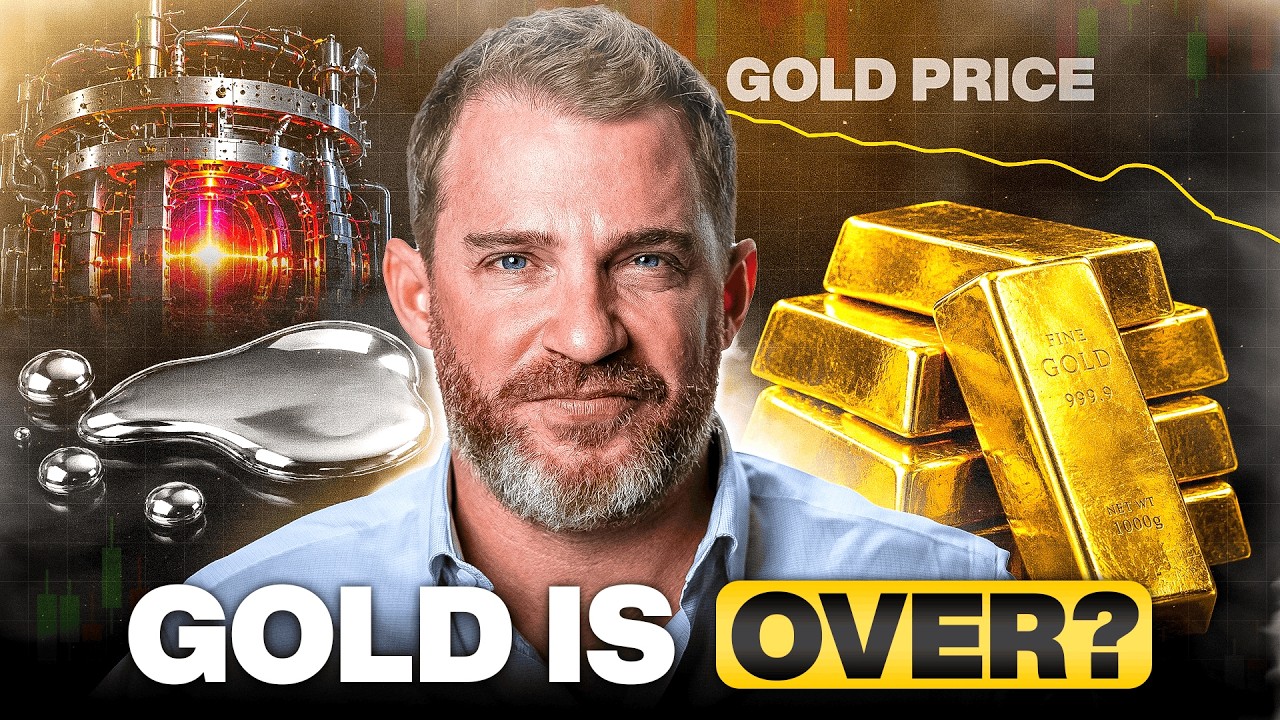
Gold Crash? What Marathon Fusion's "Lab-Grown Gold" Claim Really Means for Your Portfolio
On October 21st, a San Francisco startup called Marathon Fusion posted something on X that has been seen about 9 million times: a claim that it had turned mercury into real, stable gold using fusion neutrons, at a rate it said was 10 times CERN's record. Almost immediately, the lab-grown gold vs real gold argument was everywhere.
People started asking whether lab-grown gold was about to become the next lab-grown diamond story. It isn't. The math below explains why.
I own gold, and a headline like this is built to spook anyone holding physical metal or gold-backed positions. So I went through what Marathon actually claimed, what it left out, and why gold's market structure makes it fundamentally different from diamonds.
Why Did the Marathon Fusion Gold Story Spook Gold Owners?
Bottom Line: Lab-grown gold cannot be mass produced like lab diamonds because the fusion process makes only tiny amounts at huge cost, while gold's massive existing stockpile stays unaffected. Gold's price depends on supply and demand forces far bigger than one lab claim.
A familiar fear, borrowed from the wrong market
The story spooked gold owners because headlines framed it as proof gold could be manufactured at scale, the exact fear that crushed diamond prices over the last decade. NDTV and other outlets ran with the story, and social media declared gold "dead" within hours of the post going live.

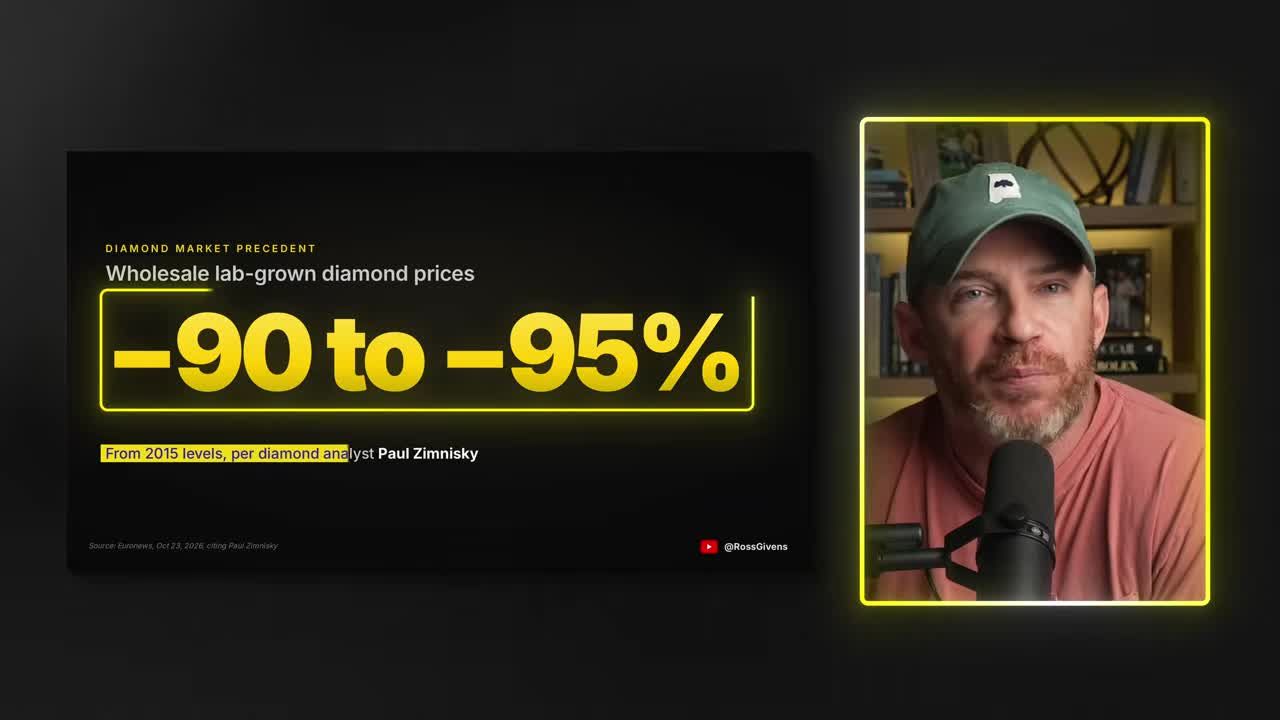
The comparison made sense on the surface. A lab claims to replicate a precious material, and the market panics about supply suddenly becoming unlimited. That's exactly what happened to diamonds. Diamond analyst Paul Zemnitsky has pointed out that wholesale lab-grown diamond prices fell 90 to 95% over the last decade.
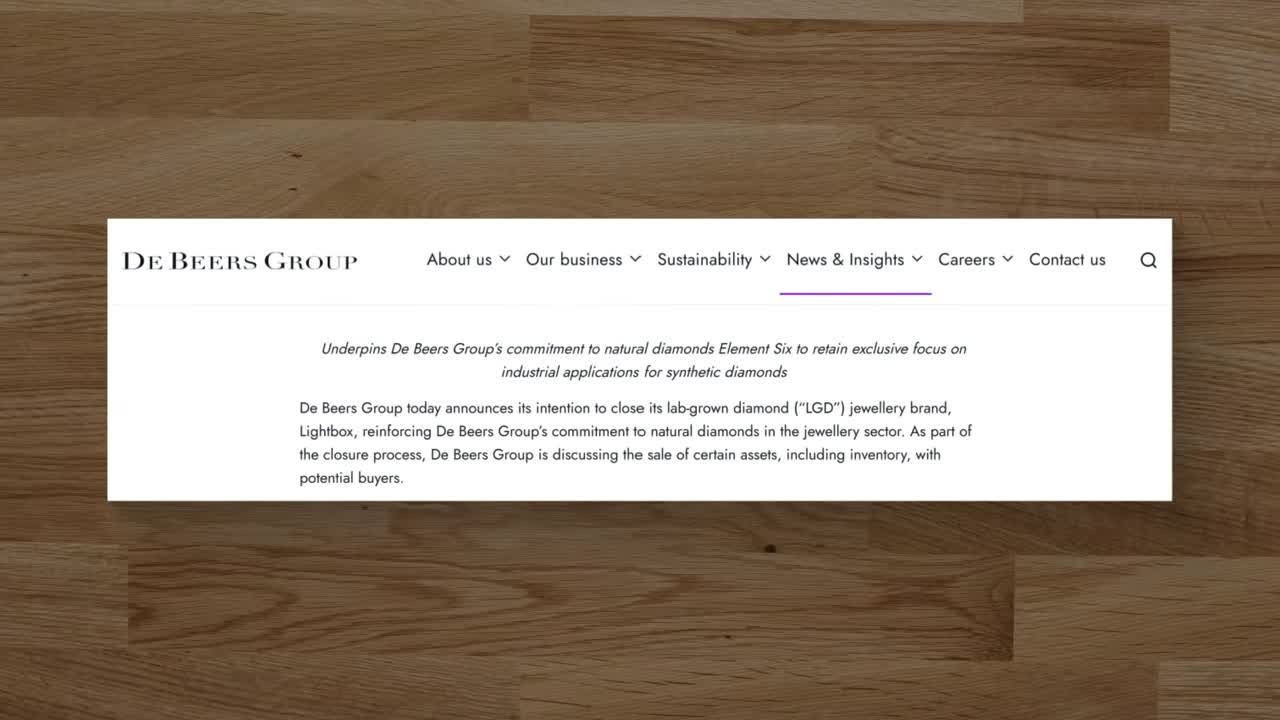
De Beers even launched its own lab-grown brand, Lightbox, before shutting it down in 2025 to refocus on natural stones. De Beers posted a loss for the first time in years, and Anglo American has reportedly looked to sell its stake.
So the fear wasn't irrational. It just didn't survive contact with the numbers Marathon actually published.
Lab-Grown Gold vs Real Gold: Is Any of This Actually Real?
In the sense Marathon Fusion describes it, yes: physically real gold atoms, not fool's gold and not a synthetic substitute. But the company has not disclosed a yield, has not published peer-reviewed data, and has not produced an independently verified sample. The physics is real. The production is not proven at any usable scale.
The pathway starts with mercury-198, a stable isotope that makes up about 10% of natural mercury. Carl Lackner of the Max Planck Institute for Plasma Physics called the enrichment process needed here "technically demanding," harder on a percentage basis than enriching uranium for a normal power plant.
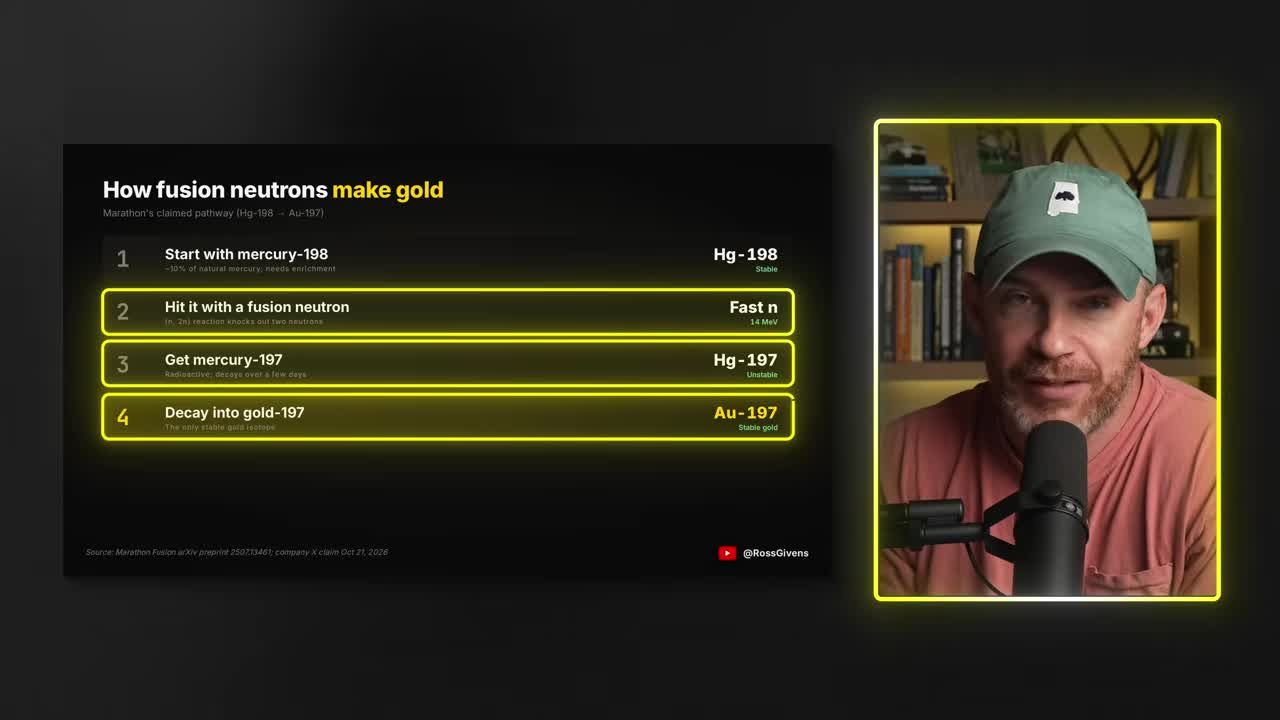
Once enriched, that mercury gets hit with a fast neutron from a fusion reaction. The neutron knocks two other neutrons out of the atom, leaving mercury-197, which is radioactive and decays over a few days into gold-197, the only stable form of gold and the same gold sitting in a wedding ring or a central bank vault.
In July 2025, three Marathon researchers published a paper on arXiv estimating what a working fusion power plant could theoretically produce: about two tons of gold a year. That number is a simulation, a computer model of a tokamak blanket, not a pile of gold sitting in a warehouse. The October claim is the company saying it demonstrated the reaction at a rate 10 times CERN's record, with no grams disclosed, no photo of a gold button, and no yield data at all.
What the Record Actually Measures
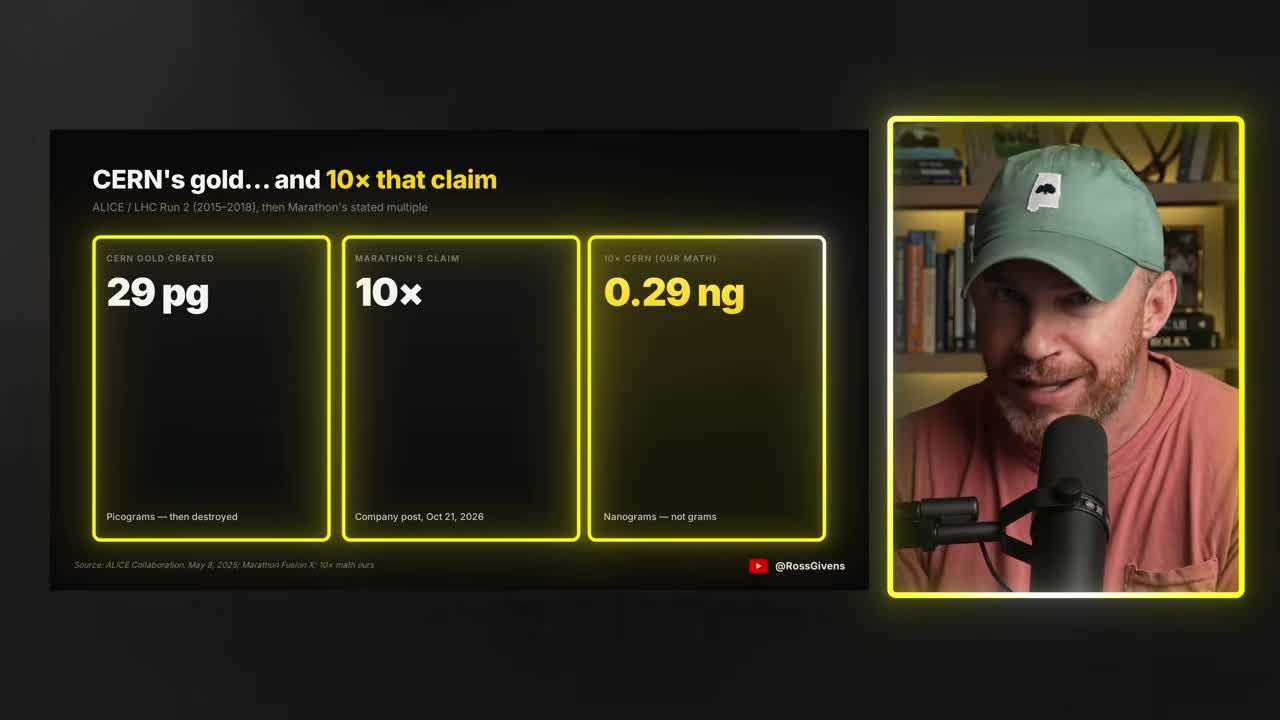
In 2025, CERN's ALICE experiment reported that during the Large Hadron Collider's 2015 to 2018 run, it created about 29 picograms of gold, roughly 86 billion gold nuclei that existed for a fraction of a second before smashing into the accelerator wall and getting destroyed. A picogram is a trillionth of a gram.
Get an entire year of live weekly mentoring sessions, my newsletter, indicators, bonus reports, tons more. Click the link and I'll see you in the next live session.
Join my Black Ops Trading ClubWhat Marathon Left Out
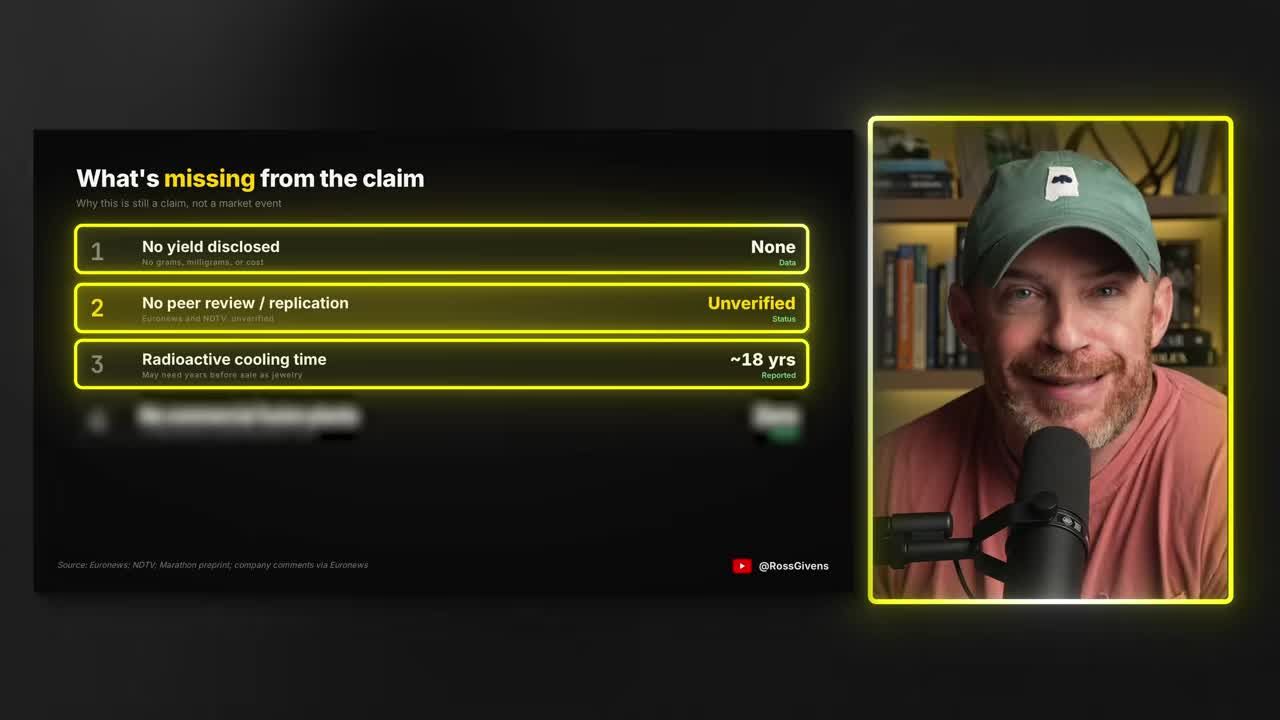
The announcement left out yield, purity, cost, and methodology. The gold it describes may also carry radioactive isotopes that need up to 18 years to cool before it's even sellable, and no outside lab has confirmed any of it.
- No yield disclosed. No grams, milligrams, or nanograms reported.
- No peer review. Euronews and NDTV both reported the claim has not been independently verified.
- Radioactive cooling time. Euronews reported the gold may need to sit for up to 18 years before it can be sold as jewelry. Lackner noted that other mercury isotopes riding along with the main reaction can leave radioactive gold behind, something regulators would treat as radioactive material, not a Krugerrand.
- No commercial fusion plants exist. Zero. The two-ton-a-year estimate assumes a working, gigawatt-scale fusion plant. Marathon said it is building a reactor in San Francisco, but it has not posted a follow-up with yield data since the October 21st thread.
That same October thread also touched on medical isotopes and diagnostics. That may end up being the company's real near-term business. The gold claim looks a lot like a way to generate attention, and with 9 million views, it worked.
Why Isn't Gold Like Lab-Grown Diamonds?
Gold is money. Diamonds are jewelry.
Diamond prices are driven by scarcity marketing and controlled supply. Gold's price is driven by central bank demand, reserve diversification, and the money supply, and that single distinction is why the diamond collapse playbook doesn't transfer to the lab-grown gold vs real gold question.
De Beers spent decades buying up mines and metering out supply to artificially maintain scarcity, which is exactly why lab-grown stones gutted the natural diamond market once chemically identical copies hit at scale. Gold has no equivalent scarcity theater. Its value comes from its role as a reserve asset.
And central banks are still buying:
- In 2025, central banks bought 863 new tons.
- In the second quarter of 2026 alone, they bought 289 tons, the biggest second quarter on record for the World Gold Council.
- Poland and China are among the active buyers.
These banks aren't buying gold to make necklaces. They're buying it as a hedge against the dollar and against the risk of other countries freezing their assets. After 2022, a lot of countries watched dollar-denominated assets get frozen during a sanctions fight, and they decided they wanted a reserve asset nobody could switch off with a keystroke. That's part of why they're selling treasuries and buying gold, and it's part of why rates have been climbing as the world's biggest banks offload bonds.
Does the Supply Math Even Work?
Even in the best-case scenario where Marathon's process worked flawlessly at commercial scale, the resulting gold supply would be a rounding error against existing mine production and above-ground stockpiles. That is where the lab-grown gold vs real gold debate really ends.
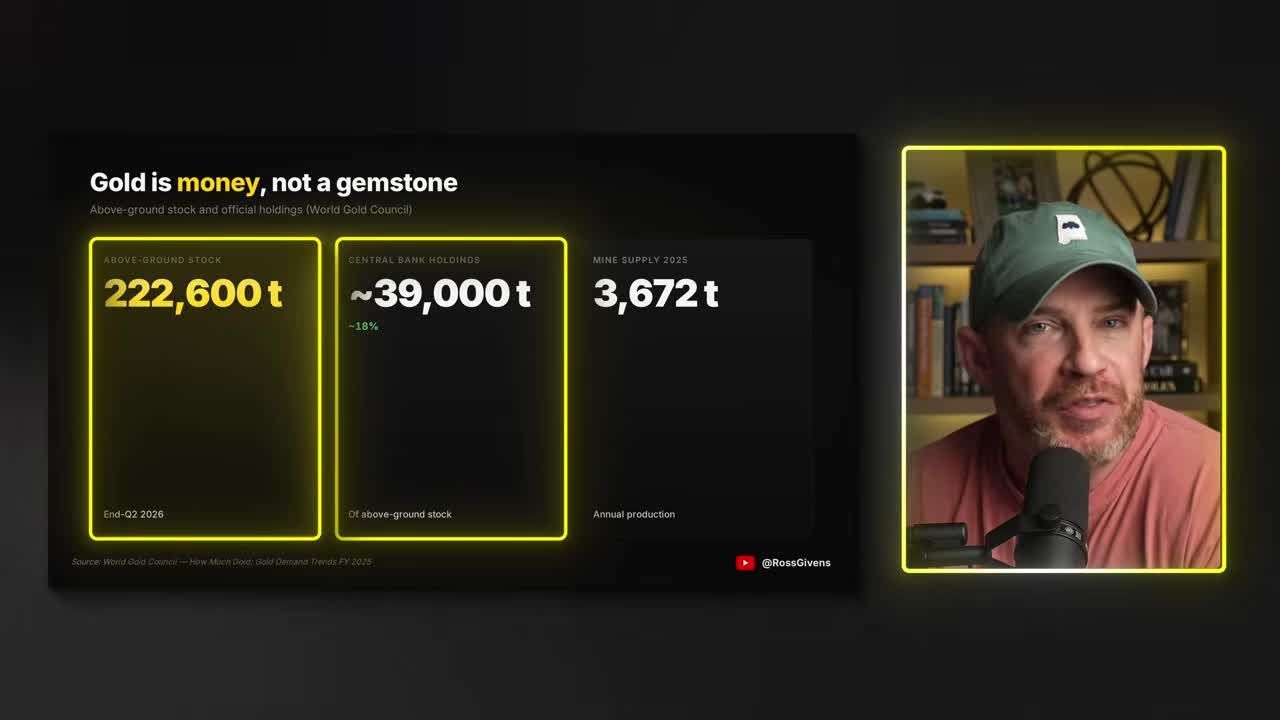
Mines produced about 3,672 tons of gold in 2025, a record. Marathon's own paper estimates roughly 2 tons of gold per gigawatt of fusion heat per year. One theoretical plant, if it existed, would add about 2 tons to a market that digs up over 3,600 tons annually, which works out to about five one-hundredths of one percent of annual mine supply.
To match just one year of mine output through this method, you'd need roughly 1,800 gigawatts of fusion plants dedicated entirely to gold production. Those plants don't exist anywhere in the world. And even if they did, the above-ground stock of 222,600 tons doesn't vaporize because of a press release. It would take years, probably decades, to see any measurable increase in supply, assuming the technology even scales, which remains unproven.
There's also a raw material constraint. Mercury-198 makes up only about a tenth of natural mercury, and Lackner has pointed out that it has to be enriched before any of this works, which means mercury supply itself becomes a limiting factor.
What Actually Moves Gold's Price?
Gold tracks the money supply, not the inflation rate directly, and that distinction explains why 3.5% inflation readings haven't been pushing gold higher on their own.
Gold rose heavily in 2025 and into early 2026 because of fear around increases to the money supply. As long as the government can borrow to cover its deficit, the money supply doesn't actually expand. But right now, interest rates are soaring, and the only way to bring down yields on 10- and 20-year bonds, not Fed funds rate cuts, is if a wave of buying pushes bond prices up and yields down. So far, that isn't happening.
The fear case is straightforward: the Fed isn't fully in control of the long end of the rate market anymore. If rates keep climbing, the Fed may eventually have to print hundreds of billions, possibly trillions, of dollars to buy up 10-, 20-, and 30-year bonds to force those yields lower. That expands the money supply. That's the fear driving gold higher, and it's why I believe gold will be two to three times its current price over the next several years.
What Investors Should Know
Marathon Fusion has not released the kind of data that would let anyone evaluate the gold claim. The company's backers reportedly include Breakthrough Energy, Bill Gates' climate network, and Anglo American, the mining group that owns De Beers, which makes for a strange overlap: a diamond company sitting on the cap table of a gold-from-mercury venture.

Beyond that backing, there's nothing concrete to assess. No yield data, no independent verification, no commercial reactor, and no confirmed path to revenue from the gold claim specifically. The medical isotope angle mentioned in the same October thread may prove to be the more realistic near-term business, but that's a different product entirely from mass gold production.
How Mercury Becomes Gold
The process starts with isolating mercury-198, a stable isotope representing about 10% of natural mercury, then bombarding it with a fast neutron produced by a fusion reaction. It's a nuclear pathway, not a chemical extraction method, and it requires conditions that don't exist outside a research setting.
The neutron strike knocks two neutrons out of the mercury atom, converting it to mercury-197. That isotope is radioactive and decays over a few days into gold-197, the stable, real form of gold. The enrichment step alone is harder on a percentage basis than uranium enrichment for standard power plants, according to Lackner. No commercial version of this process exists today, and Marathon has not published the yield, purity, or cost data needed to evaluate whether it could ever be economical.
Marathon Didn't Build a Gold Mine
Marathon Fusion's scientists produced a viral tweet, not a new source of gold supply. The claimed output, 0.29 nanograms, is invisible to the naked eye. The company hasn't disclosed yield, hasn't published peer-reviewed data, and has acknowledged the resulting material may need up to 18 years to stop being radioactive. No commercial fusion plant capable of this process exists anywhere on earth.
The diamond comparison made for a dramatic headline, but the math behind the lab-grown gold vs real gold panic falls apart the moment you run the numbers. If anything, the more dollars get printed to manage the current rate environment, the more valuable gold becomes, not less. That's the trade I'm watching, and it has nothing to do with what's happening in a San Francisco lab.
Get an entire year of live weekly mentoring sessions, my newsletter, indicators, bonus reports, tons more. Click the link and I'll see you in the next live session.
DISCLAIMER: Traders Agency does not offer financial advice. The information provided is for educational purposes only and should not be considered financial advice. Traders Agency is not responsible for any financial losses or consequences resulting from the use of the information provided. Trading carries inherent risks and may not be suitable for all individuals. You are advised to conduct your own research and seek personalized advice before making any investment decisions, recognizing the potential risks and rewards involved.
See more from Traders Agency on Google
Make us a preferred source and our market analysis will appear more prominently in your Google Search, Top Stories, and AI results.
Add to Preferred Sources