
President Trump said Tuesday that he has personally pushed within his administration to halt US diesel exports, as the national average retail price of diesel climbed to a record $6.53 a gallon, according to AAA data. Treasury Secretary Scott Bessent said officials are examining whether a full or partial export ban is feasible given US refining capacity, but the public comments came just a day after a White House official told CNN that no export ban or restrictions were under consideration at that time.
What Trump and Bessent Said
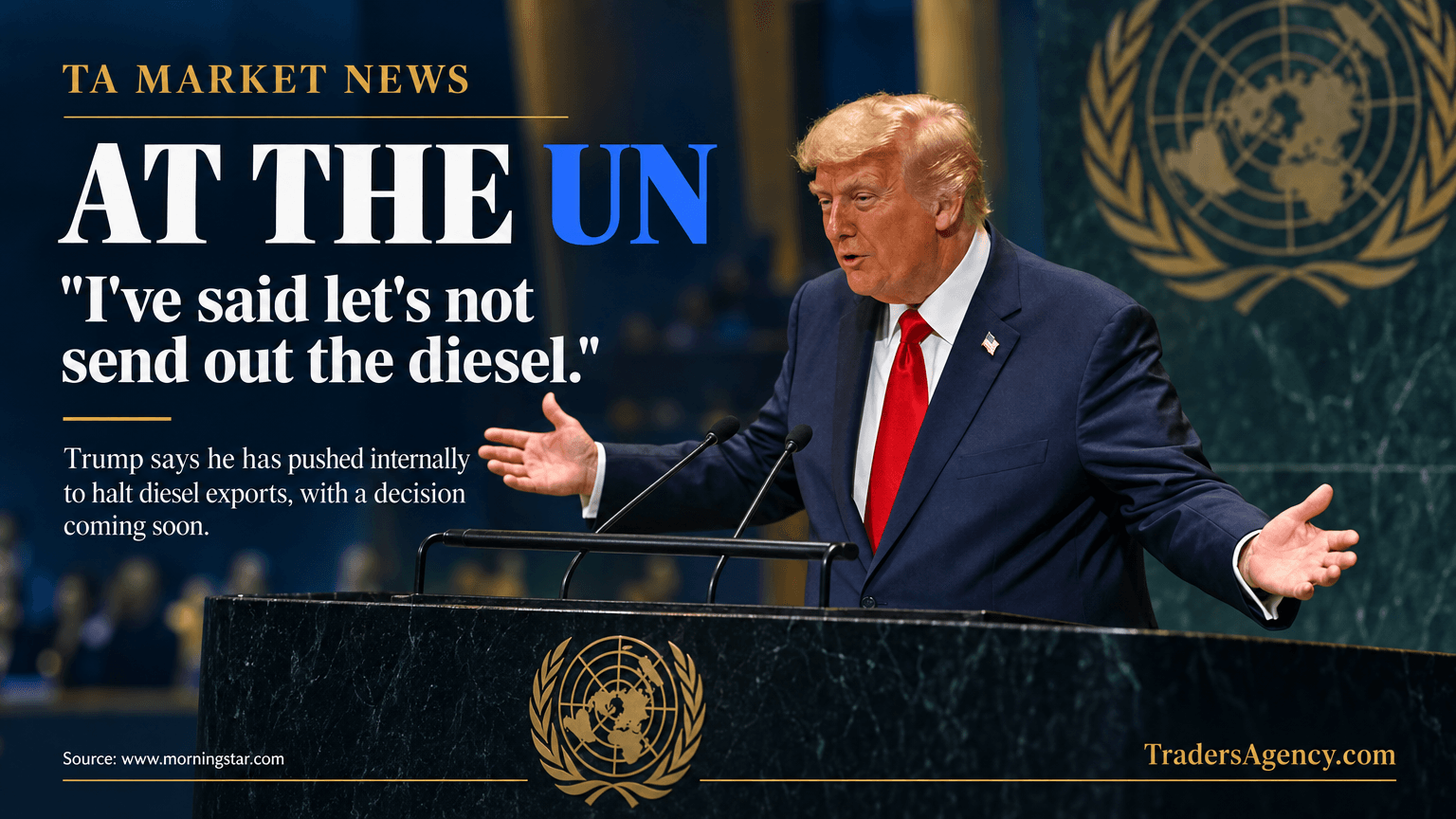
Speaking at the United Nations in New York during a meeting with Ukrainian President Volodymyr Zelensky, Trump said, "I've called for it within my people. I've said let's not send out the diesel," adding that a decision would come "fast, one way or the other," according to MarketWatch.
Bessent, addressing the same meeting, said the administration is "examining whether it's feasible in terms of the overall refining capacity and whether a full or partial ban would work," per CNBC. The remarks stand in tension with guidance a White House official gave CNN the day before, saying the administration was not considering export restrictions "at this time," as reported by CNN.
Record Prices and Their Drivers
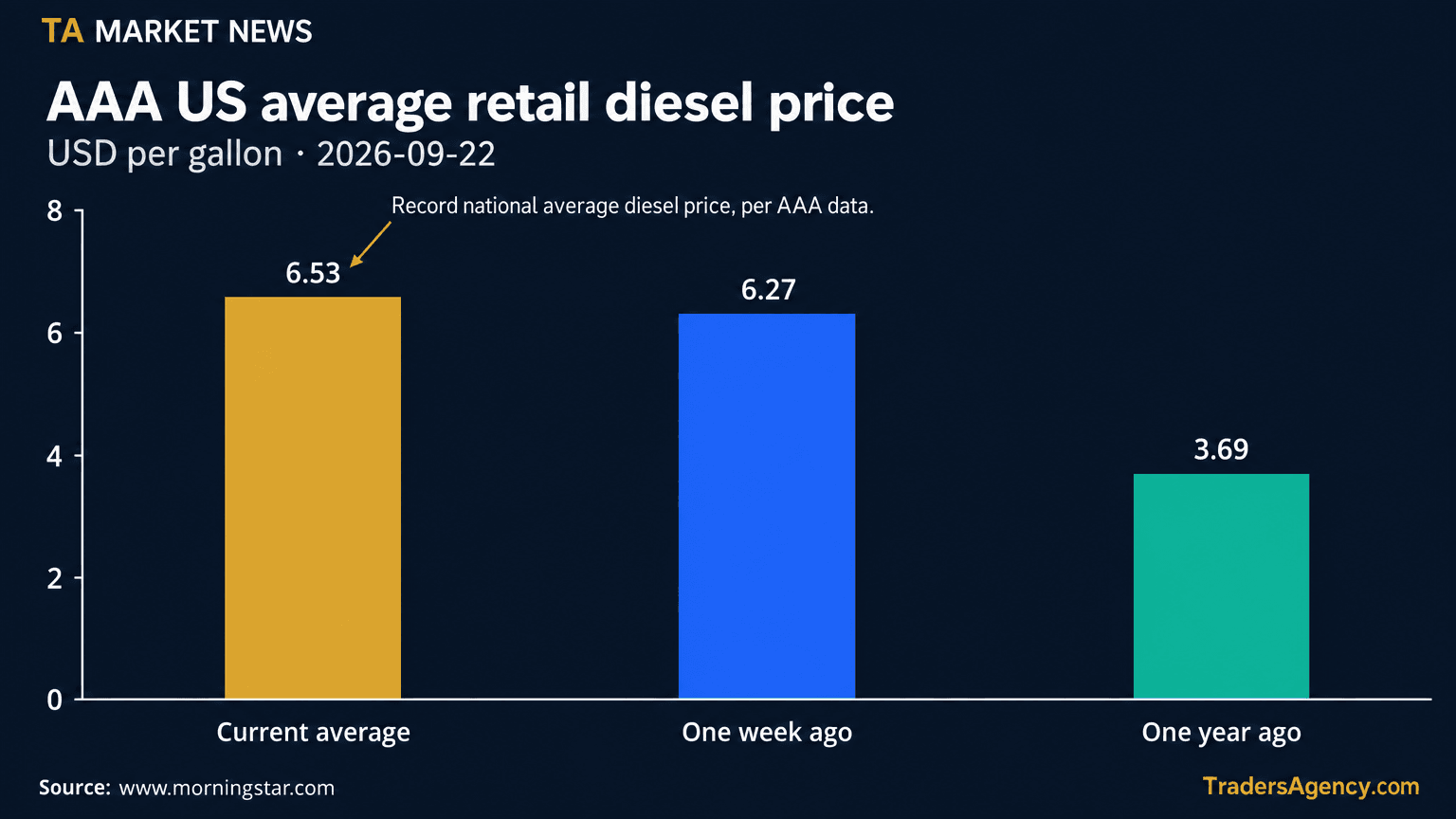
AAA figures cited by MarketWatch and CNBC put the national average diesel price at $6.53 a gallon, up from $6.27 a week earlier and $3.69 a year ago. Using those AAA figures, diesel has risen $2.84 a gallon year over year, a calculation based on subtracting $3.69 from $6.53. California diesel is running highest nationally at $8.44 a gallon, according to CNBC. CNN reported that diesel prices are up 83% so far this year, on pace for the largest annual increase since AAA began tracking the fuel in 2000, and are within striking distance of the highest inflation-adjusted price since 2008.
Refiners are earning unusually wide margins on that fuel: CNBC reported diesel traded around $207 a barrel on Tuesday, more than $100 above crude oil prices. CNN reported that refiners have been booming this year because of record-setting margins to turn oil into diesel.
Both outlets traced the spike to a string of supply disruptions rather than a single cause. CNBC reported that Ukrainian strikes have damaged refineries in Russia — which CNN identified as the world's No. 2 diesel exporter — prompting Moscow to impose its own export ban; that Middle East refineries have come under attack from Iran and Houthi forces; and that Iranian threats to tankers have constrained product flows through the Strait of Hormuz. CNN added that China has also imposed export restrictions, compounding the global squeeze.
Political Pressure From Republicans
CNN and CNBC both reported that congressional Republicans have been pushing for action ahead of the November midterms. Sen. Chuck Grassley posted on X that high diesel prices "ARE KILLING FARMERS INCOME" and called for "an embargo on diesel exports." Rep. Tim Burchett introduced legislation on the House floor to ban diesel exports, standing next to a billboard reading that prices are "out of control," per CNN's reporting. Louisiana Gov. Jeff Landry, whose state hosts some of the world's largest refineries, has asked for a 90-day export ban. MarketWatch separately reported that Trump is facing pressure from Senate Majority Leader John Thune.
Industry and Analyst Pushback
Refining and energy voices have warned publicly that a ban could backfire. American Petroleum Institute CEO Mike Sommers said on X that an export ban would "make the problem worse, not better – for consumers, farmers and the broader US economy," according to CNN. Interior Secretary Doug Burgum told CNBC earlier this month he is "not at all confident" a ban would lower prices and warned it could "actually hurt Americans" in regions dependent on imports.
Analysts consulted by CNN offered a more granular, region-by-region reading. Bob McNally of Rapidan Energy Group said Gulf Coast and Midwest diesel prices could fall by dimes per gallon if exports were trapped domestically, but warned the East and West Coasts, which rely on imports, "are screwed" and could see sudden price spikes. He called a ban "an authentic policy error" and noted the US is the world's largest diesel exporter, meaning a ban would trigger a global scramble for fuel. Garrett Golding of the Federal Reserve Bank of Dallas said on X that surging global diesel prices "will boomerang back" onto the East Coast and, to a lesser extent, the West Coast, meaning a ban is not guaranteed to lower the national average even if it depresses Gulf Coast prices.
Andy Lipow of Lipow Oil Associates told CNN that Jones Act waivers could help ship Gulf Coast diesel to the coasts, but cautioned that refiners would likely cut production runs, gasoline prices "could soar," and "some refiners may not survive." Rebecca Babin of CIBC Private Wealth told MarketWatch a ban would be "very negative" for US refiners and would push global energy prices higher, adding that US prices would still rise because the country does not domestically produce all the fuel and crude products it needs.
A ban would also cut against the administration's own stated refining agenda. CNN reported that after meeting with refining executives, a White House official said Trump's team will support reopening shuttered refineries and expanding capacity, even though no major new US refinery has been built since 1977. Eurasia Group's Gregory Brew told CNN the underlying bind is geopolitical: "Unless they are prepared to make a deal with Iran, they don't have good options for lowering prices." The Competitive Enterprise Institute also weighed in against the idea, with senior economist Ryan Young arguing export bans "would politicize energy markets and invite retaliation while failing to solve the fundamental problem of scarcity," and senior fellow Ben Lieberman warning it would signal to global producers that Washington can cut off buyers.
Bottom Line
Trump has now publicly aligned himself with a diesel export ban that Republican lawmakers have been demanding as prices hit record highs, but his own White House offered conflicting guidance just a day earlier, and Bessent's language leaves open a partial measure rather than a full prohibition. Industry groups, outside energy analysts and at least one member of Trump's own cabinet, Interior Secretary Doug Burgum, have publicly questioned whether any version of a ban would lower the national average price, given how unevenly the effects would fall between Gulf Coast refiners and import-dependent coastal markets — an assessment drawn from the analyst and official comments cited above.
DISCLAIMER: Traders Agency does not offer financial advice. The information provided is for educational purposes only and should not be considered financial advice. Traders Agency is not responsible for any financial losses or consequences resulting from the use of the information provided. Trading carries inherent risks and may not be suitable for all individuals. You are advised to conduct your own research and seek personalized advice before making any investment decisions, recognizing the potential risks and rewards involved.
- CNBC Top News: Trump examining diesel export ban, Treasury Secretary says · accessed Sep 22, 2026
- www.energyintel.com: Trump Backs US Diesel Export Ban as Prices Surge · accessed Sep 22, 2026
- www.cnn.com: Trump has a ‘sledgehammer’ way to slash diesel prices. But it could boomerang back on the US · accessed Sep 22, 2026
- www.morningstar.com: Trump endorses diesel export ban. A decision is coming 'fast, one way or the other.' · accessed Sep 22, 2026
- cei.org: Diesel export ban idea won’t fix high prices: CEI analysis · accessed Sep 22, 2026
- polymarket.com: US Announces Diesel Export ban by...? · accessed Sep 22, 2026
- www.youtube.com: - YouTube · accessed Sep 22, 2026
- fortune.com: Scott Bessent's bond plan showed markets what will make the treasury flinch · accessed Sep 22, 2026
- home.treasury.gov: Secretary Bessent Delivers Economic Security Address, Brings “Trump Accounts Tour” to California · accessed Sep 22, 2026
See more from Traders Agency on Google
Make us a preferred source and our market analysis will appear more prominently in your Google Search, Top Stories, and AI results.
Add to Preferred Sources