
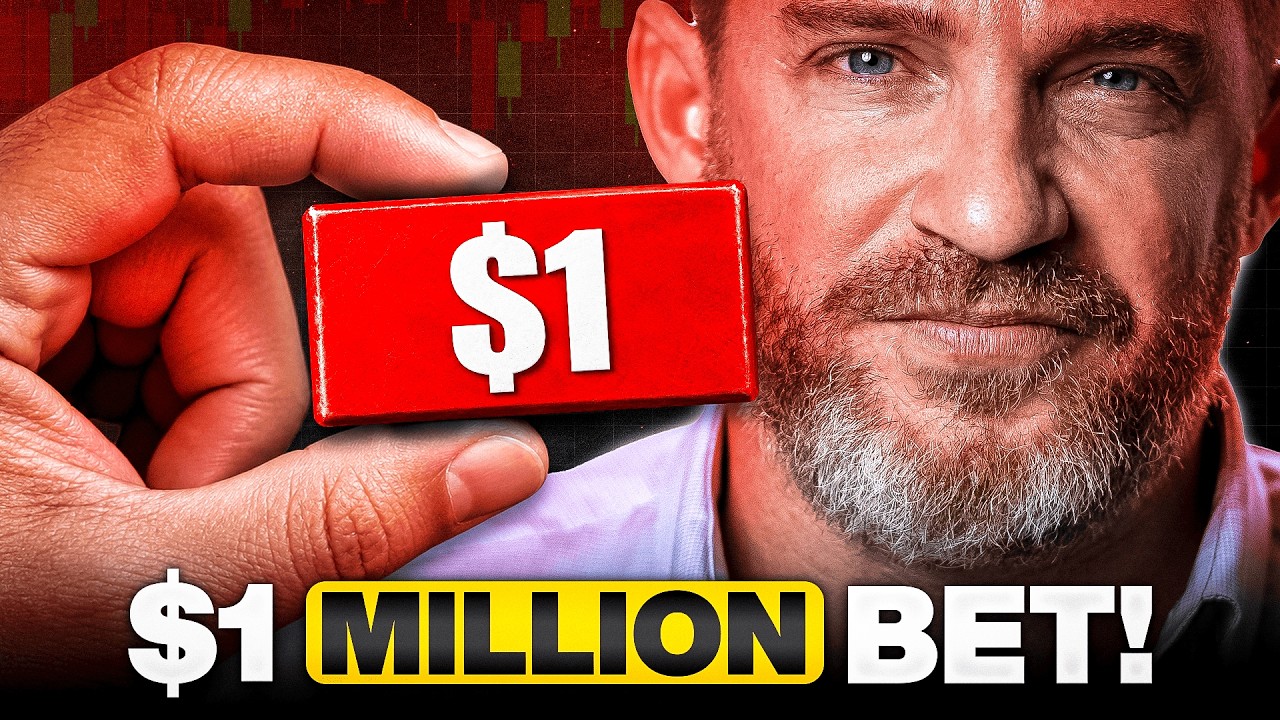
NXH is one of the clearest examples of insider buying I've seen in a sub-$2 stock this year. If you track US penny stocks under $1 and the low-dollar names sitting just above that line, this is one to put on your list. CEO Marcus Lemonis just put $1 million of his own money into it at $2.76 a share, a price nearly double where it trades today. That single transaction says more about where this company might be headed than any analyst note could.
This isn't a random ticker off a screener. This is the former Overstock.com, now trading as NXH, worth about $165 million against a pace of roughly $1.4 billion in annual sales. Today it trades for about a buck and a half.
So is this the comeback story of the decade, or a trap with a famous face on it?
Here's how a $21.5 million bankruptcy purchase turned into this company, what Lemonis says he's building with it, and the specific numbers that will decide whether this becomes a 10-bagger or a zero.
A $21.5 Million Bankruptcy Deal
How a famous brand name changed hands for pocket change
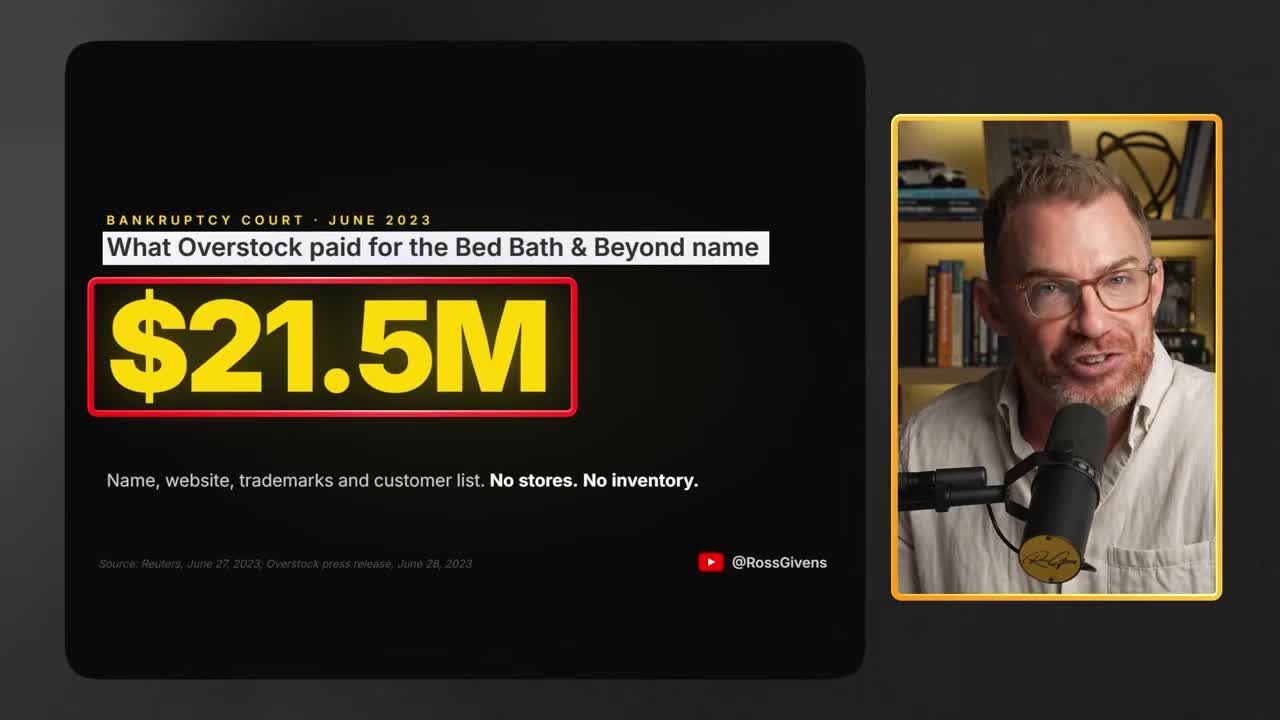
In June of 2023, Bed Bath & Beyond filed for bankruptcy. A brand like that doesn't just disappear. Somebody gets to buy the name, and that somebody was Overstock.com.
A bankruptcy judge in New Jersey approved Overstock's bid. The price: $21.5 million in cash. One of the most recognized home brands in America sold for the price of a mid-sized office building.
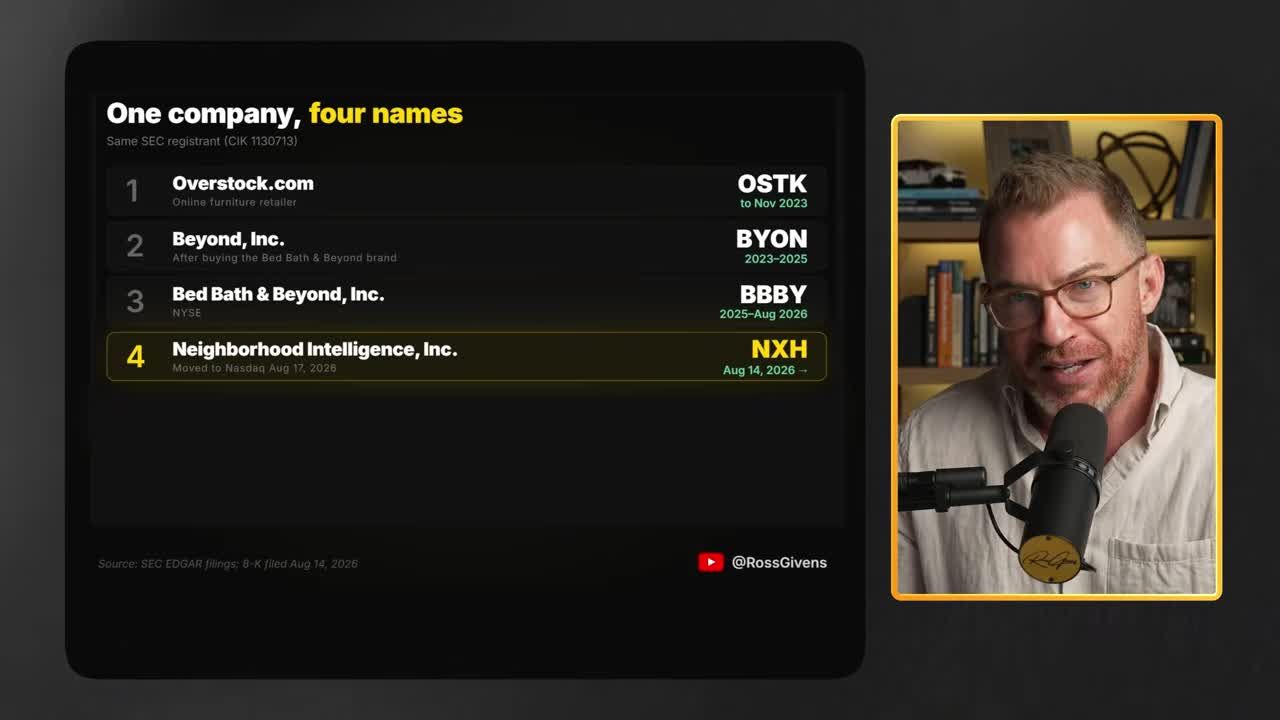
Then the company started changing its own name. Overstock became Beyond in late 2023. Beyond became Bed Bath & Beyond in 2025. On August 14th of this year, it officially became Neighborhood Intelligence, and the stock moved from the New York Stock Exchange to the Nasdaq under a brand new ticker: NXH.
Why is a company carrying brands this famous worth so little? The market simply gave up on it.
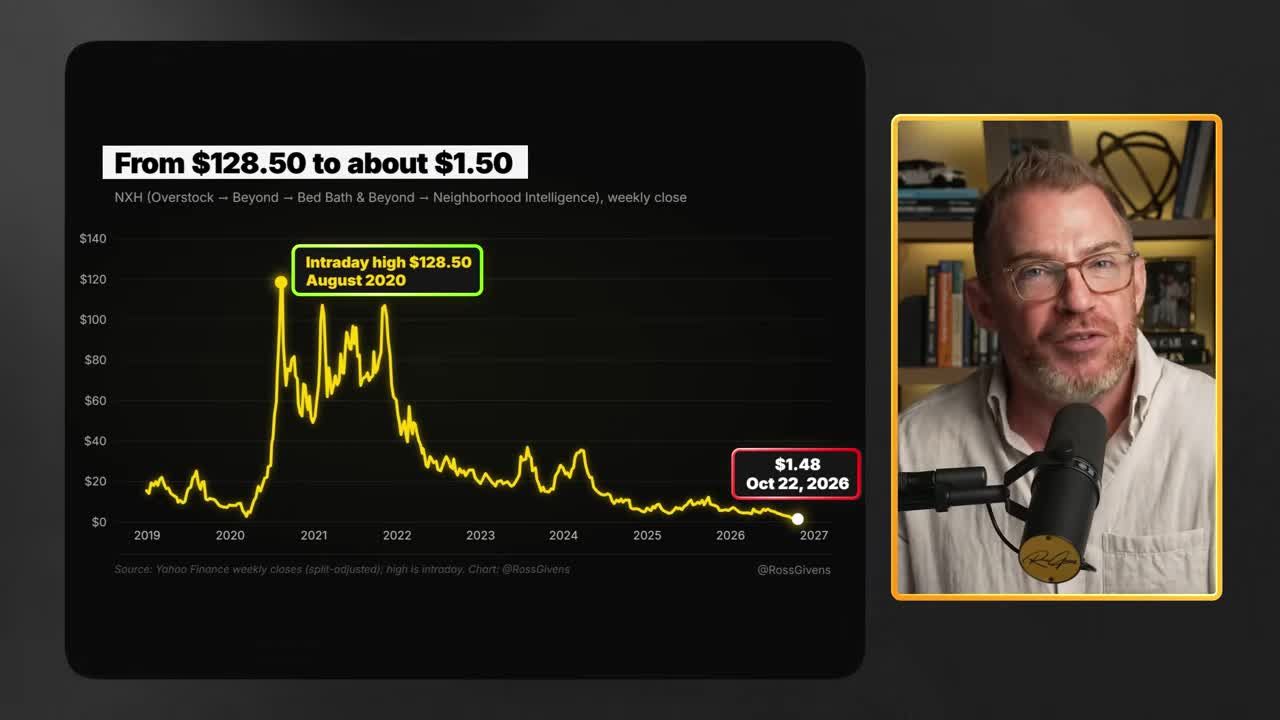
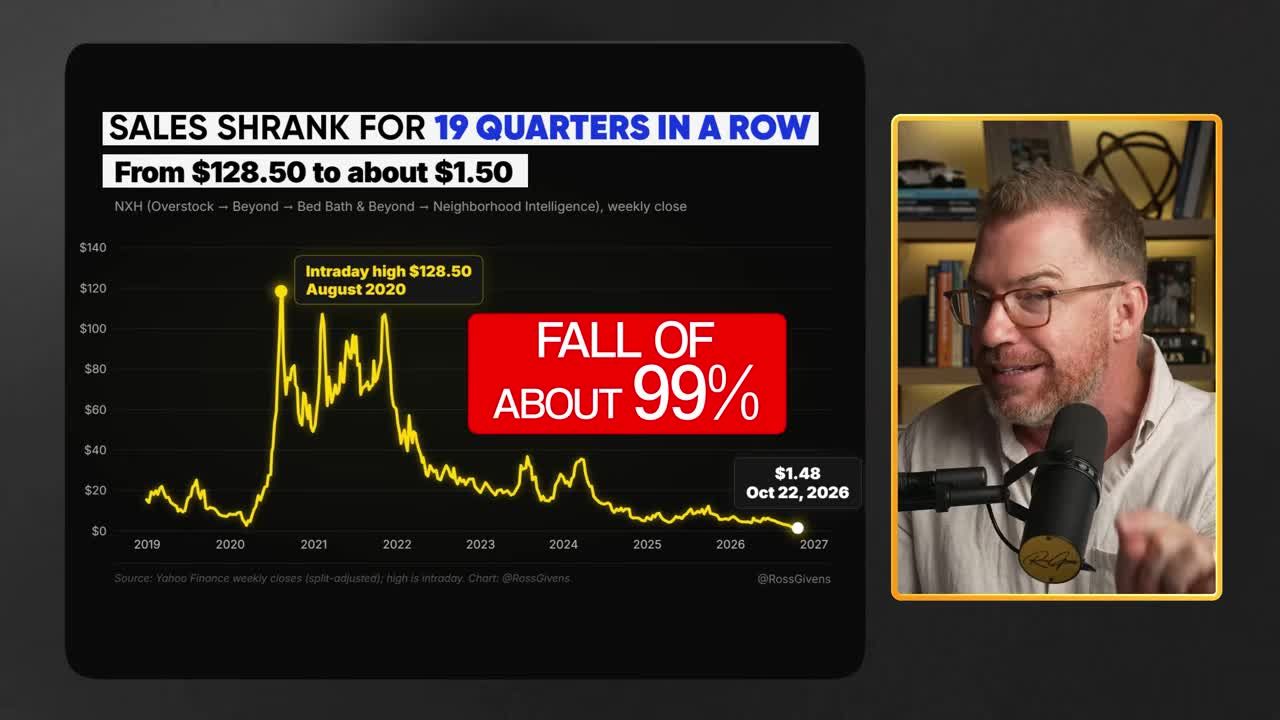
Back in 2020, when everyone was stuck at home buying furniture online, Overstock soared to $128.50 a share. Add in the crypto frenzy around its blockchain unit, TZERO, and this was one of the hottest stocks in the country post-COVID.
Then the tide went out.
- Sales shrank for 19 quarters in a row
- The stock slid from $128 to single digits, then under $2.00
- A fall of roughly 99% from the peak
That collapse is exactly when Marcus Lemonis walked in.
Why Does Lemonis's Insider Buying Matter?
If you've watched CNBC's The Profit, you know the routine. Lemonis comes into a struggling business, looks at the people, the process, the product, then puts his own money on the table to fix it.
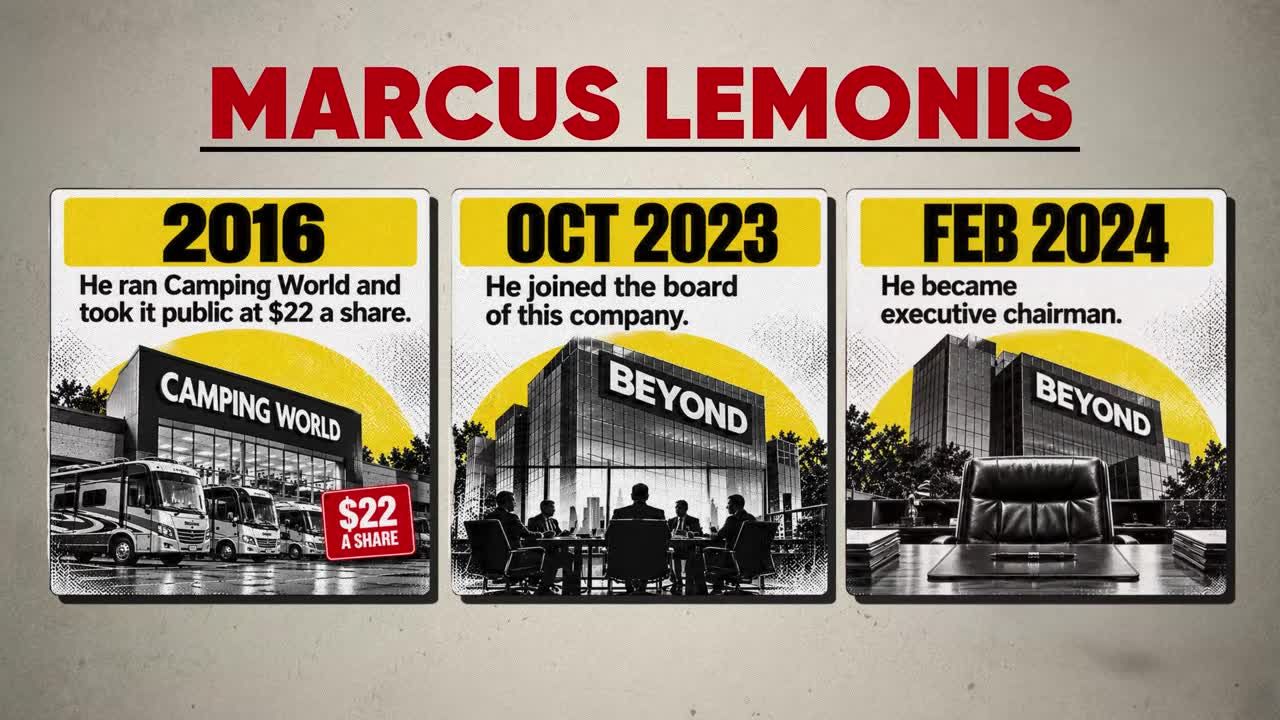
Off camera, he ran Camping World and took it public in 2016 at $22 a share. He joined the board of this company in October of 2023. By February of 2024, four months later, he was executive chairman.
Now here's the detail that matters most about how he structured the role: Lemonis took no salary for this job. His pay is performance-based stock options that only reward him if the stock climbs above where it was when he joined.
On January 1st of this year, Lemonis took over as CEO. His shareholder letter that day ended with a line that tells you exactly how big he's thinking: "We don't just sell towels."
He wasn't kidding. This year alone, the company bought Kirkland's, home to Corchain. It bought The Container Store, along with Elfa and Closet Works. It even picked up a pair of home services businesses, Installed Right and SFV Construction.
The plan has three pieces. First, sell you the stuff that goes in your home. Second, sell you the services to fix and improve your home. Third, eventually help with the buying, the financing, and the selling of the home itself. In the company's own words, the goal is to "make homeownership simpler and more affordable."
That's the big vision. Plenty of executives have big visions. They don't all become reality. The numbers have to do the talking.
Get an entire year of live weekly mentoring sessions, my newsletter, indicators, bonus reports, tons more. Click the link and I'll see you in the next live session.
Join my Black Ops Trading ClubWhat Do NXH's Numbers Actually Show?
In the second quarter, revenue came in at $361 million, up 28% versus a year ago. That's not even the impressive part. This was the second quarter in a row of growth after 19 straight quarters of decline.
Active customers jumped 47% to 6.4 million. Orders delivered more than doubled. To be fair, a chunk of that growth came from absorbing Kirkland's operations after the acquisition. But the company says the core online business grew too.
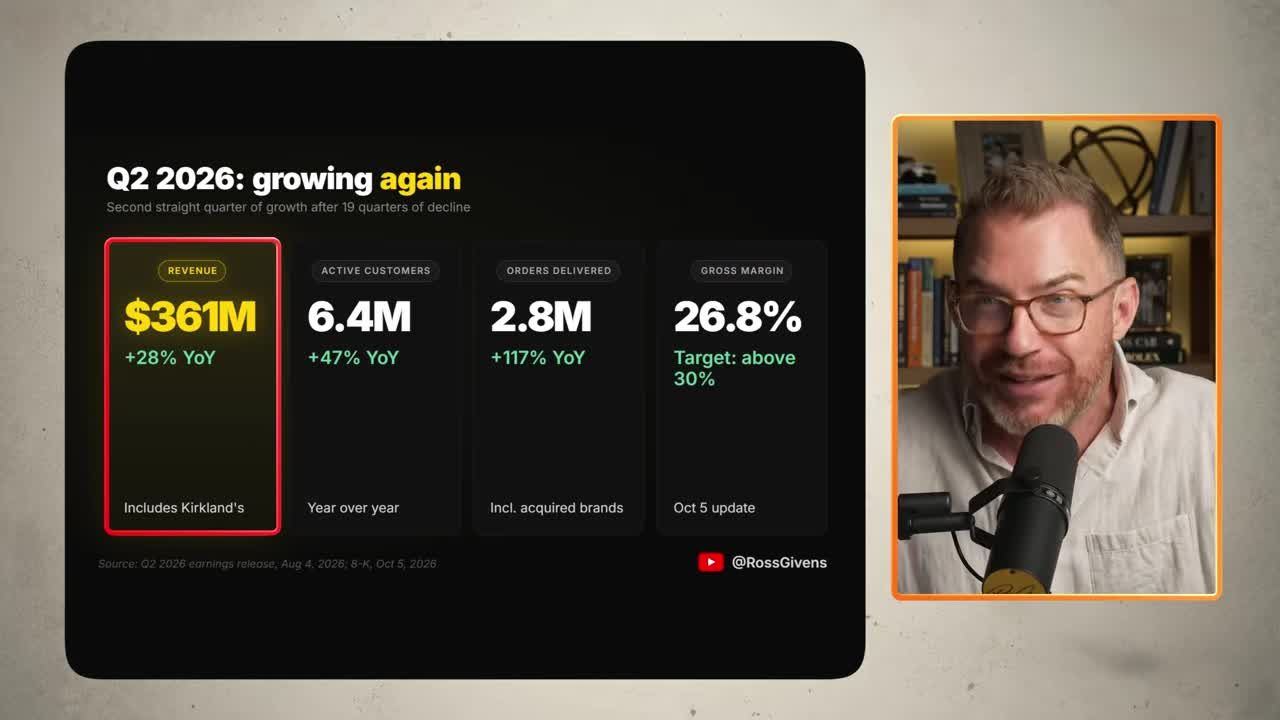
Lemonis didn't oversell the moment. He said point blank:
That restraint stands out. Most CEOs get one decent quarter and start beating their chest. This is a guy who turned around a company that had been in a nosedive for five straight years, and he isn't even asking for the credit yet.
Then on October 5th, the company gave an update that was even more interesting:
- Gross margin is now expected to top 30%, above the company's own target
- More than $50 million of overhead has already been cut this year
- At least $30 million more in cuts have been identified
- No more acquisitions are planned. The focus shifts to making what it owns work
That last point matters. This is no longer a company chasing growth through endless deal-making.
The Insider Buying Cluster
I went through every insider purchase in the SEC's EDGAR database going back to 2023, and what stands out is a tight, recent cluster of buying that lines up directly with the turnaround.
In early August, right after the second quarter numbers came out, Lemonis made a big open market buy: 21,700 shares at $4.67 each, followed by another purchase totaling $430,000. He wasn't alone. Two directors, Joseph Tabacco and Robert Shapiro, were buying the same week, picking up another 23,000 shares combined.
Then came October 6th. The big one.
Including that most recent purchase, Lemonis has now put roughly $6 million of his own money into this stock. He owns more than 1 million shares, and most of those purchases came at prices higher than where the stock sits right now.
He keeps buying anyway.
What Is This Stock Worth?
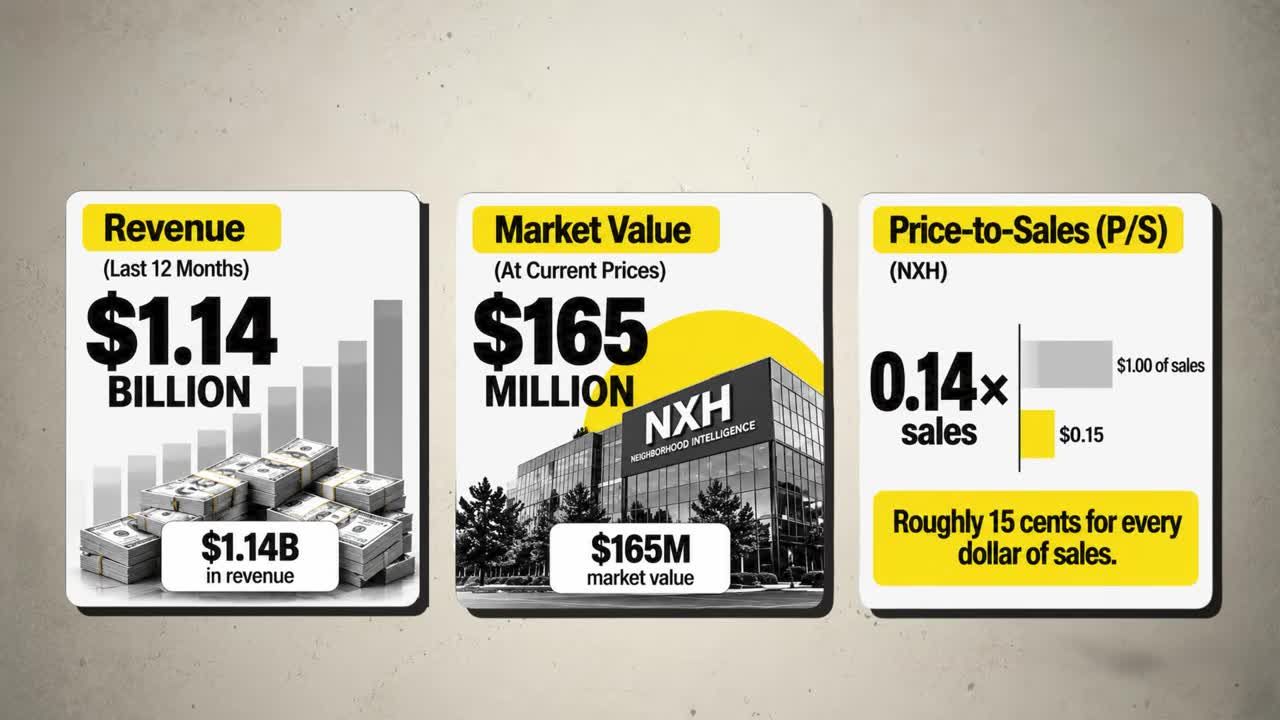
Over the last 12 months, this company did $1.14 billion in revenue. Based on the current stock price, the entire company is valued at around $165 million. That works out to roughly 15 cents for every dollar of sales, a price-to-sales ratio of 0.14 times.
Compare that to the most obvious competitor. Wayfair sells the same furniture and home goods, and it trades at about 1.2 times sales. That's eight times higher than what NXH gets for every dollar of revenue.
Wayfair is bigger. It's closer to real profits. It looks like a slightly better company. So some of that gap is earned. But not all of it. Not eightfold.
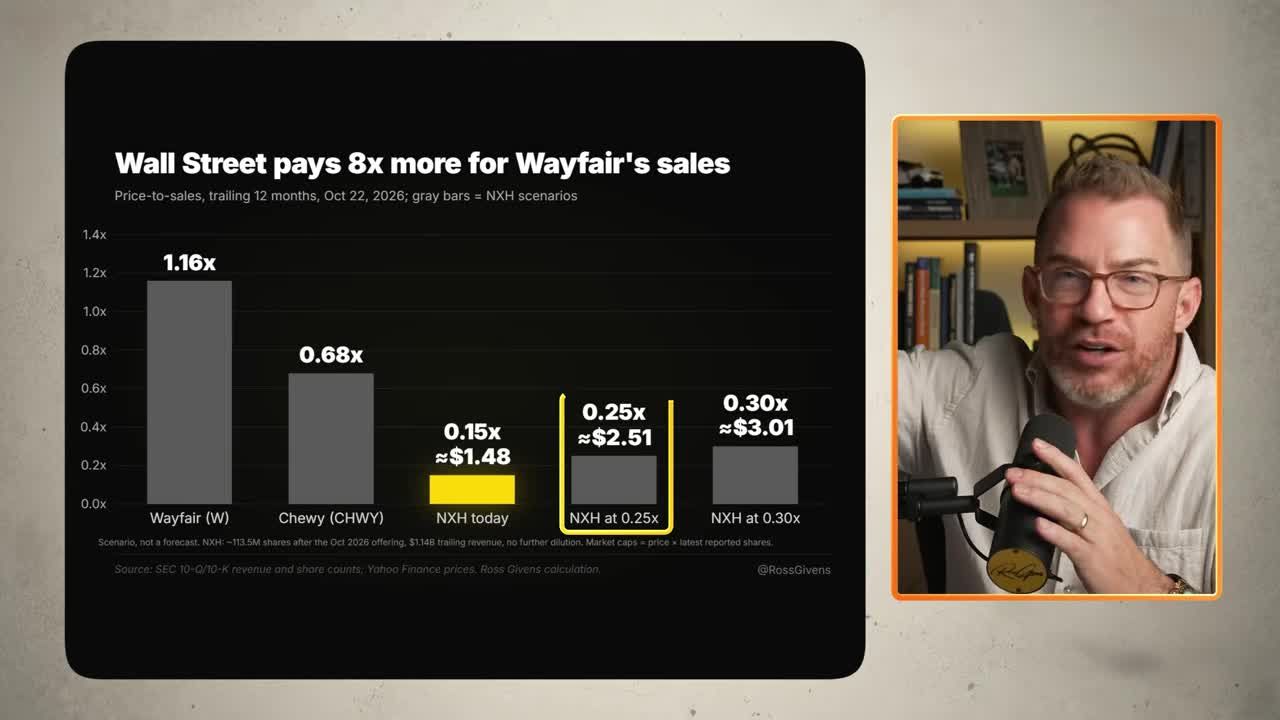
Say the gap closes only partly, and the market decides this stock is worth $0.25 to $0.30 per dollar of sales. Still a quarter of Wayfair's multiple. On today's sales and today's share count, that puts the stock at roughly $2.53 a share.
A double from here, and it still wouldn't close the gap with Wayfair. That math also doesn't count any growth from The Container Store, which only joined the company in July.
The Wild Card on the Balance Sheet
The company still owns 99% of Medici Ventures and a stake in TZERO, its old blockchain portfolio, carried on the books at around a $26 million valuation. Lemonis had a plan to spin them off into some kind of merger but canceled it earlier this month, saying he wants shareholders to keep all the upside.
Think of it as a lottery ticket attached to the stock. Probably not a big mover. But you never know.
What Four Things Have to Go Right for NXH?
Make no mistake, this is a high-risk turnaround
1. The Cash Burn Has to Slow Down
In the first half of this year, the business burned $50 million in operating cash. It had $126 million left at the end of June, and the October offering brought in another $45 million. That's runway for several years, but not forever. The losses have to stop.
2. The Share Count Has to Stop Climbing
Every time the company raises money through these offerings, it issues more stock to do it. If the choice is dilute a little or go bankrupt, we all vote dilute. But a business can't keep selling more and more of itself just to operate. The ideal path: issuance stops, and eventually the company starts buying shares back, which concentrates ownership instead of spreading it thinner.
3. The Integration Has to Work
The whole plan rests on combining Bed Bath & Beyond, Kirkland's, The Container Store, and the home services businesses into one operation. In the last two months, the company walked away from two deals, including a merger with Fathom Holdings. The CFO has left, and a partner from the restructuring firm stepped in as interim CEO. That's a lot of cleaning house at once, and investors need to see proof the integrations are actually working.
4. The Losses Have to Shrink
Wall Street won't bid this stock up to a higher valuation until the reported bottom line improves. Last quarter, the company posted a net loss of $39.5 million. When third quarter results land in November, that number has to come down. Companies losing money can still soar, but only if the trajectory points toward profitability, not away from it.
Is the Insider Signal Enough in US Penny Stocks Under $1?
That 0.14 times sales multiple is all the evidence you need that the market is pricing this stock with an expectation to fail. But it's being run by a man who has spent his whole career fixing broken businesses, and he has $6 million of his own money saying he can fix this one too.
I'm not hiding the risk. This thing could go lower. It looked cheap at $6, just like it looked cheap at $4, at $3, and at $2. And at $1.50 a share, every nickel moves the needle. A 50 cent move that would be a rounding error for most stocks is a 30% swing here. That's the same violent math you get in US penny stocks under $1, where small moves in cents turn into huge percentage swings.
So this is, without question, a bet. The potential profit is huge. The risk is just as huge. This stock isn't going to sit quietly at $1.50 for months. It's going to win big or fail big.
Final Thoughts on NXH
The insider buying pattern at NXH is about as clear as it gets in a beaten-down small cap. A CEO with a track record of fixing broken businesses has put $6 million of personal capital into a company trading at a fraction of its competitor's valuation multiple, buying repeatedly at prices well above where the stock sits today. That kind of commitment is rare anywhere, and especially rare among US penny stocks under $1 and other low-priced names.
That doesn't make it a guaranteed winner. The cash burn needs to slow. The share count needs to stabilize. The acquisitions need to integrate cleanly. The net losses need to shrink. All four have to move the right way before the market changes its mind.
Watch the Q3 report in November. The gross margin trend, the cash burn number, and the net loss figure will tell you whether this turnaround is becoming real or falling apart.
Insider transaction data sourced from the SEC's EDGAR database.
Get an entire year of live weekly mentoring sessions, my newsletter, indicators, bonus reports, tons more. Click the link and I'll see you in the next live session.
DISCLAIMER: Traders Agency does not offer financial advice. The information provided is for educational purposes only and should not be considered financial advice. Traders Agency is not responsible for any financial losses or consequences resulting from the use of the information provided. Trading carries inherent risks and may not be suitable for all individuals. You are advised to conduct your own research and seek personalized advice before making any investment decisions, recognizing the potential risks and rewards involved.
See more from Traders Agency on Google
Make us a preferred source and our market analysis will appear more prominently in your Google Search, Top Stories, and AI results.
Add to Preferred Sources