I own 25,000 pounds of copper. Right now, I’m buying 25,000 more. At today’s price of $6 per pound, that brings my total copper position to $300,000.
This is not hype. I am putting my money where my mouth is.
I’m as bullish on copper today as I was on gold two years ago when I alerted members to the start of a multi-year super cycle. As confident as I was when I advised buying silver at $40 an ounce before it exploded higher.
The case for copper is not just technical. We are facing a fundamental shortage the likes of which we have never seen. There is simply no way to mine enough of this metal to meet the demand. The smart money is already moving aggressively, and the market has no choice but to reprice this asset significantly higher.
The Closest Thing to a Slam Dunk
Commodity trends don’t move for weeks or months like stocks do. These trends last for years — sometimes decades.
Gold lay dormant for years. Went absolutely nowhere for more than a decade. Same thing with silver. Then they started moving. Gold is up 164% in two years. Silver has quadrupled.
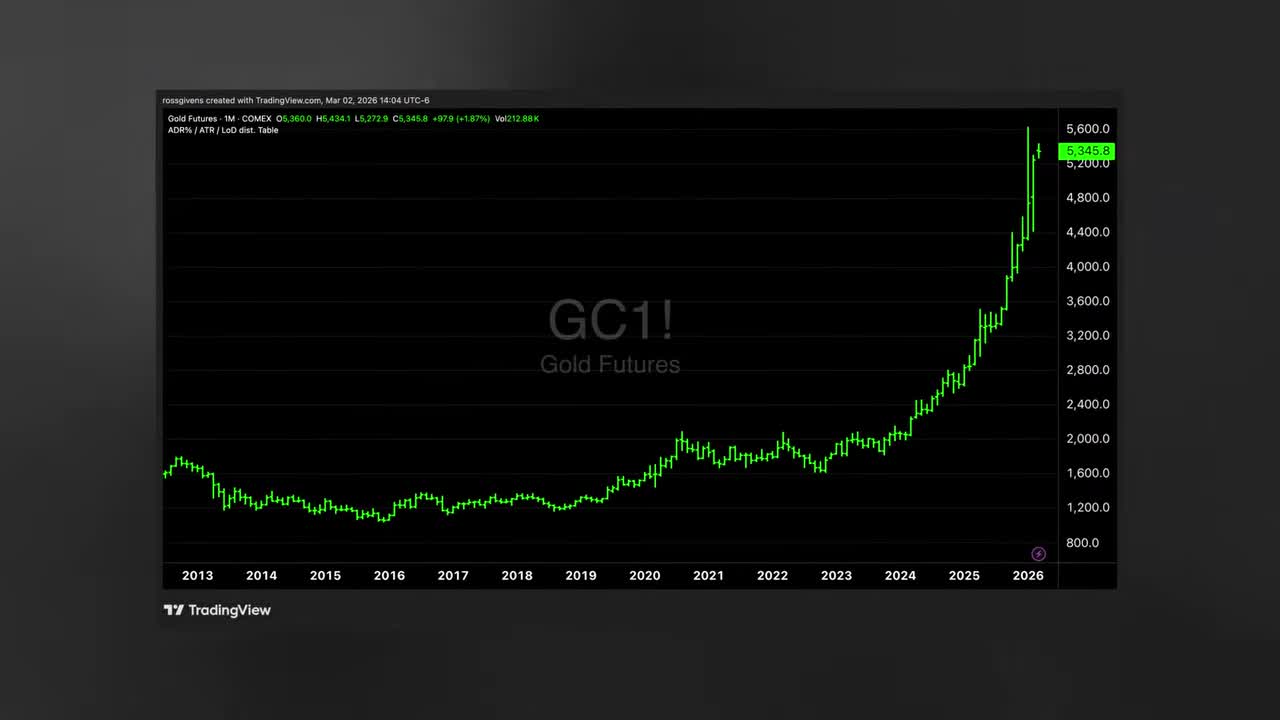
The same pattern played out in other commodities — corn, wheat, coffee. Two years ago, cocoa got hot. It went up fivefold after going nowhere for 40 years.
Copper is next.
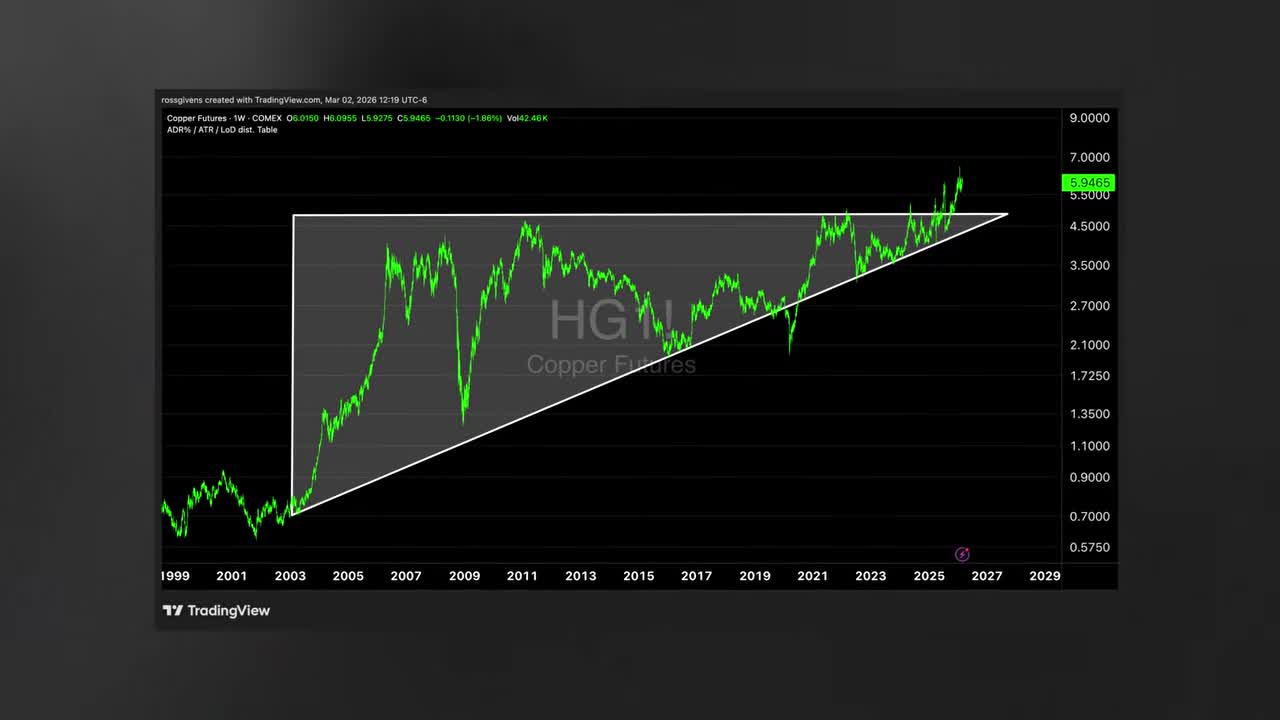
It just broke out from a 20-year consolidation pattern, and the smart money is already piling in.
Last week, Stanley Druckenmiller — arguably the best investor of all time — revealed that he holds a substantial copper position. He called it a “big consensus trade,” saying there is no meaningful supply and it will be very tight for the next eight years.
This is the closest thing to a slam dunk investment I have ever seen.
A Shortage No Money Can Fix
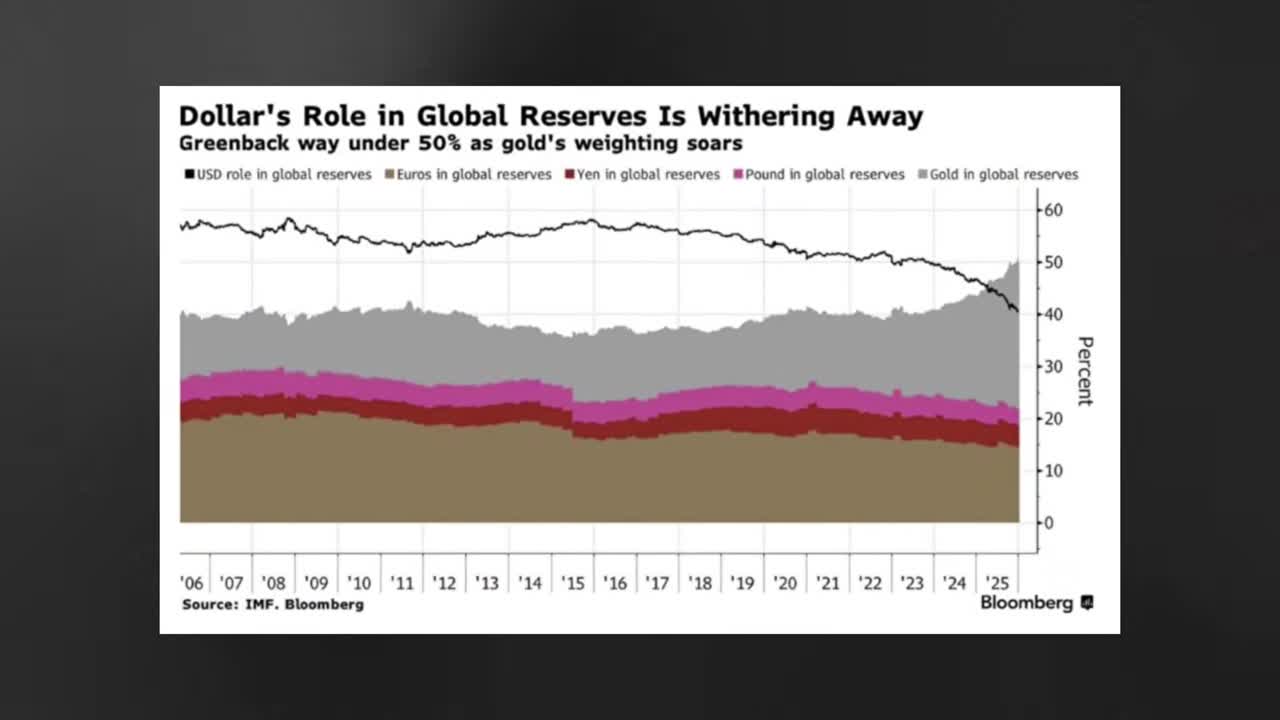
For the last two years, gold and silver have taken center stage. Central banks are choosing to buy gold instead of treasuries for reserves. This shift caused the US dollar to lose value. That combination of high demand from global banks and a weakening dollar caused gold and silver prices to soar.
The copper situation is entirely different.
Copper doesn’t need Wall Street or central banks buying it to drive up the price. There is a genuine shortage that no amount of money can fix quickly.
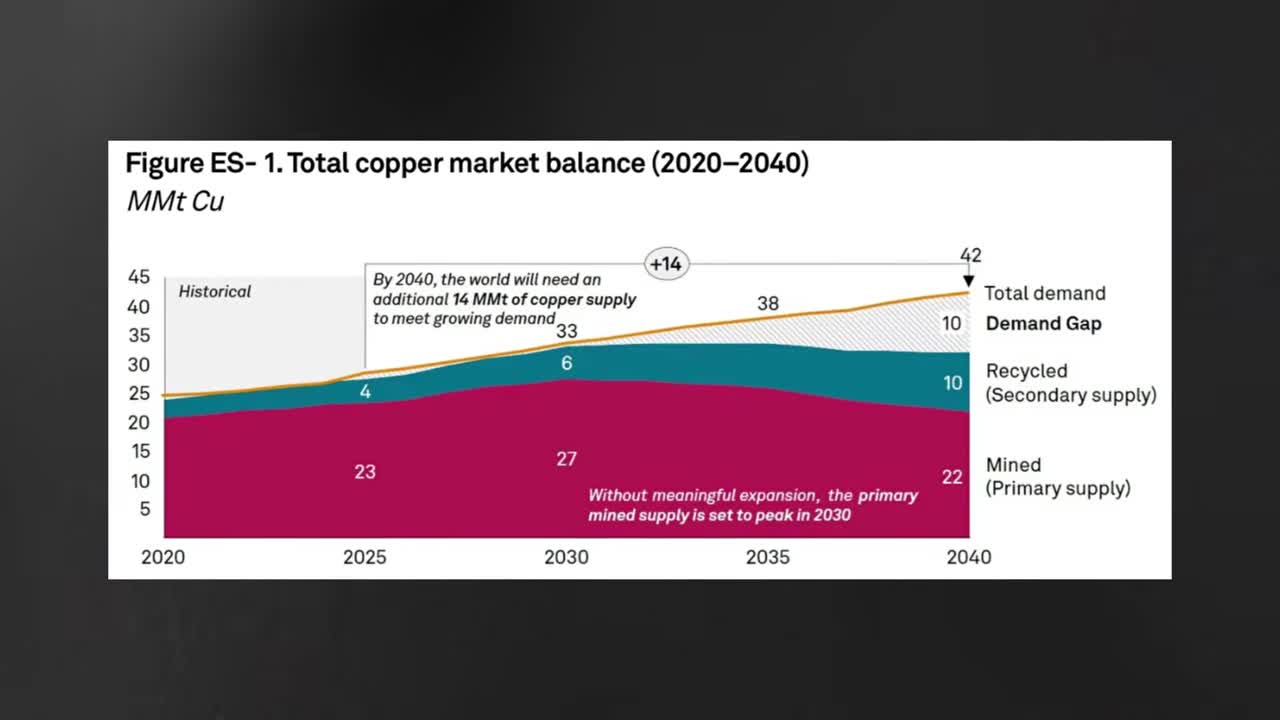
Copper is the metal that actually powers economic growth. It is the physical backbone of the future. Demand exceeds supply by 10 million tons annually. Each year, the world consumes 28 million tons of it, and that number is set to grow exponentially. We are staring down a projected 25% supply shortfall.
The price has nowhere to go but up.
Why We Can’t Just Mine More
If you studied economics in college, you learned a simple rule: higher prices should bring more supply.
Mining doesn’t work that way.
Today’s copper supply shortage was 15 years in the making. After the last commodity crash, miners cut their exploration budgets. They fired geologists. They focused on dividends instead of discovery.
Now we’re paying the price for that short-sightedness. You cannot simply flip a switch and create a copper mine. It takes 15 to 20 years to bring a major copper mine online — discovery, drilling, permits, infrastructure, power, roads.
Even if we started 10 massive projects today, they wouldn’t produce meaningful copper until the late 2030s.
Meanwhile, existing mines are aging. The easy copper is gone. Grades that were once 5% are now 0.5%. We are moving mountains for slivers of metal.
Big Tech Is Panicking
The shortage is so severe that the biggest technology companies on Earth are taking matters into their own hands.
Amazon Web Services inked a deal with Rio Tinto to resurrect a dead mine. They’re using experimental technology called bioleaching — bacteria and acid to extract copper from low-grade rock that miners used to just throw away.
Think about the implications of that.
Amazon is one of the most sophisticated logistics companies on Earth. If copper were easy to buy, they would just buy it.
Instead, they are bringing a mine back from the dead to lock up supply. Big tech sees this shortage coming, and they are racing to secure private supply lines before the rest of the world wakes up.
Get an entire year of live weekly mentoring sessions, my newsletter, indicators, bonus reports, tons more. Click the link and I’ll see you in the next live session.
Unstoppable Demand Drivers
If this supply squeeze were only about artificial intelligence, we might manage. But it’s not just AI. We are electrifying everything.
Industrial demand for copper is huge. Its high conductivity makes it crucial for everything from electrical wiring and power grids to electric vehicles and plumbing. Anything in your home that gets plugged in has copper in it.
The incoming demand metrics are staggering:
- Artificial Intelligence: A study from S&P Global estimates that AI alone could boost global copper demand by nearly 50% by 2040. Data centers require massive amounts of power and wiring.
- Electric Vehicles: An EV uses three to four times more copper than a gas car.
- Green Energy: Wind turbines require four to five times more copper per megawatt than coal.
- Grid Infrastructure: The US power grid is ancient. The country is investing over $400 billion to upgrade it. By 2030, grid demand alone could reach 15 million tons of copper.
AI, EVs, and grid rebuilds are all fighting over the same limited pile of red metal.
Copper is non-negotiable. You can skip a gold necklace. You can’t skip wiring your house or powering a data center. Demand is inelastic. Whatever it costs, people will pay.
How to Trade the Copper Super Cycle
Two options to take advantage of this opportunity.
1. The Direct Route: Copper Futures
I’m executing this trade using copper futures contracts. Copper trades on the Chicago Mercantile Exchange under the symbol HG.
One contract represents 25,000 pounds of copper. You’re buying future delivery of a commodity at current prices. Right now, copper trades at $6 a pound. That means one 25,000-pound contract controls $150,000 worth of copper.
Because of margin requirements, you don’t need $150,000 in cash to control that position. At Interactive Brokers, the margin requirement to hold one copper contract is $22,300. Technically, with $22,300, you can control $150,000 of copper. That’s 7-to-1 leverage.
I’m keeping my risk profile much tamer. I have about $150,000 in my account, and I’m holding two contracts total. That’s $300,000 worth of copper — roughly 2-to-1 leverage, which in the futures world is pretty tame. I purchased the July 2026 contract so I don’t have to worry about rolling it over each month. I will close out this trade long before it gets anywhere near the delivery date — I have no intention of taking delivery of 12.5 tons of copper.
2. The Direct Metal ETF
If futures aren’t your thing, there’s the United States Copper Fund, ticker CPER. This is basically a direct play on the metal that you can buy in any IRA or regular investment account. It holds a portfolio of copper futures contracts designed to track the SummerHaven Copper Index total return.
The Power of Operational Leverage
The other way to invest in this super cycle is through copper mining stocks. These offer a massive advantage through something called operational leverage.
Mining is an incredibly expensive business. Labor, machinery, management, administrative costs, the cost to maintain and replace old equipment, royalties, environmental compliance — it adds up fast. Mining companies track all of these expenses to determine their All-In Sustaining Cost (AISC).
Here’s the math using Barrick as an example. Their AISC is around $3 a pound. If it costs them $3 to get the metal out of the ground and they sell it for $6, profit is $3 per pound.
Now imagine copper goes up 50%, from $6 to $9.
When a company’s profits double, so does their stock. We saw this exact dynamic play out recently in gold. Gold went up 65% last year. Gold miners went up 153%.
My Top Three Copper Mining Stocks
If you want to capitalize on operational leverage, you need to own the companies pulling this metal out of the ground. Here are my three favorites right now:
1. Freeport-McMoRan (FCX)
The largest US copper producer, working the massive Mariny mine in Arizona. This is the big guy — the industrial leader and a staple for any commodities portfolio.
2. Southern Copper Corporation (SCCO)
Headquartered in Phoenix, Southern Copper has significant revenue and several new projects in the pipeline.
3. Hudbay Minerals (HBM)
A smaller Canadian operator whose stock has already tripled since last summer. This is one I actually recommended to my members in our Alpha Stock service.
On Monday, Hudbay announced it is acquiring Arizona Sonoran Copper for $1.5 billion in an all-stock transaction. This gives Hudbay 100% ownership of the Cactus Copper project. Combined with the existing Copper World project in Arizona, this deal creates one of the largest copper districts in North America — strengthening the company’s position as a leading American copper producer with long-life, low-cost assets without the geopolitical risk of mining in Africa.
Want Diversification?
The Copper Miners ETF, ticker COP, holds all three of these stocks along with 58 others. It gets the job done if you want broad exposure across the sector.
Amazon is a $2.5 trillion giant run by very smart people. They would not be getting their hands dirty in the copper mining business if they didn’t think it was absolutely necessary.
This is not speculation. It’s basic supply and demand. Demand is increasing rapidly. Supply isn’t. And the market has no choice but to reprice it.
Get an entire year of live weekly mentoring sessions, my newsletter, indicators, bonus reports, tons more. Click the link and I’ll see you in the next live session.
DISCLAIMER: Traders Agency does not offer financial advice. The information provided is for educational purposes only and should not be considered financial advice. Traders Agency is not responsible for any financial losses or consequences resulting from the use of the information provided. Trading carries inherent risks and may not be suitable for all individuals. You are advised to conduct your own research and seek personalized advice before making any investment decisions, recognizing the potential risks and rewards involved.