Today, that entire system is unraveling. The AI revolution is doing the exact opposite of what the experts predicted — destroying the white-collar knowledge economy and triggering the biggest blue-collar boom in modern history. As a result, there are several opptortunities arising, in this article I discuss what I see coming and two ETFs to own for the AI build out.
For the last 20 years, we were sold a very specific lie. Go to college, learn to code, work in finance, get into consulting. That was the guaranteed path to wealth. Now the tides could be changing.
Skilled blue-collar workers are about to be very rich thanks to the AI build out.
The White-Collar Collapse
The data is brutal if you hold a four-year degree.
The white-collar job market has hit its lowest level since the 2020 crisis. Job openings in professional services — lawyers, consultants, analysts, tech workers — have collapsed 60% from their 2022 peak. Professional and business services alone lost 57,000 jobs in January. Another 30,000 in February. Back-to-back losses in what were the highest-paid sectors in the country.
We now have more unemployed Americans than open white-collar jobs. Employers have all the leverage. Researchers are already warning this could become the great recession for white-collar work.
These are the Jobs Most at Risk from AI Right Now
Anthropic — the AI research company behind the Claude AI model, currently leaps and bounds ahead of the old ChatGPT — just performed an in-depth risk analysis of every job in America.
The jobs most at risk from AI right now? Computer programmers. Medical records specialists. Marketing specialists. Financial analysts. IT professionals.
The exact jobs people went to college to get.
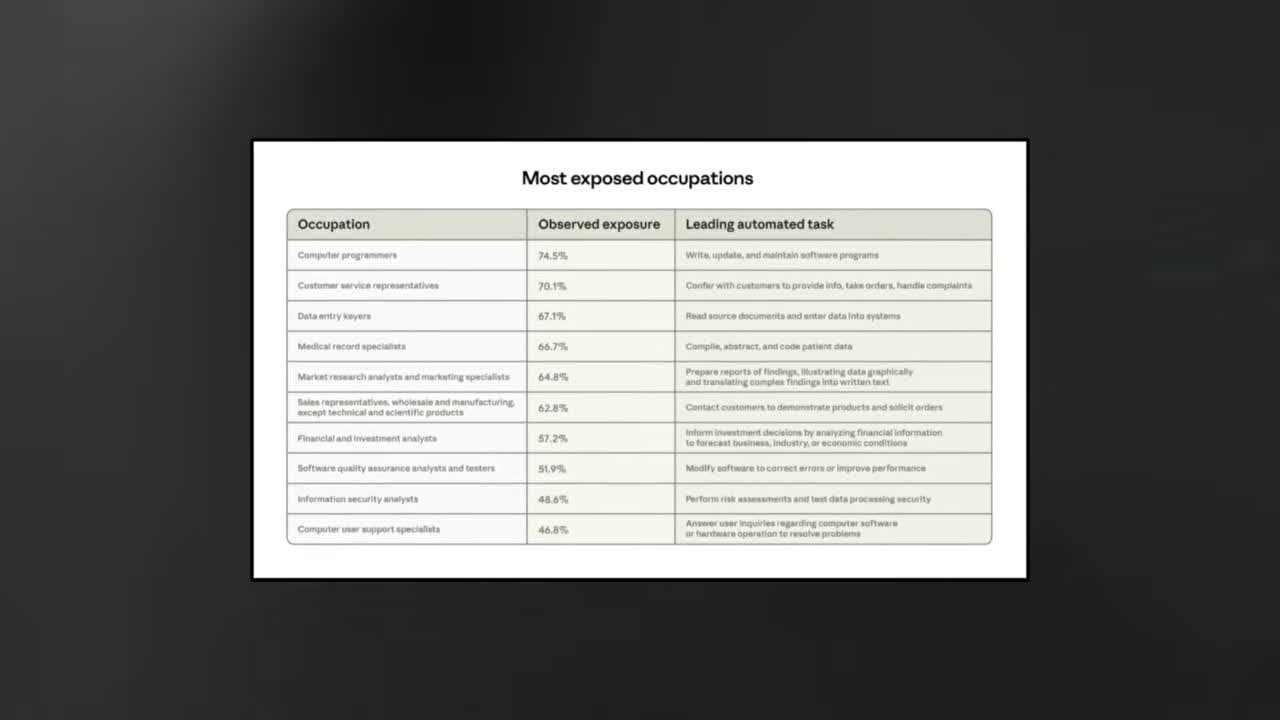
Anthropic’s study found that the workers most exposed to AI disruption fit a very specific profile: higher paid, white-collar, older, and highly educated.
Companies aren’t firing these workers yet. They’re simply not hiring them. Entry-level hiring in these high-risk professions has already dropped 14% just since ChatGPT launched. Reports suggest that number could soon grow to 30%.
College graduates are now four times more likely to be affected by AI disruption than other workers. The exact people told they had the safest careers are facing the biggest disruption.
Why Skilled Trades are Needed for the AI Build Out
While white-collar hiring collapses, something very different is happening in another part of the economy. Jobs are exploding in construction, infrastructure, and health care.
The AI boom everyone talks about is not just software. Software was stage one. Now they’re working to fix the bottlenecks that will allow AI to scale. That means physical infrastructure — massive data centers, expansion of the power grids, cooling systems, fiber networks, and chip fabrication plants.
These don’t build themselves. They require electricians, welders, pipe fitters, engineers, and heavy equipment operators — skilled trades, the kinds of workers that Silicon Valley never paid much attention to until now.
The skills in demand now — welding, electrical, HVAC, pipe fitting — are skills these guys do not have.
The $5,000 Compute Deficit
To understand the sheer scale of money flowing into physical infrastructure, look at the economics of the AI race itself.
Anthropic’s Claude Code subscription costs $200 per month. But internal analysis suggests the company may be spending as much as $5,000 in compute per month per user. They are losing thousands of dollars per customer just to stay in the AI race.

Why would they do that? Because whoever builds the dominant AI platform will control the next generation of technology. This is the exact playbook we saw with Uber and Lyft. Remember when rides cost six or seven bucks? Those companies were losing billions every year because their goal wasn’t to make money in those early years. It was to change the way we operate — get the public accustomed to, even dependent on, ride shares and grocery delivery. Once the VC dollars dried up and the companies went public, they raised prices dramatically. But only after they had captured the market.
Anthropic, OpenAI, and the others are in that exact capture phase today. To get every man, woman, child, and business dependent on AI, they are spending billions, tens and hundreds of billions on infrastructure — massive GPU clusters, the power to make it all work, new chip plants.
Every single one of these projects requires real-world labor. Not code. Not spreadsheets. Not PowerPoint slides. Real physical work.
Get an entire year of live weekly mentoring sessions, my newsletter, indicators, bonus reports, tons more. Click the link and I’ll see you in the next live session.
The Safest Jobs in America
According to the same AI research study, the safest jobs from AI automation all require a physical presence and a real-world skill.
The least exposed jobs include cooks, mechanics, lifeguards, bartenders, dishwashers, and all manual labor workers — your electricians, your plumbers. These jobs represent nearly 30% of the workforce.
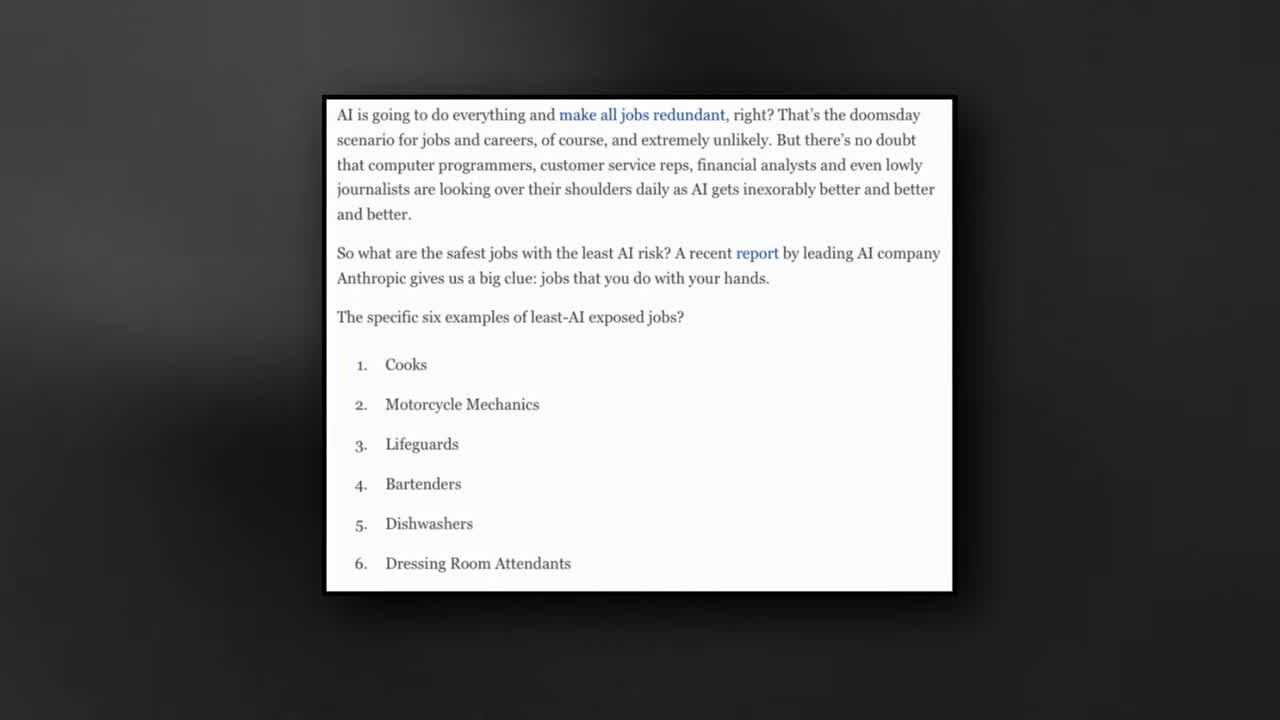
The value of skilled labor is about to rise dramatically. We are about to witness what may be the biggest economic shift of the century — a near-complete unraveling of the four-year degree culture built over the last 50 years.
My own nephew is a senior in high school trying to decide what to study. I told him to pick a career with no automation risk. He’s now leaning toward the fisheries — and I think that’s a pretty smart move.
For the first time in three generations, the men and women who physically build America will see the largest rewards.
The Infrastructure Supercycle
AI is simultaneously creating two totally different economic worlds. One where white-collar tasks are automated. Another where demand for skilled physical labor explodes.
The smartest investors will start asking a very different question. Not just which AI companies will win, but which industries will be required to build that AI economy.
Tech is on the way out. Real stuff is going to be the theme going forward.
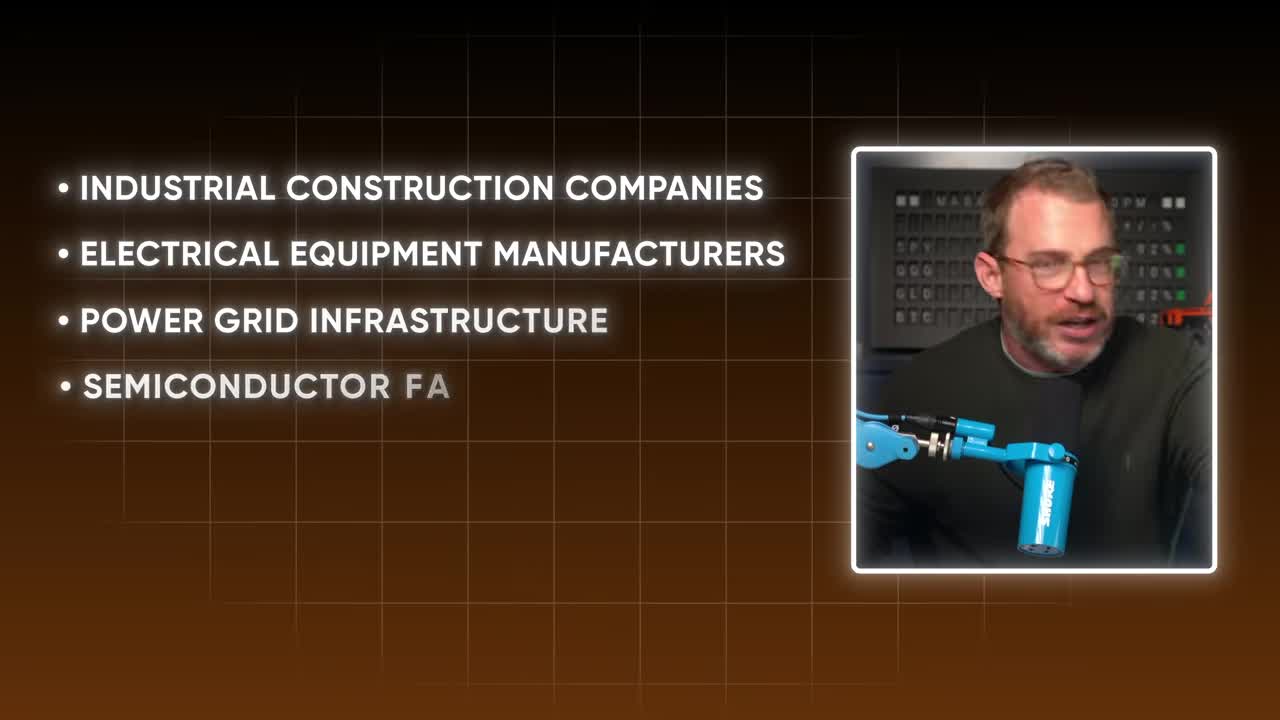
We’re talking about industrial construction companies, electrical equipment manufacturers, power grid infrastructure, semiconductor fab, data center builders, and copper and all the critical minerals. Many of these companies are in the early stages of a multi-year infrastructure boom.
Two ETFs to Own for the AI Buildout
There are literally hundreds of stocks likely to see big upside in the coming years. Everything from energy companies expanding the grid to firms building advanced cooling systems, nuclear reactors, and silicon photonics that use light to transmit data.
There is no clear, singular winner like we had with Nvidia dominating the chip industry. And you don’t need to pick one. You just want exposure to the whole industrial sector.
The easiest way to do that is with Exchange Traded Funds. You can buy these in any IRA or retirement account. ETFs are just the modern-day equivalent of mutual funds — a basket of stocks giving you exposure to an entire sector under a single ticker symbol.
The Infrastructure Play: PAVE
One fund I own is the Global X US Infrastructure Development Fund, ticker symbol PAVE.
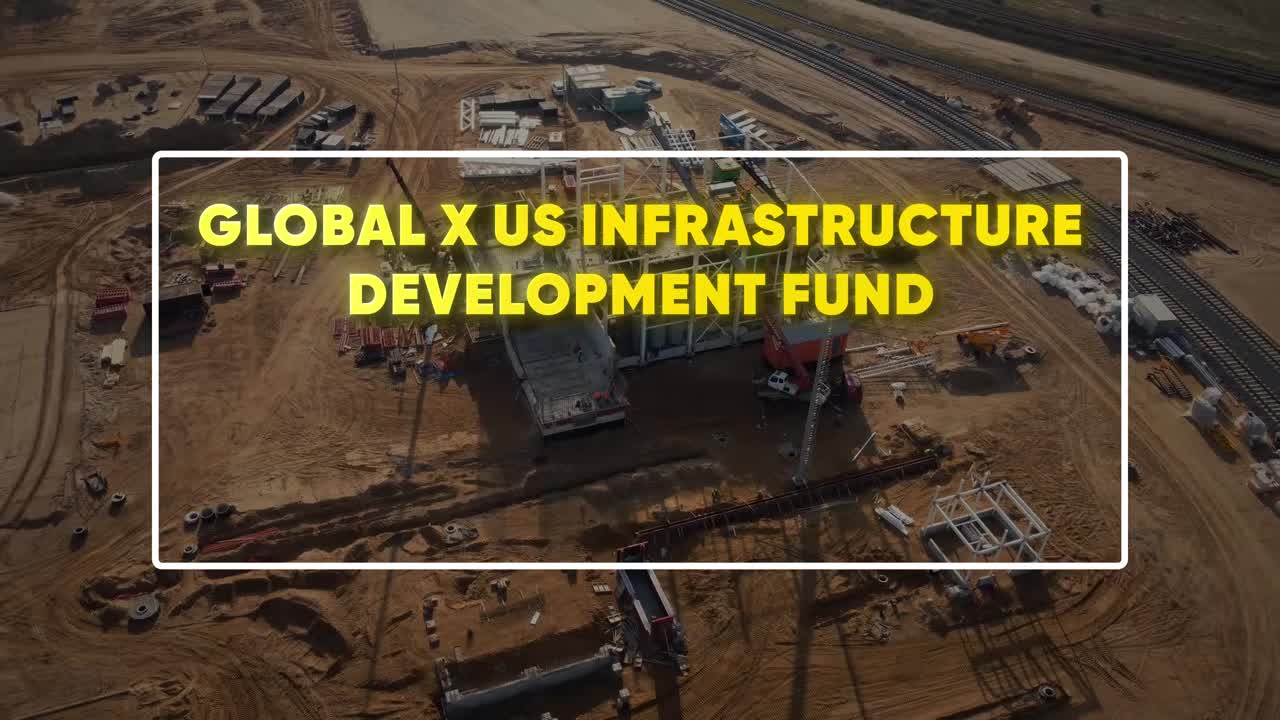
Its top holding is a company called Quanta Services — the leading specialty contractor in North America providing end-to-end infrastructure buildouts. They plan, design, install, maintain, and repair infrastructure for transmission lines, renewable energy facilities, and broadband.
The PAVE ETF also holds 100 other stocks that will also benefit from infrastructure expansion.
The Nuclear Power Play: NLR
Another fund I own in my retirement account is the VanEck Uranium and Nuclear ETF, ticker symbol NLR.
The reasoning is pretty simple. Right now, nuclear technology hasn’t reached the stage for widescale adoption — we’re in the demonstration and regulatory approval stage, but we’re getting close. And I simply do not see a way for AI to reach the scale it plans to without nuclear power. I expect to see an America run primarily on nuclear power over the next one to two decades.
I don’t know which company will come out on top. In all likelihood, it’ll be three or four of them. This ETF owns them all — broad, long-term exposure to the entire nuclear and uranium sector.
This world is changing faster than we realize. The college degree path that worked for decades is not going to look the same in the AI era.
If you have a son, a daughter, a grandchild, a niece, or a nephew trying to decide what to study — show them the data. For the first time in three generations, it will again be the men and women who build America that see the largest rewards. They will be the most valuable workers in the entire economy.
For investors, that shift could unlock some incredible opportunities — if you know where to look.
Get an entire year of live weekly mentoring sessions, my newsletter, indicators, bonus reports, tons more. Click the link and I’ll see you in the next live session.
DISCLAIMER: Traders Agency does not offer financial advice. The information provided is for educational purposes only and should not be considered financial advice. Traders Agency is not responsible for any financial losses or consequences resulting from the use of the information provided. Trading carries inherent risks and may not be suitable for all individuals. You are advised to conduct your own research and seek personalized advice before making any investment decisions, recognizing the potential risks and rewards involved.