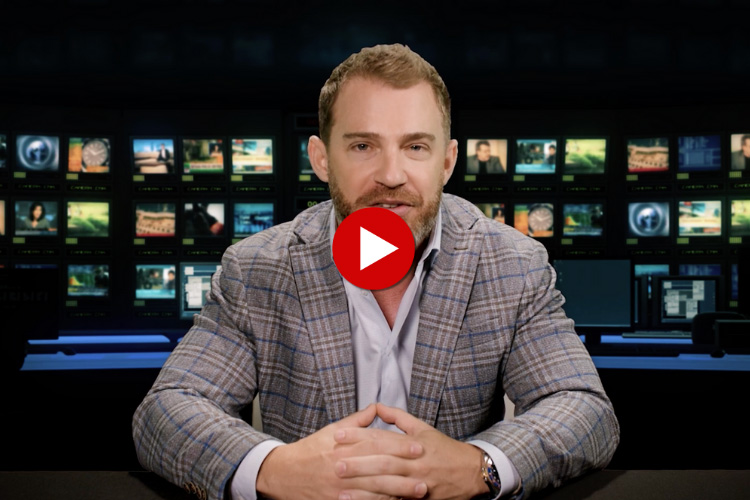
Hey, Ross here:
If you’re trying to position your portfolio for 2026, there’s a hard truth most investors don’t want to hear:
The AI trade is largely over.
That doesn’t mean artificial intelligence is disappearing. It means the market has already priced in much of the easy upside. Mega-cap AI stocks have delivered extraordinary gains, dominated headlines, and absorbed massive capital inflows. When a trade becomes that obvious, the risk-reward usually changes.
What comes next isn’t a crash — it’s a rotation.
And right now, the market is flashing signals that suggest money is quietly moving into an entirely different set of opportunities.
A Rare Market Signal: When Small Assets Beat Big Tech
One of the clearest signs of an early market rotation is when obscure, off-the-radar assets start outperforming the most popular names.
That’s exactly what we’re seeing now.
A small bank near the Arctic Circle — Bank of Greenland — surged roughly 40% in a single week. That kind of move doesn’t happen by accident. It’s not driven by social media hype or retail speculation.
It’s driven by early institutional positioning.
When small, overlooked assets suddenly outperform global tech giants, it often signals that capital is rotating before the broader market narrative changes.
Why Geopolitics Is Driving the Next Market Rotation
This isn’t a meme trade. It’s a geopolitical trade.
Markets are beginning to price in:
- strategic territory
- energy reserves
- shipping routes
- critical minerals
- national security priorities
When regions like the Arctic become strategically important, even small financial institutions located there gain relevance. The takeaway isn’t about Greenland itself — it’s about what money is prioritizing now.
And that leads directly to the biggest macro issue investors face today.
The Dollar Problem Most Investors Are Ignoring
U.S. policy is currently built on a contradiction:
- Rising trade tensions and tariffs
- Expanding government spending and deficits
- Continuous liquidity injections into the system
In plain English: more money is being created while costs are rising.
Historically, when debt expands faster than productivity, one outcome tends to follow — a gradual loss of purchasing power in the currency.
That raises a critical question for investors:
Where does smart money go before currency weakness shows up in everyday prices?
Why Money Rotates Into Hard Assets During Global Stress
History is consistent on this point.
When geopolitical risk rises and currencies come under pressure, capital does not hide in cash. Cash loses value when money is printed aggressively.
Instead, money rotates into hard assets — things that exist in the real world and can’t be created at will.
Historically, the biggest beneficiaries during global stress periods have been:
- Gold
- Energy
- Industrial metals
- Infrastructure-related assets
This isn’t ideology. It’s pattern recognition.
If you want to stay ahead of market rotations instead of reacting after they happen, now is the time to reassess your positioning.
Become a member of Stealth Trades to get access to my live classes every Monday and Thursday.
The Next Expansion Cycle Is Physical, Not Digital
The next major investment cycle isn’t just about software.
It’s about what supports technology at scale:
- electricity
- energy infrastructure
- metals
- supply chains
- defense and industrial capacity
AI data centers don’t run on hype — they run on power.
Power requires fuel.
Fuel requires resources.
That’s why the next phase of market leadership may come from sectors many investors still consider “boring.”
This Is Rotation — Not a Market Crash
A common mistake is assuming that money leaving one sector means it’s leaving the market entirely.
That’s not what rotation looks like.
Rotation means:
- capital exits expensive, crowded growth trades
- capital enters sturdier, cash-generating sectors
- the market continues moving — just in a different direction
In other words, money doesn’t leave the casino — it changes tables.
How to Position for 2026 Instead of Panicking
This environment doesn’t call for fear. It calls for repositioning.
1. Focus on Hard Assets
Gold has shifted from speculation to insurance for many investors. Industrial metals like copper, aluminum, lithium, and steel benefit directly from electrification, infrastructure, and defense spending.
2. Diversify Beyond U.S. Stocks
U.S. equities are historically expensive relative to other global markets. International exposure can provide both valuation relief and currency diversification if the dollar weakens.
3. Prioritize Cash Flow
Dividend-paying companies and income-producing assets can reduce volatility stress and reward patience during uncertain periods.
4. Trim the Most Crowded Trades
Mega-cap tech has already delivered extraordinary returns. Rebalancing doesn’t mean abandoning technology — it means managing concentration risk intelligently.
The Bigger Picture: Let Volatility Work for You
Periods of uncertainty feel chaotic — but they often create the best long-term opportunities.
Chaotic markets don’t punish discipline.
They punish leverage, impatience, and overconfidence.
Investors who focus on:
- real assets
- cash flow
- structural trends
- long-term positioning
are often the ones who emerge stronger on the other side.
Final Thoughts: What Replaces the AI Trade
If the AI trade was about imagination, the next phase is about execution.
Not just code — but:
- power
- materials
- infrastructure
- energy security
- real-world constraints
AI isn’t disappearing. But the market’s next leaders may be the companies that control the physical bottlenecks behind the digital economy.
If you want a deeper analysis on where capital is rotating next — and how to position before the crowd — become a member ofStealth Trades Gold. Where I provide updates like these every Monday and Thursday in my live classes.
DISCLAIMER: Traders Agency does not offer financial advice. The information provided is for educational purposes only and should not be considered financial advice. Traders Agency is not responsible for any financial losses or consequences resulting from the use of the information provided. Trading carries inherent risks and may not be suitable for all individuals. You are advised to conduct your own research and seek personalized advice before making any investment decisions, recognizing the potential risks and rewards involved.