Dario Amodei is the CEO of Anthropic, the company behind the popular Claude AI model. He just laid out the single biggest financial risk in AI right now.
It's not whether the technology works. He's pretty confident it will.
The risk is whether the money comes back fast enough to justify what's being spent.
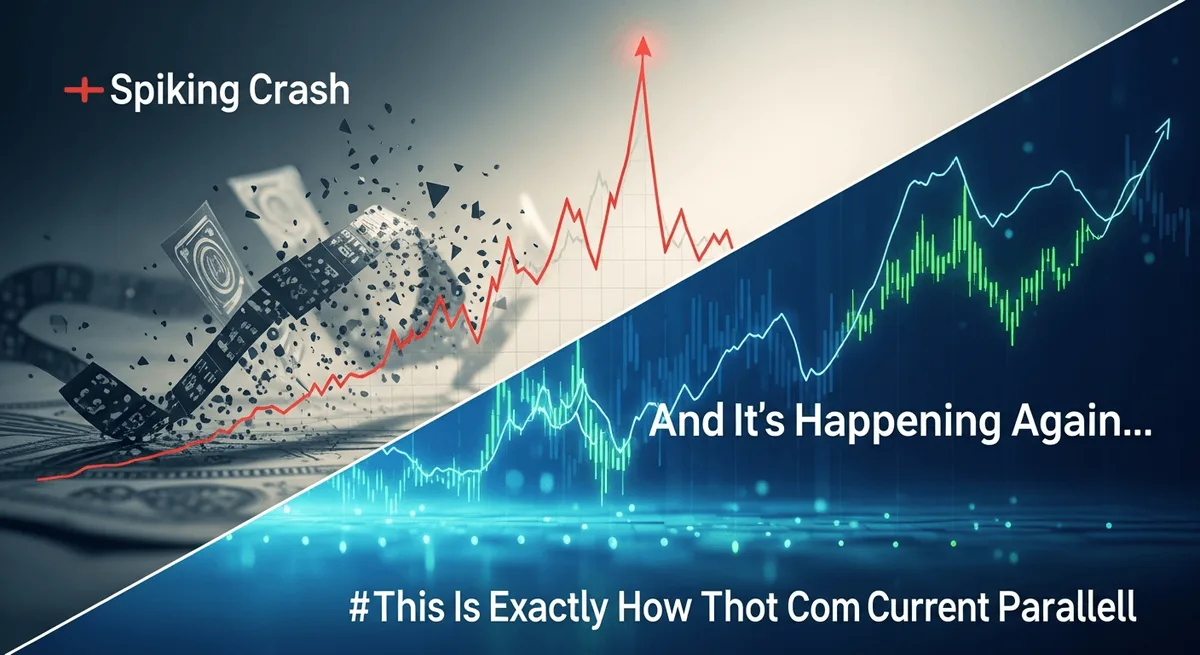
We're watching a massive disconnect between infrastructure costs and actual revenue. This is the same dynamic that wiped out dot-com companies in the early 2000s. They built the infrastructure for demand that eventually came — but it came too late to save many of the companies that built it.
Today's stock prices — the valuations of these hot young AI companies — are out of touch with reality. They reflect years of future growth that has not yet happened.
And if you look at the math, you'll see why a major correction is inevitable.
The Billion-Dollar Time Lag
The fundamental problem comes down to construction timelines versus revenue timelines.
Building AI data centers costs tens of billions of dollars. It takes one to two years to finish them. This forces CEOs to make impossible decisions right now — deciding how much compute to buy for infrastructure that won't even be ready until 2027.
They're placing a massive bet today on what revenue will look like two years from now.
The growth rates are seductive. Anthropic has been growing at roughly 10x per year:
- Early 2025: About $1 billion
- End of 2025: $9 billion
- February 2026: $14 billion (annualized)
That growth is insane. But you can't just assume it keeps going at that pace forever.
If revenue keeps growing at 10x a year, it would hit $100 billion by the end of 2026 and $1 trillion by the end of 2027.
Being off by just 20% on what you've committed that capital is fatal. If the growth rate slows to 5x instead of 10x, or if the timeline shifts by just one year, the result is the same. You're basically done.
Technology vs. Revenue
Even if AI becomes genius-level in the lab, turning that into actual revenue — into real dollars — takes time.
Amodei uses the example of disease to explain this lag. AI might discover cures for everything, but you still have to manufacture the drug. You still have to run clinical trials. Get regulatory approval. Distribute it globally.
COVID vaccines took a year and a half to reach everyone, even with the entire world in a panic. Polio has had a vaccine for 50 years and still hasn't been fully eradicated.
The technology being ready and the revenue actually showing up are two very different timelines.
So what does Amodei do? He deliberately under-buys. He commits to hundreds of billions in infrastructure, not trillions. He accepts the risk that if demand explodes, he won't have enough capacity.
But he's smart. He'd rather leave money on the table than bet the entire company on a growth curve that might be off by a year.
The "YOLO" Spending Problem
But not every tech company is showing the same restraint.
Some of the other AI companies are just throwing money around without doing the math — committing a hundred billion here and a hundred billion there without actually modeling what happens if revenue comes in below expectations.
Amodei calls it "yoloing." A term us traders are familiar with.
The gap between what's being spent and what's being earned is massive. And therein lies the problem.
Get an entire year of live weekly mentoring sessions, my newsletter, indicators, bonus reports, tons more. Click the link and I'll see you in the next live session.
Join my Black Ops Trading ClubThe Netflix Valuation Reality Check
To understand how absurd current valuations are, we need to look at paying users.
Free users don't pay the bills. Companies like to throw around numbers like 700 million or 800 million users, but if you give something away for free, everyone's going to use it. You have to look at how many are actually paying.
The Current User Base
Anthropic's Claude model has around 30 million monthly active users. ChatGPT has about 35 million paying subscribers.
The price point for these services runs in the $8 to $20 a month range. ChatGPT is kind of in the $17 range. They do have a big plan for pro users, but that's more the exception than the rule.
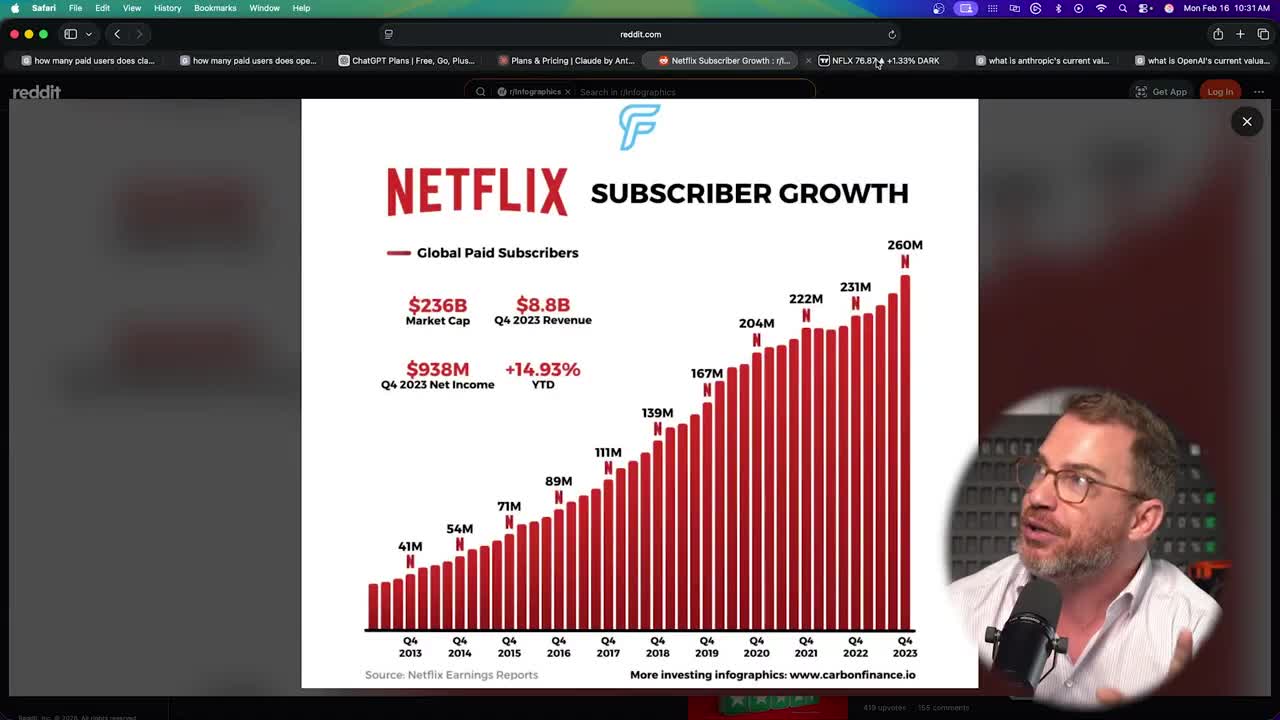
The most accurate precedent for this business model is Netflix. They also have a product in that $10 to $20 a month range. They also have a massive market of billions of people.
The Netflix Trajectory
Around 10 years ago, Netflix had around 30 to 40 million paid subscribers — roughly where the AI giants are today. It's taken them a decade to reach 260 million subscribers.
Today, with 260 million paid subscribers, Netflix has a market capitalization of $324 billion. They're down a little bit, but even at their peak they were maybe $500 billion.
The AI Bubble Math
Now look at where the market is pricing AI companies that are way back at the beginning of that growth curve:
- Netflix: Currently worth $325 billion (with 260 million subs)
- Anthropic: Already worth $380 billion (with ~30 million users)
- OpenAI: Valued at $500 billion, considering going public at $750 to $800 billion
What they're doing is pricing these companies today based on where they think they're going to be 10 years down the road.
Buying these stocks at these valuations would be like buying a house and paying what the realtor says it's going to be worth 10 years from now.
Why OpenAI Is at Risk of Bankruptcy
Many of these companies are expected to go public this year. These IPOs are massive — they'll be some of the biggest in history.
But investors who buy these stocks are all but guaranteed to suffer huge losses. Twenty years from now? Sure, they'll probably be up. But two years from now? It doesn't look good.
Some of these companies will go bankrupt. I'd put OpenAI at the very top of that list if I were speculating.
The math just isn't mathing.
He thinks his company's too big to fail. He's wrong. It will fail if the revenue doesn't catch up to the spending.
Others will end up being the best investments of all time, but only when the price makes sense.
The Cisco Warning
We've seen this movie before.
Cisco was one of the dot-com darlings of the late 1990s. Those who got caught up in the hype — those who bought at the peak of the bubble like we're seeing now in AI — are just getting back to breakeven 26 years later.
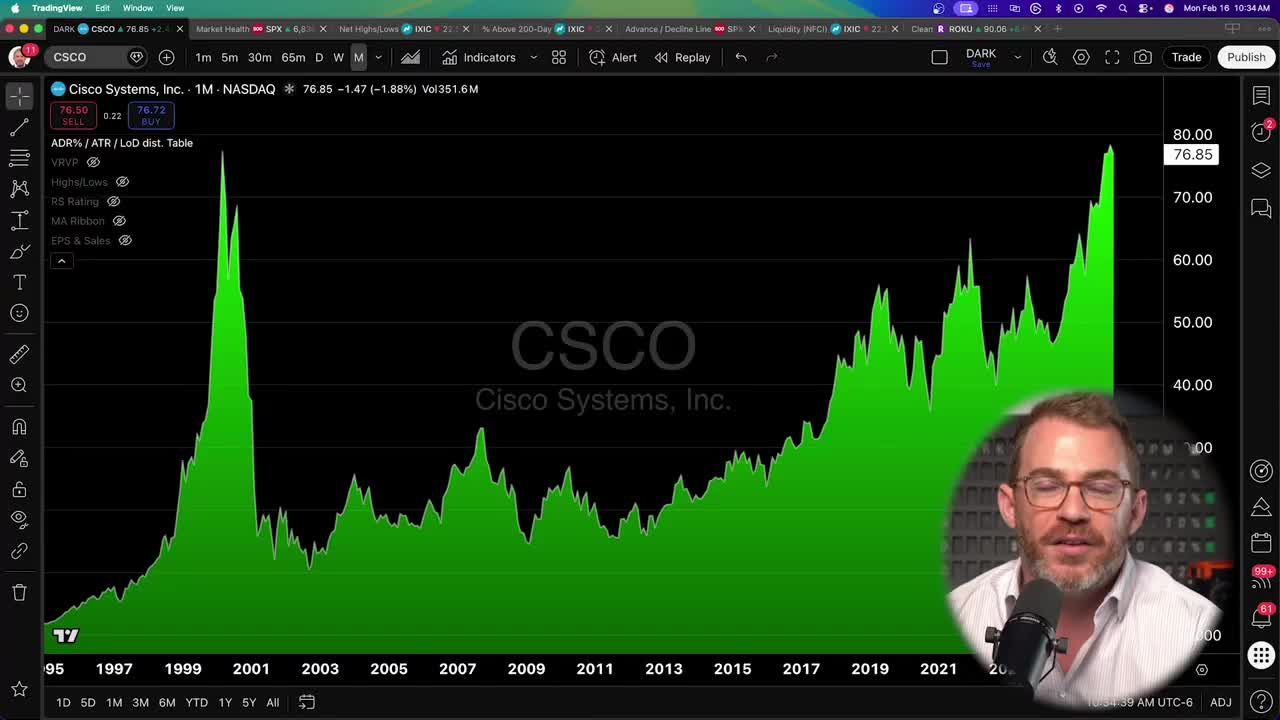
You're going to see a correction first. When that happens, buy like you mean it. Those people who bought Cisco a year or two after the crash were up hundreds of percent.
But you have to wait for the price to make sense.
How to Protect Your Portfolio Now
In the meantime, my advice is to avoid too much exposure to AI in your investment accounts.
The problem lies in how traditional index funds are structured. They're market cap weighted. That means the big stocks like Nvidia and Microsoft get a disproportionately large slice of your investment dollars.
But you can avoid this by holding an equally weighted fund like RSP.
In that fund, all 500 stocks in the S&P 500 are given the same number of dollars. So you won't be punished if a few of the big names go down.
A comparison of the two over the last 90 days shows the difference. RSP, the equal-weighted fund, has continued to make new highs even though Microsoft, Amazon, and Apple are in freefall.
This isn't speculation. It's pattern recognition.
Final Thoughts
We're witnessing a classic disconnect between capital expenditure and return on investment. The gap between AI spending and AI revenue is not sustainable.
History tells us that infrastructure builds often lead to crashes before they lead to long-term prosperity. The dot-com crash didn't mean the internet was a failure — it meant the financial models were broken.
The same is true for AI. The technology is real, but the valuations are fake.
Don't chase the massive IPOs. Don't expose your retirement to market-cap weighted risk that relies entirely on Big Tech perfection. Position yourself in equal-weight funds and wait for the inevitable correction to offer you a better entry point.
Get an entire year of live weekly mentoring sessions, my newsletter, indicators, bonus reports, tons more. Click the link and I'll see you in the next live session.
Join my Black Ops Trading ClubDISCLAIMER: Traders Agency does not offer financial advice. The information provided is for educational purposes only and should not be considered financial advice. Traders Agency is not responsible for any financial losses or consequences resulting from the use of the information provided. Trading carries inherent risks and may not be suitable for all individuals. You are advised to conduct your own research and seek personalized advice before making any investment decisions, recognizing the potential risks and rewards involved.
See more from Traders Agency on Google
Make us a preferred source and our market analysis will appear more prominently in your Google Search, Top Stories, and AI results.
Add to Preferred Sources