Treasury Secretary Scott Bessent said Wednesday that the United States and China have agreed to extend their bilateral trade truce by two months, pushing the expiration date from Nov. 10 to Jan. 10, as Chinese President Xi Jinping landed in Washington for a multiday state visit, according to NBC News and CNBC.
What Bessent Announced
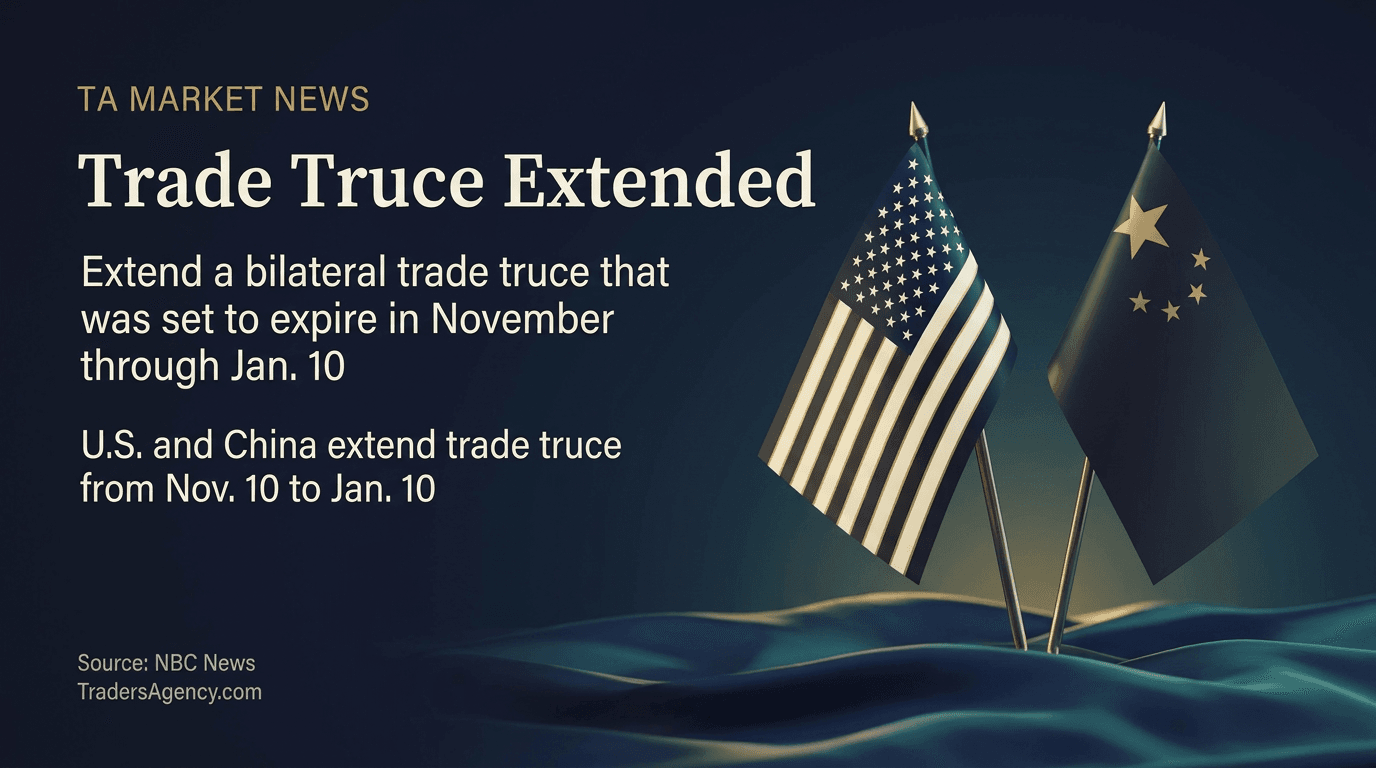
Speaking on Fox News Channel, Bessent referred to the arrangement as the "Busan Agreement," the economic détente the two sides struck when Xi and President Trump met in South Korea last October, according to NBC News. "We will extend what we call the 'Busan Agreement' — the economic détente between the two countries that was scheduled to end on Nov. 10 — that is going to be extended until Jan. 10," Bessent said, per NBC News.
The original truce was a one-year deal, according to CNBC, and its core terms are what the extension preserves: lower tariffs than would otherwise apply, and limits on China's export controls over rare earths, which CNBC noted are critical components of semiconductors, household goods and defense products. Seeking Alpha similarly reported the extension buys negotiators additional time to pursue a broader agreement.
The announcement came after an unscheduled meeting in Washington between Bessent and Chinese Vice Premier He Lifeng, and landed just minutes after Xi's plane touched down for the visit, NBC News reported.
Deliverables Bessent Says China Still Owes
Bessent said Wednesday that some Chinese commitments under the deal have fallen short. "There are some deliverables that have not been perfect on the Chinese side, so we also want to see, now that we've sat down and told them our expectations, if over the coming months they can be more fulsome in enacting the agreement," he said, according to NBC News. CNBC likewise reported that Bessent said Beijing needs to fulfill more deliverables, though neither outlet specified which commitments remain outstanding.
Bessent also indicated further announcements could come from the Chinese delegation in coming days, including agreements to buy more American agricultural products and potential deals in financial services, NBC News reported. Separately, U.S. Trade Representative Jamieson Greer told reporters the two sides could agree on lists of goods eligible for lower tariffs under Trump's "Board of Trade" initiative — consumer goods and low-tech items from China, and energy products, agricultural goods and potentially medical devices from the U.S., according to NBC News.
Bessent said it is possible a larger economic package gets agreed by January, but that the two sides could also simply "roll the current deal" and extend it further, NBC News reported.
Beijing's Response
China had not publicly confirmed the extension at the time of Bessent's remarks. China's embassy in Washington had no immediate comment, according to Reuters via ThePrint, and Chinese state media did not immediately note Bessent's comments, per CNBC.
Separately, China's Commerce Ministry confirmed Thursday that its senior trade negotiators had held their first talks with the United States on artificial intelligence, following an earlier New York meeting between He Lifeng and Bessent, according to CNBC. CNBC also reported that Bessent had said earlier in the week that the two sides discussed establishing an AI dialogue and a mechanism to alert each other about AI risks, and NBC News reported that Bessent and Greer had announced a proposal to exchange alerts about AI-related hacking incidents, particularly those touching national security.
The Trump-Xi Summit
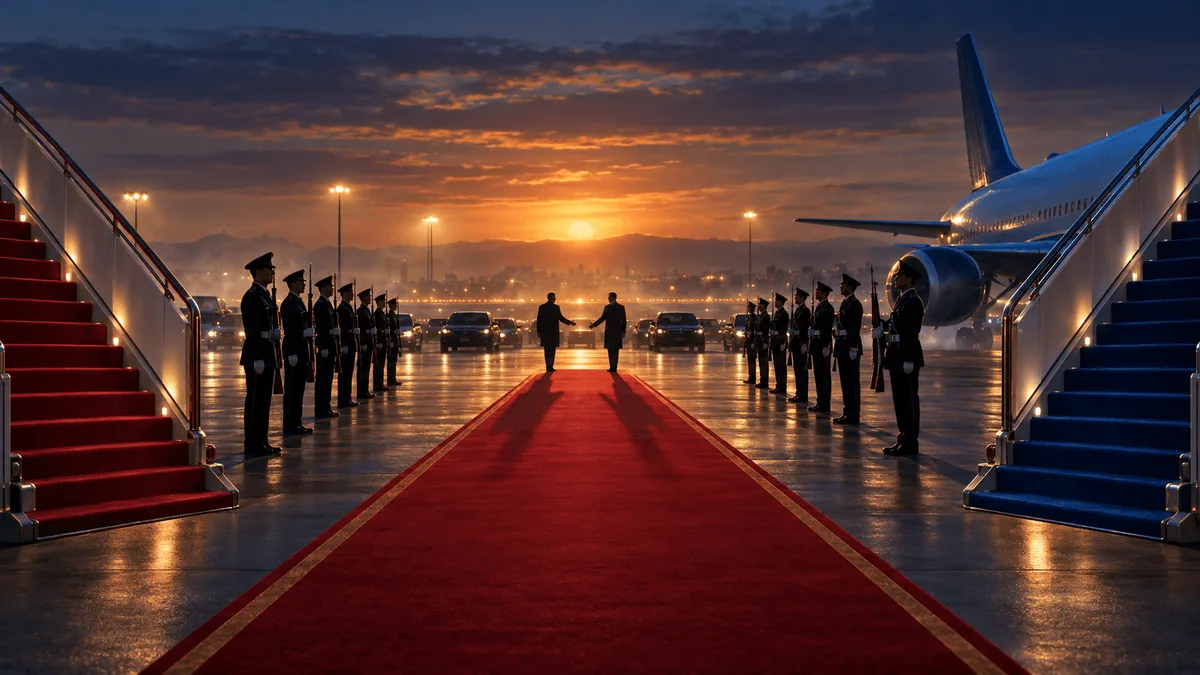
Trump personally greeted Xi at Joint Base Andrews, a gesture C-SPAN said marked the first time in 11 years a U.S. president has welcomed a foreign leader there, with the prior instance being Pope Francis's 2015 visit during the Obama administration, per ThePrint. Xi, in an official arrival readout, said he was confident the visit would produce "fruitful results" and that the two countries should be partners rather than rivals, working toward a stable relationship that manages competition and differences, CNBC reported. The readout did not mention tariffs, rare earths or artificial intelligence, according to CNBC.
Reuters, via ThePrint, reported that Xi's trip was not expected to deliver major breakthroughs, with deep differences persisting over export controls on rare-earth minerals and computer chips, China's ties with Iran, and U.S. support for Taiwan. Talks scheduled for Thursday could nonetheless yield sector-specific tariff reductions, cooperation on drug trafficking and expanded military-to-military dialogue, with Trump also expected to seek the release of some Americans detained in China, ThePrint reported. Instead of a joint statement, the two governments are expected to issue separate announcements tailored to their own domestic audiences, according to ThePrint.
A Thursday state dinner is expected to include Apple's Tim Cook, Nvidia's Jensen Huang and OpenAI's Sam Altman, though no Chinese tech executives are expected to attend, per ThePrint and CNBC. CNBC also reported that another Trump-Xi meeting could occur later this year, potentially around an APEC summit in Shenzhen in November or a G20 meeting in Miami in December.
Analysts and Business Groups React
Ahead of the summit, many observers had expected a longer rollover of six months or more, making the two-month extension shorter than anticipated, CNBC reported. Scott Kennedy of the Center for Strategic and International Studies told CNBC the brief window "suggests to me the U.S. is unsatisfied with China's offers and wants to keep the heat on, with a bonus being it is more likely that Xi goes to the G20 in Miami." That is Kennedy's interpretation of the timing, as reported by CNBC, rather than a confirmed U.S. government rationale.
Jens Eskelund, president of the European Chamber of Commerce in China, told CNBC that simply extending the truce does not resolve practical problems companies face, including the absence of a standardized process for applying for rare-earth export licenses. Reuters, via ThePrint, separately noted that the 2025 tariff war had produced triple-digit levies between the two economies, and that even a limited deal could help calm global markets that were shaken by that dispute.
Bottom Line
The confirmed fact is narrow: Bessent says the truce that was due to lapse Nov. 10 now runs to Jan. 10, preserving the reduced-tariff, rare-earth-access framework struck in Busan last October. What remains unresolved and attributed rather than confirmed is whether China meets the "deliverables" Bessent flagged, whether Beijing itself will characterize the extension the same way, and whether this week's Trump-Xi meetings produce the broader package Bessent said could still arrive by January, or simply another rollover of the status quo.
DISCLAIMER: Traders Agency does not offer financial advice. The information provided is for educational purposes only and should not be considered financial advice. Traders Agency is not responsible for any financial losses or consequences resulting from the use of the information provided. Trading carries inherent risks and may not be suitable for all individuals. You are advised to conduct your own research and seek personalized advice before making any investment decisions, recognizing the potential risks and rewards involved.
- CNBC Top News: U.S.-China trade truce extended, Bessent says, as Xi begins visit · accessed Sep 24, 2026
- Seeking Alpha Market News: US, China agree to extend trade truce by two months to Jan. 10, Bessent says · accessed Sep 24, 2026
- CNBC Top News: China confirms first AI talks with U.S. have taken place, hints at trade truce extension · accessed Sep 24, 2026
- Reuters via ThePrint: US says China trade truce extended as Trump welcomes Xi · accessed Sep 24, 2026
- NBC News: U.S., China agree to extend trade truce through Jan. 10 · accessed Sep 24, 2026
See more from Traders Agency on Google
Make us a preferred source and our market analysis will appear more prominently in your Google Search, Top Stories, and AI results.
Add to Preferred Sources