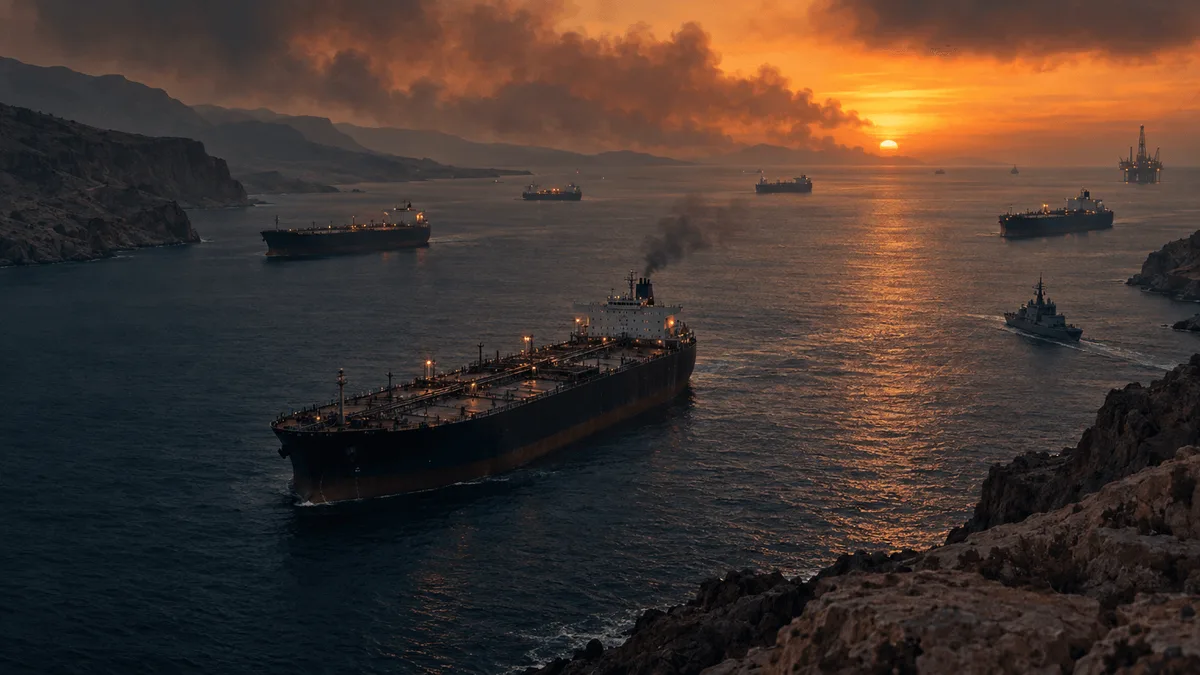
Brent crude futures rose 76 cents, or 0.73%, to $105.48 a barrel by 2304 GMT, while U.S. West Texas Intermediate crude was at $92.44 a barrel, up 59 cents, or 0.64%, according to Reuters. Reuters reported the gains came as Middle East conflict and tanker attacks persisted, with more attacks on tankers sailing through the Strait of Hormuz reported so far this month alongside Houthi strikes on Saudi Arabia.
Tanker Attacks Add to Strait of Hormuz Risk
Reuters reported that more attacks on tankers sailing through the Strait of Hormuz have been reported so far this month, threatening to dampen a recovery in Middle East crude exports seen in September. The report did not identify the vessels involved, their flags, cargoes or the extent of any damage, and the available reporting did not include a claim of responsibility for the tanker attacks specifically.
Houthi Strikes on Riyadh Escalate the Conflict
Separately, the Houthis claimed responsibility for a Saturday strike on Riyadh's international airport that killed 13 people and wounded more than 300, Reuters reported, while Saudi authorities reported that people were injured in a new attack on the airport on Sunday. Reuters described the Saudi-Houthi fighting as a spillover from the wider war with Iran that the United States and Israel launched in February; the available reporting did not attribute the Strait of Hormuz tanker attacks to any particular party.
Washington Weighs a Larger Role as a Ukraine Energy Truce Emerges
U.S. President Donald Trump said on Saturday that the United States was considering joining Saudi strikes against the Houthis, according to Reuters. In an unexpected shift on the energy front elsewhere, Trump also announced on Sunday that Ukraine and Russia had agreed to an energy ceasefire, following a Friday announcement of a diesel supply deal with Russia. Reuters did not detail how these developments might offset or interact with the Gulf-driven price pressure.
Goldman Sachs Lifts Its Brent Forecast
Goldman Sachs raised its December Brent price forecast to $90 a barrel from $85 previously, analysts led by Daan Struyven said in a note cited by Reuters. The analysts estimated a risk premium of just over $20 a barrel in current prices, writing: "We maintain our base case that continued adaptation of Mideast supply will eventually reduce crude oil prices, while potential renewed escalation still poses significant net upside risk."
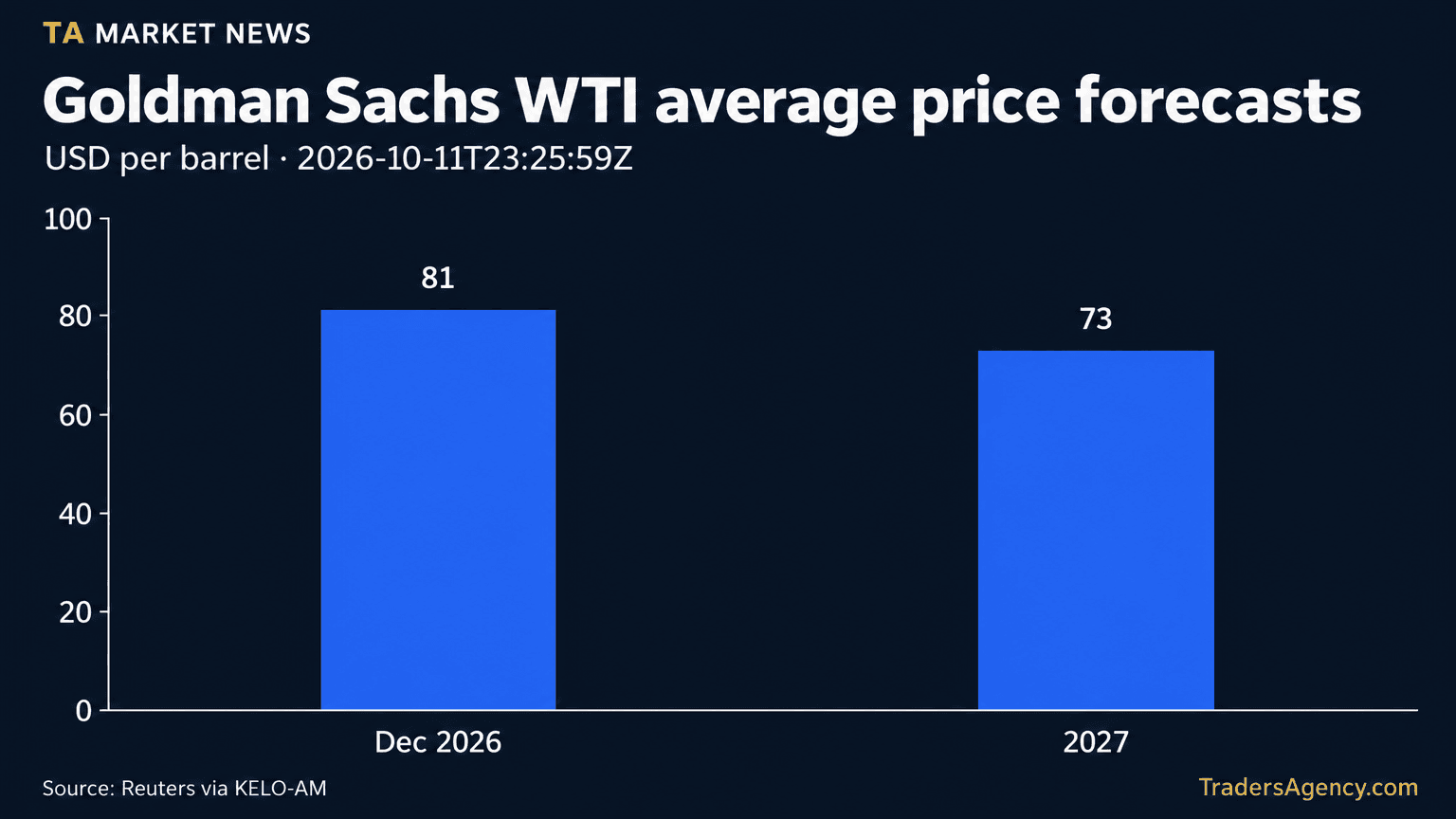
Reuters also cited separate Goldman Sachs WTI average price forecasts showing an expected $81 a barrel for December 2026 and $73 a barrel for 2027. By our calculation, that is a gap of $8 a barrel, or roughly 10.96% (81 minus 73, divided by 73, multiplied by 100). This is a straightforward arithmetic comparison of Goldman's own labeled forecast figures as reported, not an independent projection or a signal of where prices will actually land.
Inflation and Policy Concerns in the Background
Seeking Alpha reported that prolonged high oil prices could raise transportation and manufacturing costs, squeeze profit margins, make it harder for central banks to contain inflation, and potentially lead to tighter monetary policy. This is a forward-looking characterization attributed to that outlet rather than a confirmed economic outcome, and it depends on how long elevated prices persist.
Gulf of Mexico Storm Recovery Adds a Separate Supply Thread
In an unrelated development, Reuters reported that Shell, Chevron and BP were working to redeploy personnel and restore platform production in the Gulf of Mexico after Hurricane Isaias made landfall early on Saturday. The wire service did not quantify volumes affected or provide a restart timeline.
Bottom Line
Brent's move above $105 came alongside reported Strait of Hormuz tanker attacks, a deadly Houthi strike on Riyadh's airport and President Trump's statement that Washington was considering joining Saudi strikes on the Houthis, according to Reuters. Details on the tankers themselves, including names, ownership and the scale of any damage, along with any claim of responsibility for those particular attacks, were not part of the available reporting. One reading of Goldman Sachs' increase in its December Brent forecast to $90 and its estimated risk premium of just over $20 a barrel is that the bank attributes a meaningful share of the current price to geopolitical risk; that is interpretation of the figures above, and the bank's stated base case is that continued adaptation of Mideast supply will eventually reduce crude prices.
DISCLAIMER: Traders Agency does not offer financial advice. The information provided is for educational purposes only and should not be considered financial advice. Traders Agency is not responsible for any financial losses or consequences resulting from the use of the information provided. Trading carries inherent risks and may not be suitable for all individuals. You are advised to conduct your own research and seek personalized advice before making any investment decisions, recognizing the potential risks and rewards involved.
- Seeking Alpha Market News: Oil tops $105 as Houthi attacks on Saudi Arabia raise inflation fears · accessed Oct 12, 2026
- Reuters via KELO-AM: Oil climbs as Mideast conflict, tanker attacks persist · accessed Oct 12, 2026
See more from Traders Agency on Google
Make us a preferred source and our market analysis will appear more prominently in your Google Search, Top Stories, and AI results.
Add to Preferred Sources