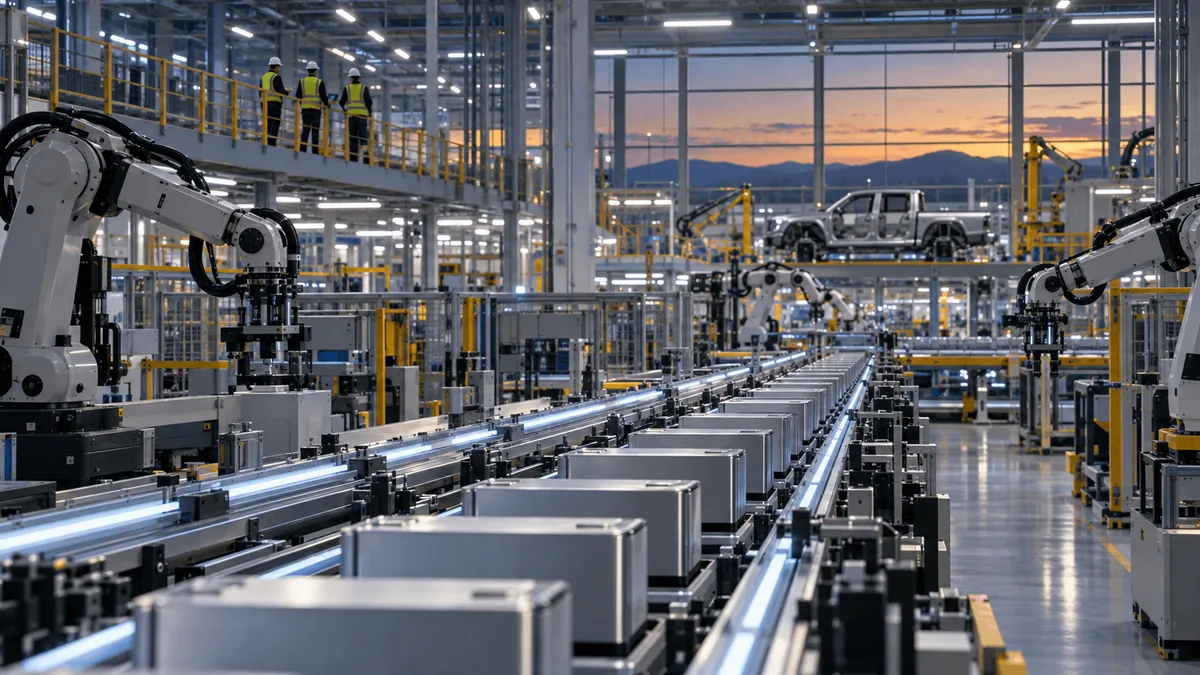
Ford Motor has started producing lithium iron phosphate (LFP) battery cells in the United States using technology licensed from Chinese battery maker CATL, with the first cells now shipping out of a plant in Marshall, Michigan, according to CNBC. The cells are headed to Kentucky to power prototypes of the Fathom, Ford's planned small electric pickup, as reported by both CNBC and Electrek.
Ford said cell production at the roughly $3 billion Marshall facility, located about 100 miles west of Detroit, began last month, according to CNBC. Electrek reported the cells are now rolling off the assembly line at Ford's BlueOval Battery Park plant and heading to the company's Louisville Assembly Plant, where they will be used in Fathom prototypes built on Ford's new UEV platform.
Plant Scale and Output
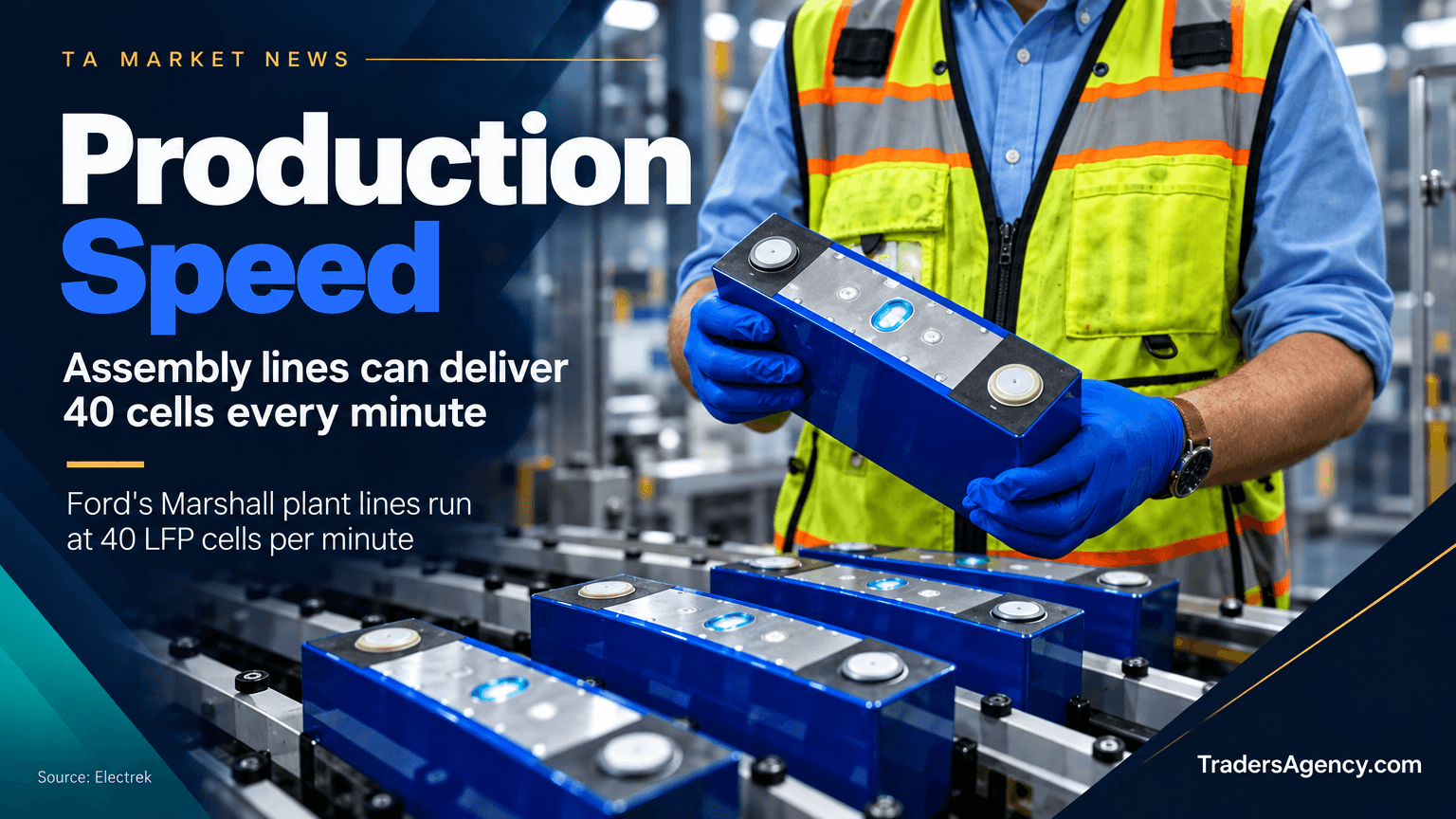
CNBC reported the roughly 2 million-square-foot Marshall facility is expected to be capable of producing 40 battery cells a minute, equating to 20 gigawatt-hours annually for EVs and the company's energy storage business. Electrek similarly described the assembly lines as able to deliver 40 cells every minute, calling it one of the fastest LFP prismatic battery assembly lines outside China, according to that outlet's reporting.
That 20-gigawatt-hour figure is down from Ford's initial plans of up to 40 gigawatt-hours annually, according to CNBC, which attributed the reduction to an EV pullback by Ford and the broader auto industry. Based on those two figures, the current capacity target represents a 50% reduction from the original plan (our calculation: (40 minus 20) divided by 40, multiplied by 100).
CATL License and Political Pushback

Ford executive Alan Clarke, speaking Tuesday during a tour of the facility, told CNBC that licensing CATL's technology was the fastest route to low-cost LFP chemistry in the U.S. "If we want to get to being able to produce affordable EVs in the United States, we need to also do it the fastest way possible," Clarke said, adding that "CATL being the biggest in the world means that they're the best supplier to get us that technology and help us learn ourselves how to produce LFP cells," according to CNBC. The arrangement has drawn political criticism: CNBC reported that U.S. Transportation Secretary Sean Duffy sent a letter to CEO Jim Farley in September expressing "profound concern" about Ford's ties to Chinese companies, while the White House a day later commended the automaker for its domestic jobs and manufacturing. CNBC also reported that Ford said it remains in the early stages of certifying its processes and plans to ramp up cell production next year ahead of the Fathom pickup's expected launch in the fourth quarter of 2027; Electrek reported Farley said on the company's third-quarter earnings call last month that the Fathom, Ford's first vehicle on the UEV platform, remains on track for that Q4 2027 launch. Electrek added that Ford plans to open Fathom preorders in early 2027 starting at $28,350 for the standard-range model.
DISCLAIMER: Traders Agency does not offer financial advice. The information provided is for educational purposes only and should not be considered financial advice. Traders Agency is not responsible for any financial losses or consequences resulting from the use of the information provided. Trading carries inherent risks and may not be suitable for all individuals. You are advised to conduct your own research and seek personalized advice before making any investment decisions, recognizing the potential risks and rewards involved.
- CNBC Top News: Ford starts U.S. battery cell production using Chinese tech · accessed Nov 18, 2026
- Electrek: Ford's first LFP batteries en route, and the $30K Fathom EV pickup will get them first · accessed Nov 18, 2026
See more from Traders Agency on Google
Make us a preferred source and our market analysis will appear more prominently in your Google Search, Top Stories, and AI results.
Add to Preferred Sources