

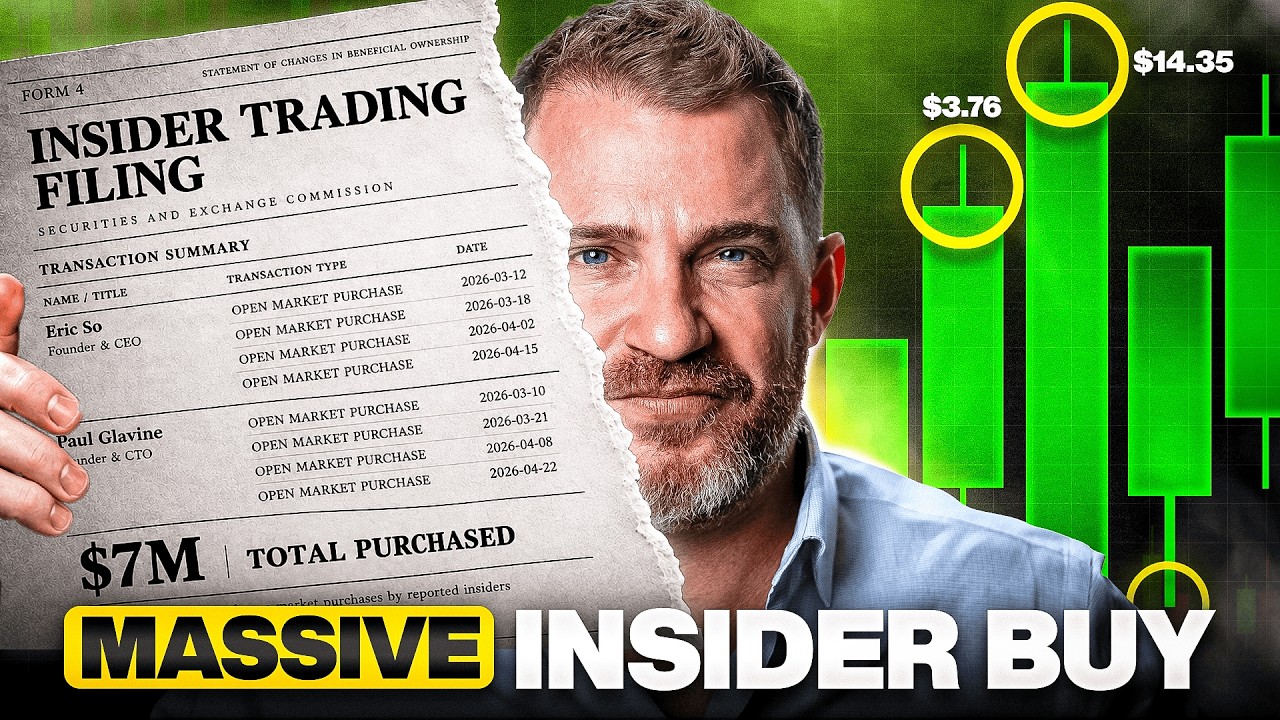
Why Did Helius Pharma Insiders Buy $7 Million in Stock?
Bottom Line: Helius Pharma's founders put $7 million of their own cash into HELP stock after a nearly 300% run, not before it, which suggests confidence heading into a Phase 3 readout roughly eight weeks away. That timing matters more than the dollar amount, since insiders rarely buy into strength unless they believe the trial data supports it, though the outcome remains unproven and risk stays high until results land.
The two men who built Helius Pharma stepped in with real size, and the timing is everything.
Between August 31st and September 8th, the founders of Helius Pharma bought $7 million worth of Helius Pharma stock, ticker HELP, with their own money in open market purchases. No grants. No stock options. Just cash bets from the two people who know this company better than anyone on Wall Street.
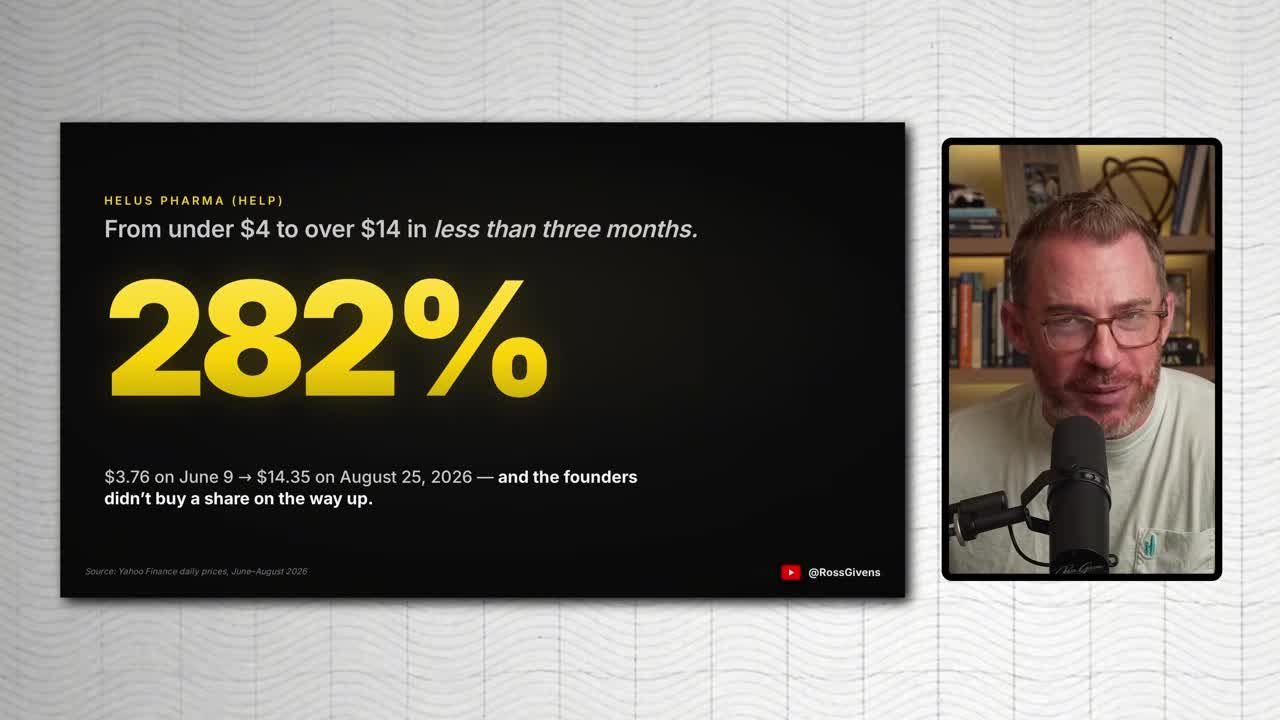
Here's what makes it strange. Insiders usually buy when a stock is beaten down and cheap. This stock is not cheap. It's up almost 300% in the last three months.
These founders watched the stock quadruple, sat on their hands the entire way up, and are only now stepping in. That raises the obvious question: what do they know that we don't?
Not one in a thousand investors has heard of this company. But the biggest day in its history is roughly eight weeks away, and the people who built the business just told you which way they think that day goes.
Why Is Helius Pharma Stock Rising?
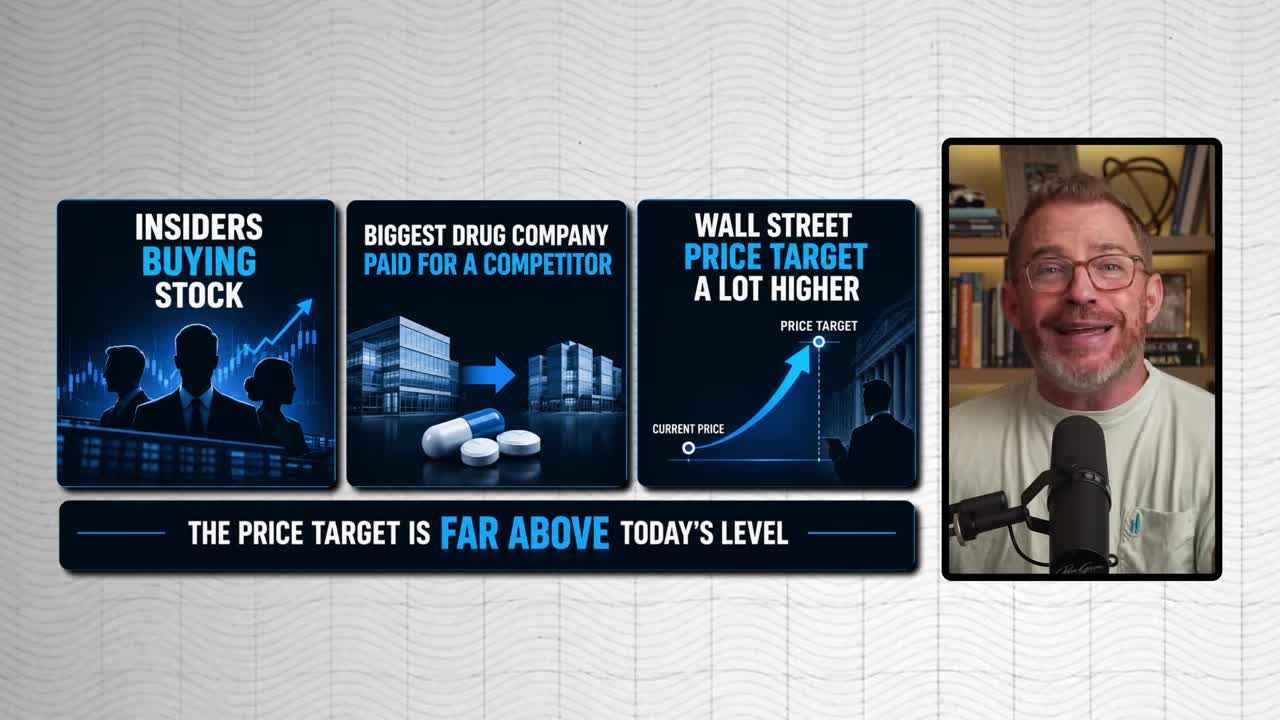
Three things changed for this stock as it ran up almost 300% in three months: a locked-in Phase 3 timeline, a wave of good news across the depression-drug sector, and a Wall Street price target that dwarfs the current share price.
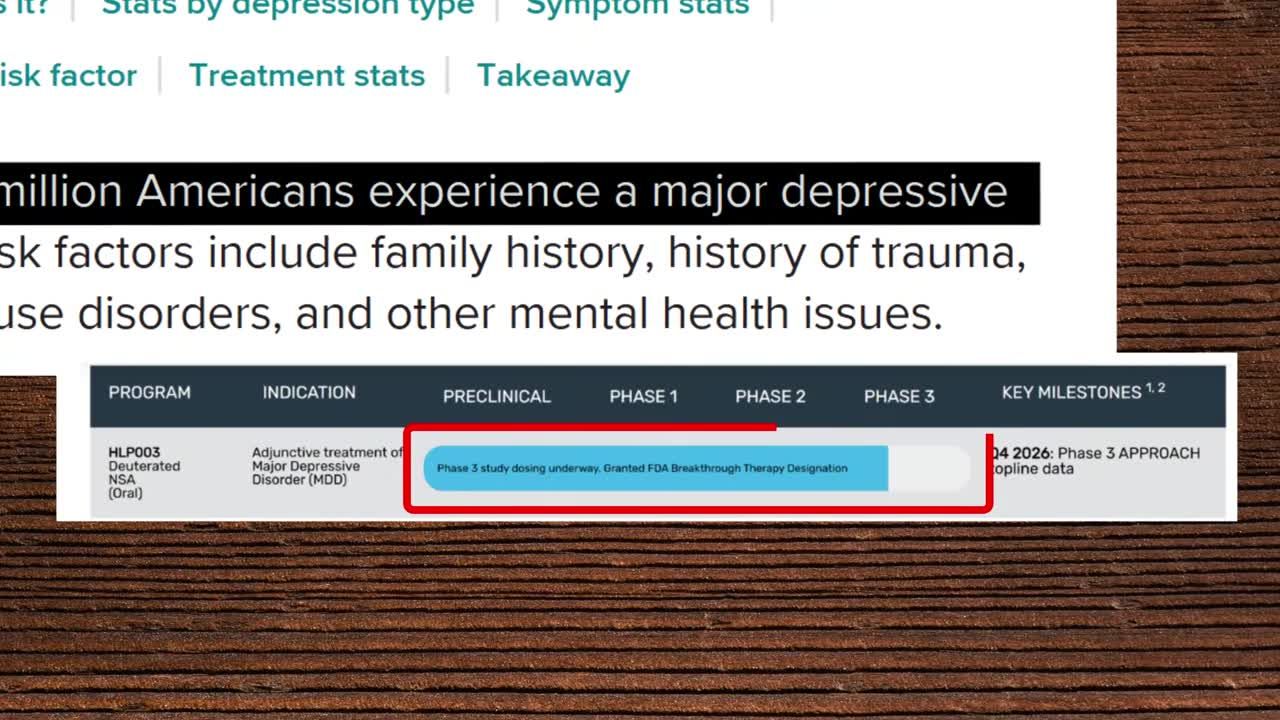
Helius is a clinical stage biotech, which means it has no drugs on the market yet. Its lead candidate is HLP00003, an oral pill for major depressive disorder designed to be taken alongside the antidepressant a patient is already on.
A normal antidepressant is a pill you take every single day, forever. HLP3 is two doses, three weeks apart. It activates serotonin pathways in the brain linked to neuroplasticity, the brain's ability to lay down new connections, and the benefit is designed to last months after that final dose.
What Does the $7 Million Insider Buy Really Mean?
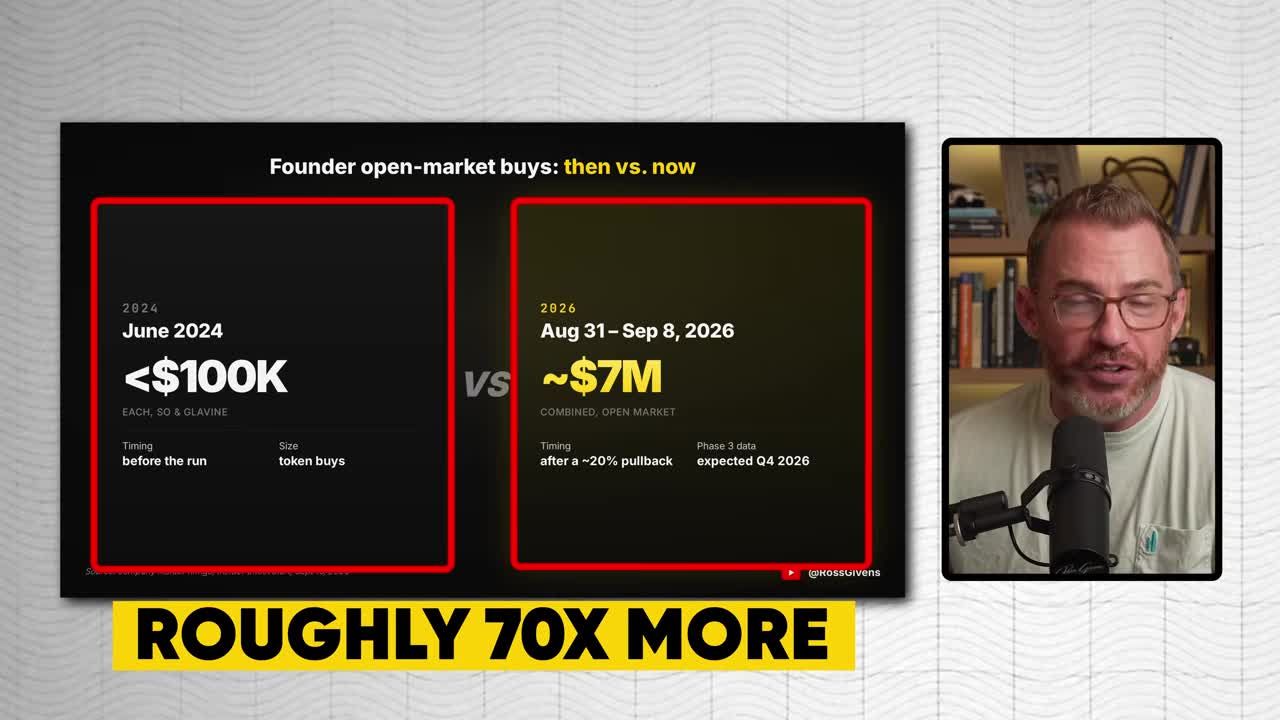
Roughly 70 times more than their last purchase, weeks before the readout that decides everything.
Eric So and Paul Glavin started Helius Pharma. So is the executive chairman. Glavin is the chief growth officer. These two know the clinical data, the regulatory path, and the competition better than anyone alive.
They've bought stock before. In June 2024, both men made insider purchases, but tiny ones, less than $100,000 each. This time they committed about $7 million. Roughly 70 times more.
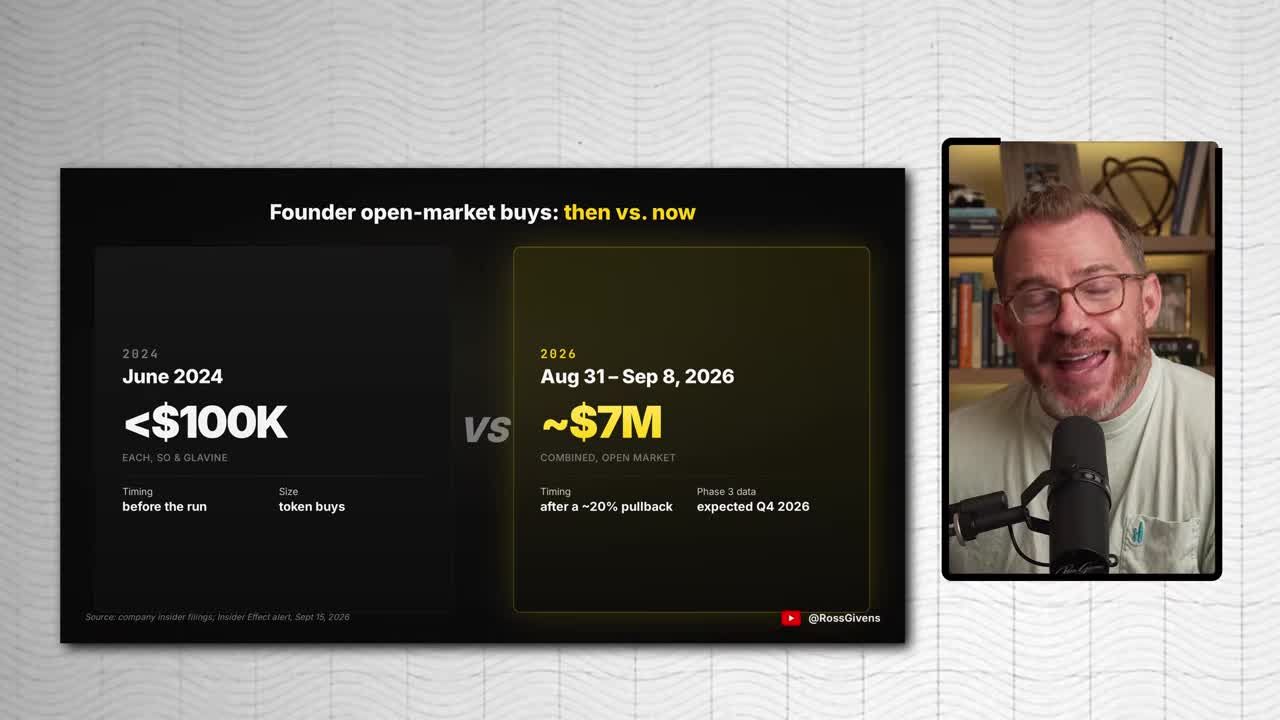
So why now, and not in June when the stock traded under $4?
Timing. Back in June, the founders didn't know when their Phase 3 trial would finish enrolling patients. On July 21st, they completed enrollment ahead of schedule. That locked the calendar. Topline data from the trial, called APPROACH, is expected in the fourth quarter, and the analyst covering the name says mid-November.
The founders are buying roughly two months in front of the most important data readout in company history.
The backdrop changed fast
- June 22: Definium Therapeutics reported positive Phase 3 results for its own next-generation serotonin depression drug. Same general approach, late-stage trial, and it worked.
- July 16: Eli Lilly, the biggest drug company on Earth, agreed to buy psychedelic drug developer Atai Beckley for $2.8 billion upfront and as much as $3.8 billion with milestones, a 40% premium to where it was trading.
- August 20: The analyst at TD Cowen raised his price target on HELP from $8 to $62.
Not a typo. $8 to $62. Hold onto that number.
Get an entire year of live weekly mentoring sessions, my newsletter, indicators, bonus reports, tons more. Click the link and I'll see you in the next live session.
Join my Black Ops Trading ClubA Physician Read the Science
What Carol caught that I missed entirely.
I sent this stock out as an official buy alert to the paid members of my Insider Effect service on September 15th. Shortly after, I got an email from a subscriber named Carol. Carol is a physician, and she wrote because she knew I hadn't fully understood the science of this drug. She was right.
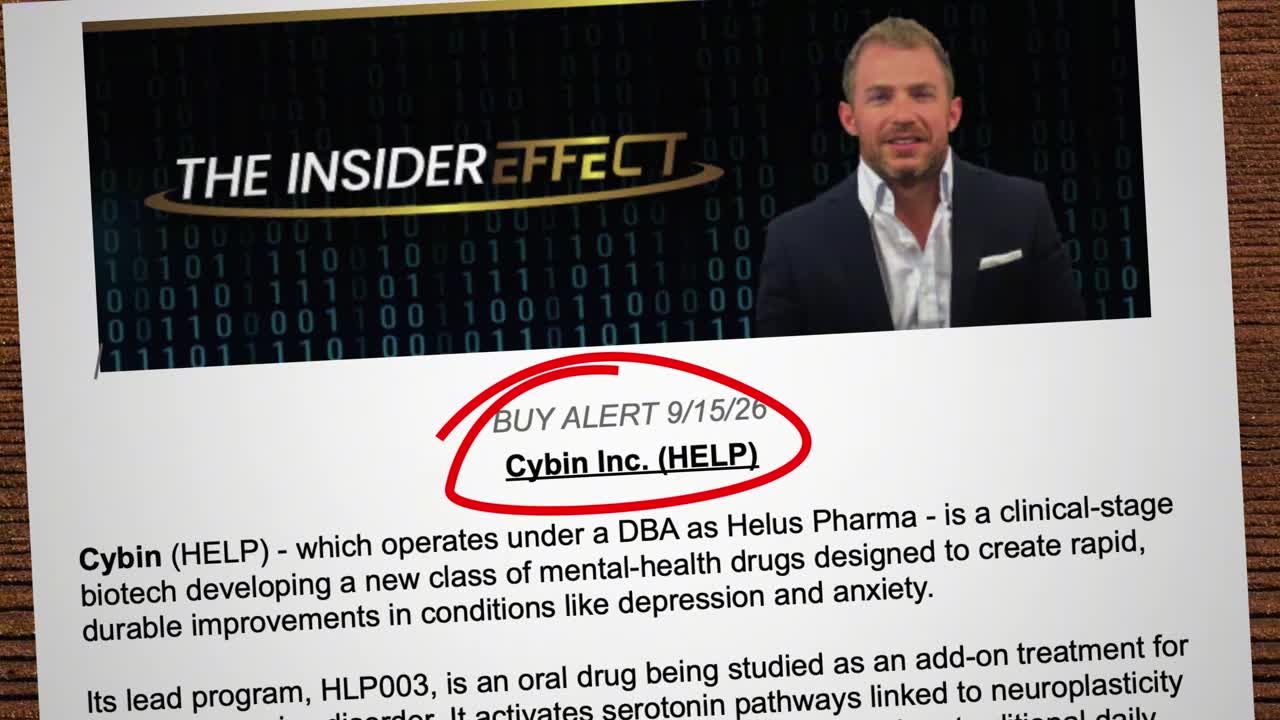
First, the mechanism
Serotonergic drugs have been on the market for decades. That's not the news. The news is what's in this one. HLP3 is built on silocin, the active metabolite of psilocybin, and the company's own explanation is that it works through neuroplasticity, laying down new neural networks.
Carol went further than the company does. If the drug is building new neural pathways, she reasoned, then with continued use you can at least postulate that the effect becomes permanent once that network is established. The company isn't saying that, and her read is that they may not want to say it until they're past the FDA.
But if it's true, this isn't mood elevation so patients can get through the day. It's a shot at something closer to a cure.
Second, the numbers
Existing antidepressants work maybe 40 to 60% of the time, often with unpleasant side effects. In Helius's Phase 2 trial at the higher dose, 100% of patients responded, and 71% were in remission a full year after just two doses. Carol's word for those results: unheard of.
That's exactly why the Phase 3 trial is the whole ball game. Same drug, but this time a few hundred patients against a placebo. If the numbers hold up even halfway, that is a very good drug. If they don't, the stock gets hit.
Nobody knows yet, including the founders. But they just bet $7 million on which way it goes.
Third, the word "adjunct"
This is the part I would have never caught. Helius is running HLP3 as an add-on for patients who aren't responding to their current antidepressant, not as a treatment for treatment-resistant depression. That distinction matters far more than it sounds.
If it were labeled for treatment-resistant depression, a patient would have to fail two other drugs for six to eight weeks each before a doctor could prescribe it. Then the doctor needs prior authorization from the insurance company, a hoop designed to let the insurer stall, deny, or force appeals, because drugs like this are expensive.
By calling it adjunct, Helius sidesteps that entire process. More patients, faster, with fewer fights with insurers, and it leaves the door open for the drug to eventually be used on its own.
There's also a second program targeting generalized anxiety disorder, about 20 million Americans. A lot of those patients are on benzodiazepines today, drugs that are nearly impossible to get off of and very unsafe. If the anxiety drug works, that's a second market the same size as the first.
The Latest Helius Pharma News
Three developments reset this story in the last 90 days.
On July 21st, Helius completed enrollment in its Phase 3 APPROACH study ahead of schedule, locking in the timeline. On June 22nd, Definium Therapeutics reported positive Phase 3 results for its own next-generation serotonin depression drug using the same general approach, a late-stage trial that worked.
The bigger headline landed on July 16th. Eli Lilly, the largest drug company on Earth, agreed to buy psychedelic drug developer Atai Beckley for $2.8 billion upfront and as much as $3.8 billion with milestones, a 40% premium to where it was trading.
Is Helius Pharma Stock Worth Buying?
This sounds like a layup. It isn't. There are no guarantees in medicine or the stock market, and this is still a speculative biotech.
Helius Pharma stock has already gone up more than threefold since June. The company has no revenue, and the whole thing rides on one trial reading out in November. But it's still valued at under a billion dollars, which is a small number for a drug addressing 21 million people with major depressive disorder and potentially another 20 million with generalized anxiety disorder.
If that data disappoints, it wouldn't be good. And that's exactly why the insider buying matters so much to me. Eric So and Paul Glavin have seen more of this data than any analyst on Wall Street, and they chose to add $7 million of personal exposure right in front of it. You can track open-market insider filings directly through SEC EDGAR.
The Competitive Backdrop
Definium Therapeutics posted positive Phase 3 results in June. Eli Lilly just agreed to pay up to $3.8 billion for Atai Beckley at a 40% premium. That's the sector as Ross described it: a competitor's late-stage trial worked, and the biggest drug company on Earth agreed to pay up for a psychedelic drug developer.
The backdrop for this entire class of drugs has changed in the last 90 days. And if the Phase 3 data holds up, Helius would be a big acquisition target for big pharma, just like Atai Beckley was for Eli Lilly.
The $62 Price Target
TD Cowen's target went from $8 to $62 on August 20th. The stock currently trades for $13.
His reasons were straightforward: the clear Phase 3 timeline, a new CEO who came over from Intracellular Therapies, one of the biggest neuropsychiatry success stories of the last decade, and a much friendlier backdrop for this whole class of drugs.
If the Phase 3 data comes in anywhere close to the Phase 2 data, this stock moves. It would also be a huge acquisition target for big pharma, the same way Atai Beckley was for Eli Lilly.
The Insider Buying Is the Signal
The headline numbers are eye-catching: a 300% run, a $62 target on a $13 stock, a $2.8 billion acquisition in the same space. But the number that matters most to me is $7 million.
That's what the founders put on the line, in the open market, roughly two months before the biggest data readout in their company's history. They've seen more of the internal trial data than any analyst on Wall Street. And they chose to add exposure, not sell.
This is still a speculative biotech with no revenue, riding entirely on one Phase 3 trial. The downside is real if November disappoints. But when the people who built the company bet $7 million of their own money on Helius Pharma stock right before the results land, that's a signal worth understanding, not ignoring.
Get an entire year of live weekly mentoring sessions, my newsletter, indicators, bonus reports, tons more. Click the link and I'll see you in the next live session.
DISCLAIMER: Traders Agency does not offer financial advice. The information provided is for educational purposes only and should not be considered financial advice. Traders Agency is not responsible for any financial losses or consequences resulting from the use of the information provided. Trading carries inherent risks and may not be suitable for all individuals. You are advised to conduct your own research and seek personalized advice before making any investment decisions, recognizing the potential risks and rewards involved.
See more from Traders Agency on Google
Make us a preferred source and our market analysis will appear more prominently in your Google Search, Top Stories, and AI results.
Add to Preferred Sources