
Precious metals behave differently than almost everything else in a typical portfolio. When stocks are falling, gold often holds its value or gains ground, while silver and mining stocks ride a bumpier path tied to industrial demand and equity sentiment. In this guide, we'll walk you through how we approach allocation sizing, vehicle selection, and timing when building recession resilience into a portfolio.
By the time you finish reading, you'll know how much of a portfolio our team typically suggests allocating to metals, how gold and silver tend to diverge during downturns, and which vehicle (bullion, ETFs, or mining stocks) fits which goal.
What Happens to Precious Metals During a Recession?
Bottom Line: Precious metals during a recession tend to work as portfolio ballast rather than growth drivers, with gold offering the more consistent hedge and silver and mining stocks carrying more equity-like risk. Sizing the allocation and picking the right vehicle (bullion, ETFs, or mining stocks) matters more than simply owning metals at all.
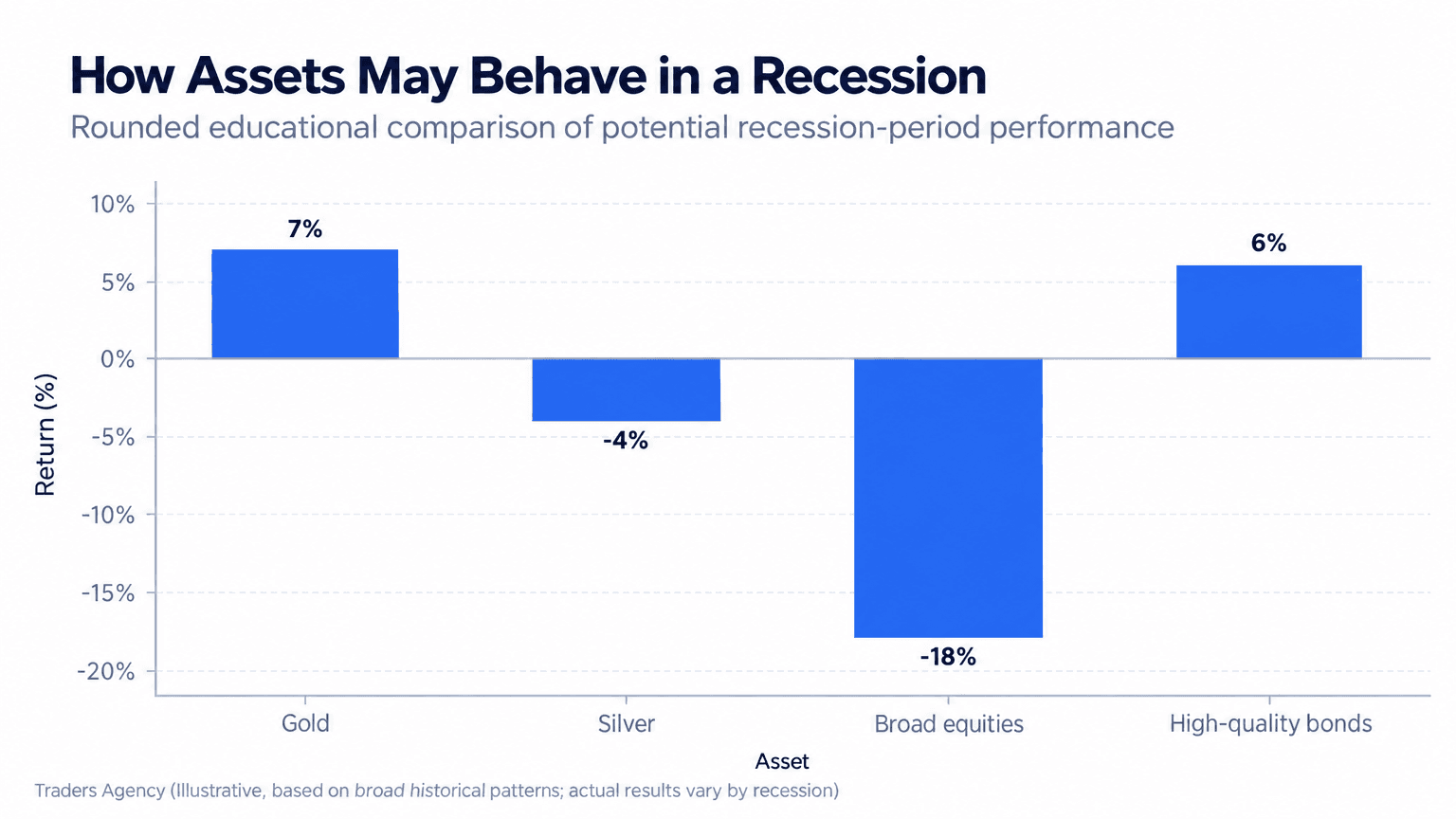
Precious metals during a recession generally benefit from a flight to safety as investors reduce exposure to stocks and other risk assets. Gold in particular tends to hold value or appreciate because it isn't tied to a company's earnings or a government's ability to pay its debts.
That's the core logic behind a gold recession hedge: when confidence in equities or currencies drops, demand for a neutral store of value tends to rise. Looking at how gold has behaved through past downturns, it has generally either held steady or gained while equity indexes dropped sharply, especially in periods marked by financial system stress rather than a simple economic slowdown.
Key Concept: Gold's hedging power comes from what it isn't. It carries no earnings risk, no credit risk, and no counterparty dependence, which is exactly why demand tends to rise when confidence in other assets falls.
This relationship isn't automatic, though. In the earliest, sharpest days of a market panic, gold can sell off right alongside stocks as investors scramble to raise cash for margin calls. The safe-haven behavior usually reasserts itself once that initial liquidity crunch clears.
How Much Should You Allocate to Precious Metals?
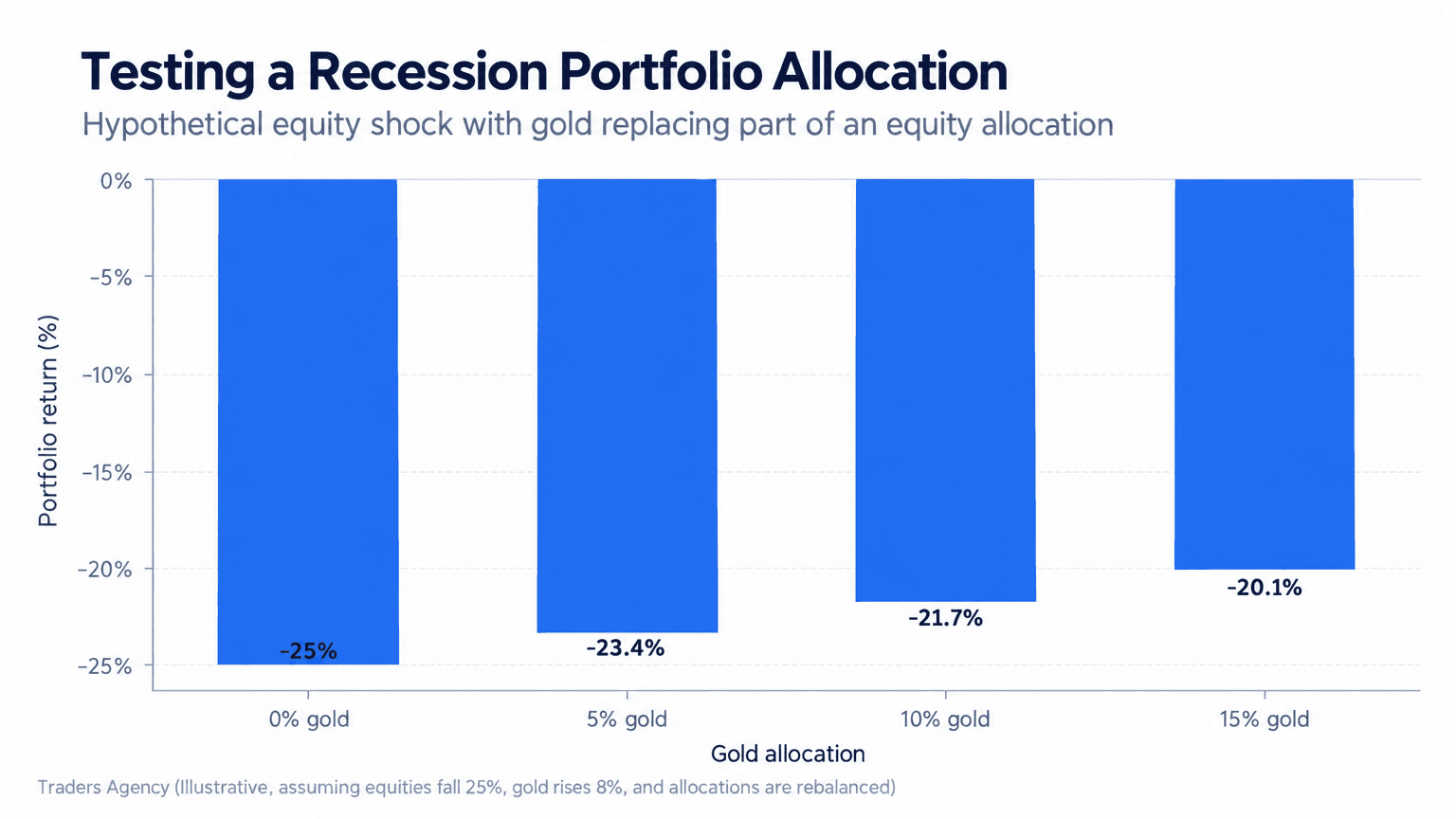
Our team generally recommends a 5% to 15% allocation to precious metals for traders building recession resilience into a portfolio. The right number inside that range depends on three things: your existing equity exposure, your time horizon, and your tolerance for underperformance during calm markets.
We treat this as an insurance allocation, not a growth bet. A trader with heavy equity concentration might lean toward the top of the range, while someone already holding meaningful bonds and cash might sit closer to 5%.
| Portfolio Profile | Suggested Metals Weighting | Reasoning |
|---|---|---|
| Heavy equity concentration, few bonds | 10% to 15% | Metals carry more of the hedging load |
| Balanced stocks, bonds, and cash | 5% to 8% | Existing bonds and cash already absorb shocks |
| Short time horizon, low volatility tolerance | 5% to 10% | Smaller sizing, gold-weighted rather than silver |
Rebalancing Triggers We Watch
We never set and forget a metals allocation. Here's the review process we run:
- Check for allocation drift. If a gold rally pushes your metals weighting more than 5 percentage points above target, trim back into the target range.
- Watch equity drawdown thresholds. A broad equity decline of 15% or more is a natural point to review whether your hedge actually did its job.
- Track the rate environment. Falling real interest rates tend to support gold, so we revisit allocation size whenever rate expectations shift materially. The Federal Reserve policy calendar is worth keeping in front of you.
- Run a time-based review. Even with no trigger event at all, we review metals weighting quarterly.
Want expert trading insights delivered daily?
Join thousands of traders who rely on Traders Agency for market analysis and trade ideas.
Join Traders AgencyGold vs. Silver: Which Holds Up Better in a Downturn?
Gold typically holds up better than silver in economic downturns, and the reason is demand mix. Silver carries heavy industrial demand tied to manufacturing and electronics. When factory output slows, one of silver's core demand sources weakens at the exact moment investors are hunting for safety, and that creates a tug-of-war on price.
That's the mechanic behind silver in economic downturns underperforming its more famous counterpart. Roughly half of silver demand comes from industrial applications, so a manufacturing slowdown can offset a good chunk of the safe-haven buying that would otherwise lift the metal.
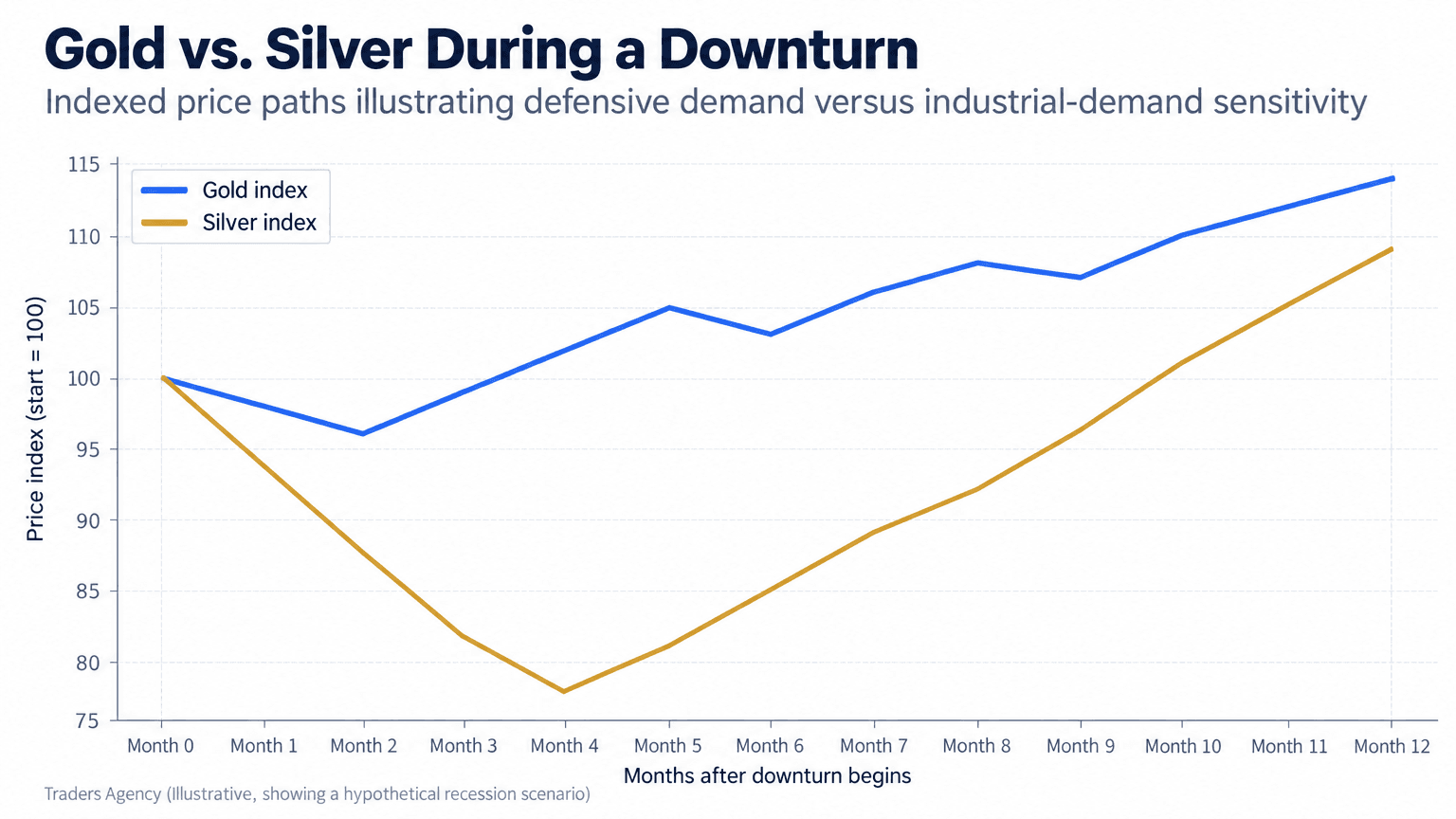
Traders often ask us whether silver will hit $200 an ounce. We don't make price predictions in our education content, but we will point out this: silver's higher volatility means it can produce sharper rallies once a recovery begins, since industrial demand returns just as safe-haven flows unwind. That same volatility cuts hard in the other direction during the downturn itself.
You'll also hear the classic critique of metals as an asset class, that a bar of metal sitting in a vault doesn't generate earnings or compound value the way a business can. We think that's a fair point about gold as a long-term core holding. It doesn't really address gold's role as a short-term hedge during acute market stress, which is the specific job we're focused on here.
Should You Choose Mining Stocks, Physical Gold, or ETFs?
Every route into metals exposure carries a different risk profile, and picking the wrong one can undo the whole point of the hedge.
| Vehicle | Main Advantage | Main Drawback | Best Fit |
|---|---|---|---|
| Physical bullion | Direct exposure, no counterparty risk | Storage costs, slower to trade | Long-term holders |
| Gold ETFs | Easy brokerage access, tight spreads | Small ongoing expense ratio | Active traders |
| Mining stocks | Operational leverage to rising gold | Moves with equity sentiment | Growth-oriented speculation |
Physical bullion gives you the most direct exposure with no counterparty risk, but it brings storage costs and less liquidity when you need to move quickly. Gold ETFs tracking spot prices trade through a standard brokerage account with tight bid-ask spreads, which makes them the most practical choice for most active traders. Mining stocks add operational leverage: because miners carry fixed costs, a rise in gold prices can expand profit margins disproportionately. That leverage reverses just as forcefully when gold falls or when a company hits its own operational trouble.
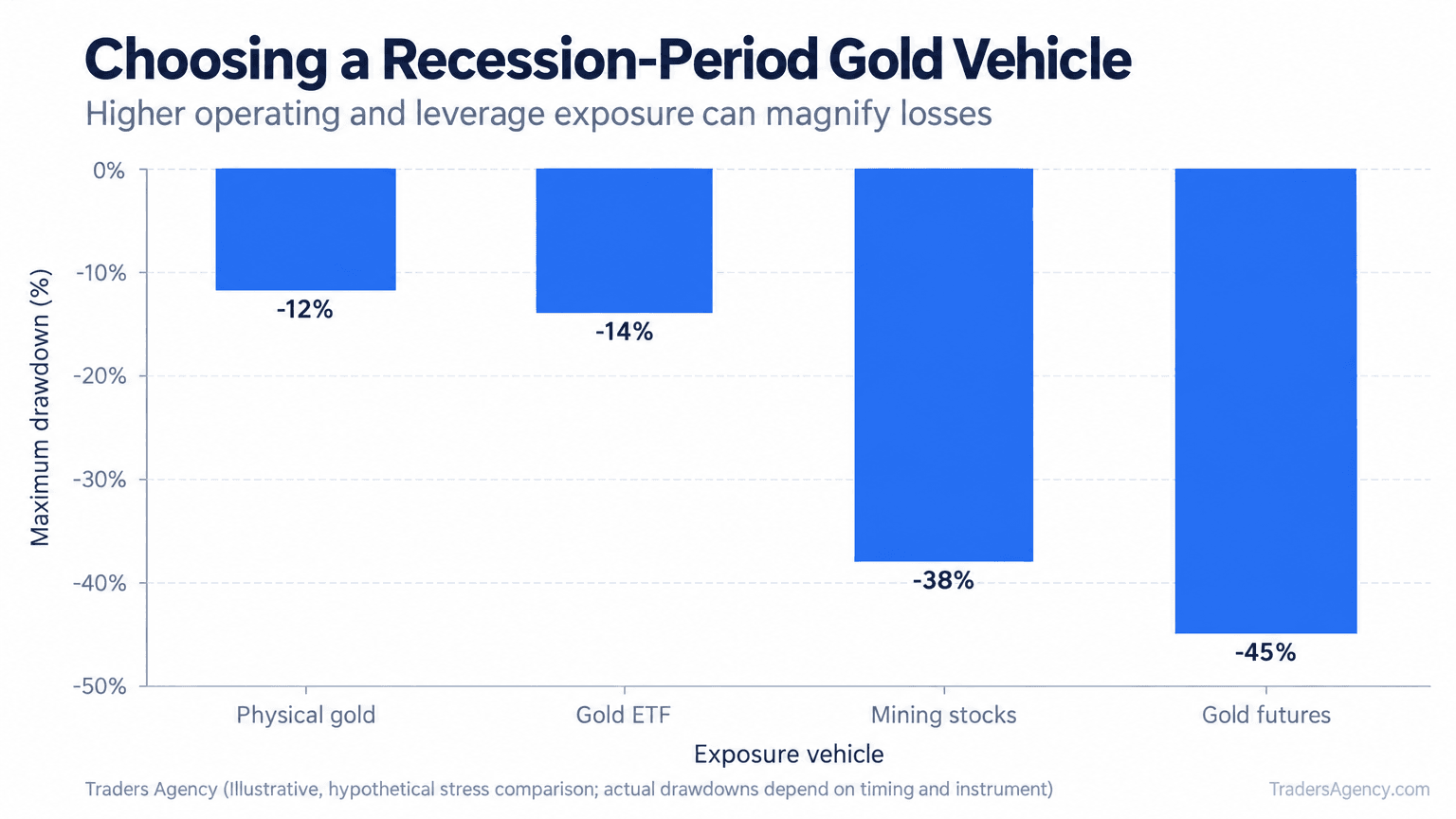
Watch Out: Mining stocks track broader equity sentiment, which means they can fall right alongside the very stocks you're trying to hedge. If a clean recession hedge is the goal, physical gold or a straightforward ETF does that job far more reliably than a miner.
When Does Adding Gold Help Most?
Gold tends to earn its keep when equity markets are under stress and real interest rates are falling or negative. In those conditions, gold faces less competition from yield-bearing assets like bonds, which makes it more attractive on a relative basis.
We also see gold pull its weight during periods of currency weakness, or when inflation expectations climb faster than nominal rates. If your portfolio is stacked heavily toward growth stocks with little diversification, that's usually when a metals allocation does the most work for you.
When Should You Hold Off on Gold?
Gold is not always the right tool for the job. Through periods of strong economic growth with rising real rates, gold has historically lagged assets like equities, simply because investors have less reason to hold a non-yielding safe haven.
Common Mistake: Adding to metals only after a selloff has already happened. By then, much of the safe-haven benefit is already priced in. We'd rather set a target allocation ahead of time and rebalance into it than react to headlines.
Building a Recession Playbook with Precious Metals
Pulling it all together, here's the sequence we teach:
- Set your target allocation. Land somewhere in the 5% to 15% range based on your equity exposure and risk tolerance.
- Make gold your primary hedge vehicle. Use ETFs when liquidity matters, physical bullion when you're holding for the long haul.
- Add silver only with eyes open. Include it if you can stomach higher volatility, remembering that silver in economic downturns often lags gold before catching up on the recovery.
- Keep miners out of the hedge sleeve. If the goal is offsetting equity risk directly, mining stocks work against you at the worst possible moment.
- Rebalance on triggers, not emotion. Use the drift, drawdown, and rate-based triggers above instead of reacting to the news cycle.
Precious metals aren't a substitute for a diversified portfolio, and they won't outperform in every environment. But as one piece of a broader risk management approach, they remain among the more historically consistent tools for offsetting equity drawdowns. That's why the question of the best asset to hold during a recession so often puts gold in the conversation right next to high-quality bonds and cash. If you're trading metals through futures or options, contract specifications are published directly by the CME Group.
Our education team publishes new strategy guides and market analysis every week.
Want expert trading insights delivered daily?
Join thousands of traders who rely on Traders Agency for market analysis and trade ideas.
Join Traders AgencyDISCLAIMER: Traders Agency does not offer financial advice. The information provided is for educational purposes only and should not be considered financial advice. Traders Agency is not responsible for any financial losses or consequences resulting from the use of the information provided. Trading carries inherent risks and may not be suitable for all individuals. You are advised to conduct your own research and seek personalized advice before making any investment decisions, recognizing the potential risks and rewards involved.
See more from Traders Agency on Google
Make us a preferred source and our market analysis will appear more prominently in your Google Search, Top Stories, and AI results.
Add to Preferred Sources