Ray Dalio The Changing World Order
Why every empire follows the same script — and where the US sits right now
Legendary investor Ray Dalio published research titled Principles for Dealing with the Changing World Order, which has garnered 135 million views. Dalio is a billionaire and an optimist. He’s a student of history who became wealthy by studying economic cycles to predict how events will play out.
He is not a permanent doom-and-gloomer like Robert Kiyosaki, who has been predicting a once-in-a-generation market crash every six months for the last two decades.
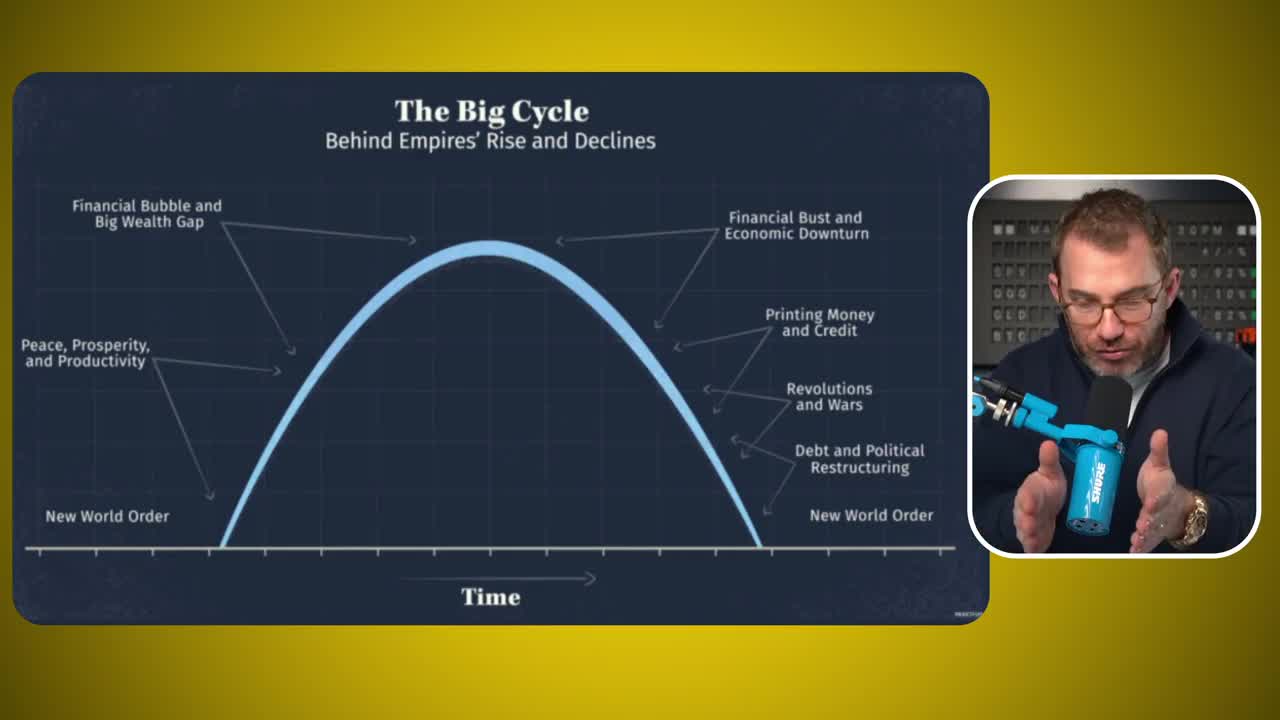
In his research, Dalio outlines a 250-year cycle of imperial rise and fall — a pattern that has dictated the downfall of every major economy throughout history.
The Six Stages of the Big Cycle
- Stage 1: New order
- Stage 2: Building resource allocation
- Stage 3: Peace and prosperity
- Stage 4: Excessive spending and debt
- Stage 5: Financial crises and conflict
- Stage 6: War and disorder
The Reserve Currency Weapon
This shifting world order has nothing to do with the great reset or the Russia-Ukraine invasion. It’s about a repeating cycle that has occurred since the beginning of time to decide the reserve currency of the world.
Throughout history, there’s an evolving conflict between the leading economy and the rising economy. Both fight for the spot of economic superpower. One of the best ways to become the de facto superpower is to have your currency accepted as the world’s reserve.
A reserve currency is simply the currency most commonly accepted around the world — the one against which all other currencies are pegged. When you hear the Euro is up or the Chinese Yuan is down, that’s measured against the US dollar.
Since the end of World War II in 1945, the US dollar has held that position. It provided a strong, stable store of value. Because world economies started transacting in dollars, the US benefited from favorable exchange rates and more demand for those dollars.
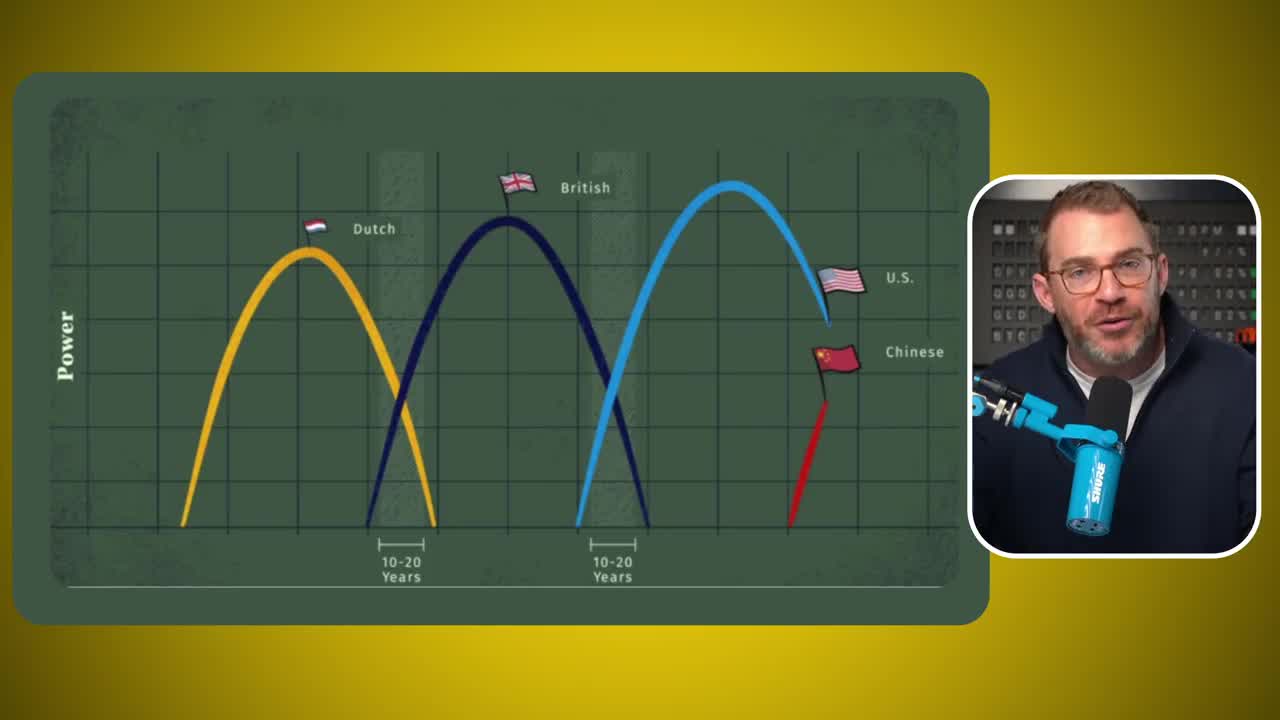
But reserve currencies don’t last forever. They change hands every hundred or so years in what Dalio calls the big cycle.
- France held the reserve currency from 1720 to 1815
- Britain held it from 1815 to 1920
- The US has held the mantle since then
The question is how long we can hold on to this — and whether the Chinese Yuan will become the new reserve currency.
How Empires Rise and Fall
The pattern is remarkably consistent across generations. A country rises to dominance after winning a big conflict. That victory leads to a period of peace and prosperity where other countries don’t want to challenge the dominant power. This has been the reality for the US since World War II.
But this rise eventually leads to a peak — a period of stagnation with increasing costs of expansion. This creates an opening for rising economies to compete.
The creation of a global superpower is marked by above all economic dominance, which shows up in leading metrics like a strong education system that cultivates character and promotes technological innovation, higher economic output through that technology, competitiveness in a global market with a bigger share of world trade, establishment of a financial center, and military dominance.
In the initial stages, borrowing and spending are signs of a strong economy. Debt is rewarded with higher and higher productivity.
There’s a close connection between the government and the wealthy. This was true in the days of the Dutch East India Company and the British Empire, and it’s just as true today with the American military-industrial complex.
The reach of the empire starts to span across the globe and more people start trading in the currency of the leading country as they see the possibility for better returns. This lets the leading country take on more and more debt to expand.
Values change across generations. People who had to grind and fight to get where they are have children who grow up in much easier conditions. They pursue leisure more than productivity, and the work ethic slowly erodes.
The Debt Trap and Inflation End-Game
As a rich, powerful nation, the government attempts to ensure a certain quality of life is perceived by all. To achieve this, the leading country keeps taking on debt to finance its expansion.
As more countries invest in the leading economy, a financial bubble forms. A stage is reached where the prices charged by the leading country are far higher than those of other countries, who simply copy their methods and charge less.
In the long term, excessive debt weakens the finances of the country. A stage is reached where it cannot borrow more, triggering a decline.
When a country can’t borrow anymore, it has exactly two options: default on its debt, or print more money.
Governments always choose to print.
Printing money causes higher inflation. This triggers resentment in the population as prices rise. The gap between the rich — who own assets and see their holdings rise in price — and the poor, who lose purchasing power and get poorer as prices climb — becomes so great that a revolution eventually takes place.
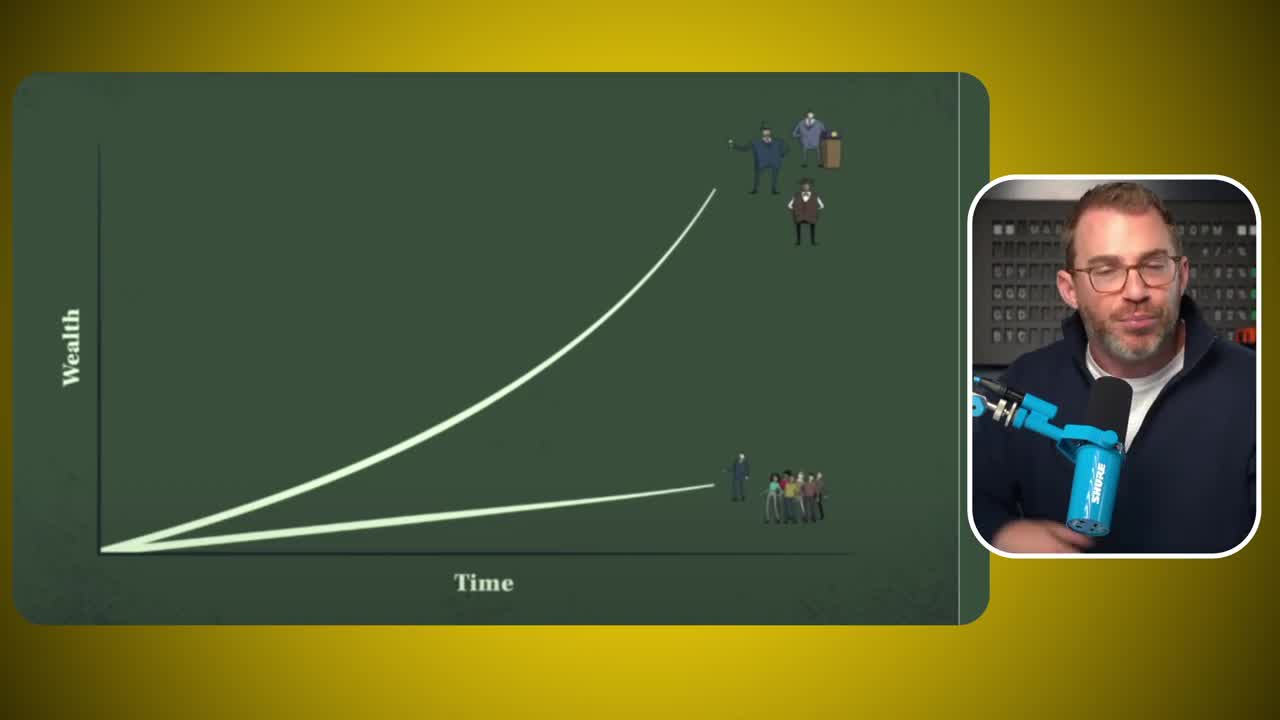
These revolutions can happen peacefully in a political manner, or violently — which weakens the country even further.
This internal chaos creates an opportunity for another country to attack. Other nations reconsider which side to support and start selling off the reserve currency. With its reserves drying up, the leading country loses its status.
The Math Doesn’t Lie
People will insist this time is different. It’s not.
And that’s in a good economy with record GDP growth, historically low interest rates, huge efficiency increases from AI, and record forward investment.
What happens in a weak economy? Or another pandemic?
We thought 7% and 8% inflation was bad. Wait until it’s 15% or 20%.
De-Dollarization Is Underway
Dalio uses eight specific factors to evaluate a country’s standing as a reserve: education, technology, competitiveness, output, world trade, military strength, financial center, and strength of the currency.
The US still leads in some of these. But not all. The decline from the peak in the 50s and 60s is measurable across these metrics.
China is becoming a real contender. Back in 2020, China and Russia created a financial alliance to reduce their dependency on the US dollar. China has also been reducing the number of settlements in the US dollar. And increased tariffs on Chinese goods have only sped up that de-dollarization. Foreign central banks are buying gold at a record pace. They’re replacing US Treasuries with what they see as a safer bet.
The US is losing its reserve currency while China’s economy is set to overtake the US by 2030.
But it’s not going to be that easy. It is not enough if China just has a large economy. World countries have to be willing to use the Yuan as a reserve currency, which so far they’re not. 40% of global trade and 80% of cross-border transactions still use the US dollar. The Chinese Yuan accounts for just 3% of global transactions today.
A World Without Reserve Currencies?
There’s no viable alternative for a new reserve currency yet, but there’s another interesting possibility. What if we had a world without reserve currencies? The model of a reserve currency and a leading country might not make sense in an increasingly decentralized world. Senator Rand Paul has even gone so far as to say that Bitcoin could one day replace the world’s reserve currency if people lose faith in government institutions. El Salvador is already promoting it as legal tender.
Personally, I don’t see that happening anytime soon.
I cannot imagine an economic system where I could put my entire net worth on a thumb drive, and if I lose it, there’s no way to recover it. And advances in quantum computing are going to make us even more vulnerable once supercomputers can crack any digital wallet.
But nonetheless, there are alternatives to the way history has operated until now. Many believe we could go back to a hard currency system. If someone built a new currency backed by physical gold, countries might quickly adopt it.
Either way, Dalio’s research is hard to argue. The world has seen a drastic change in power every 100 to 250 years since the beginning of the Roman Empire.
Ray Dalios All Weather Portfolio
Ray Dalio developed what he calls the All Weather Portfolio — a long-term passive investment strategy designed to provide stable, consistent returns with lower volatility across all economic cycles. He argues that traditional portfolios are too dependent on economic growth, which causes high volatility during downturns. His portfolio seeks to provide a smoother ride, especially in a shifting world economic order, by balancing risk across five different asset classes.
Dalio is one of the sharpest minds in finance. He has accomplished more than I could ever dream of.
But me personally? There is no way in hell I’m putting 55% of my money in Treasuries, which is what his portfolio requires.
As the government tries to print itself out of this debt problem — as every government in this situation has done for millennia — inflation is going to get worse. High inflation is generally considered the worst enemy for long-term Treasury bonds.
To combat inflation, the Federal Reserve raises rates aggressively. We just saw this happen a couple of years ago. For every 1% rise in interest rates, TLT — the long-term bond ETF — can be expected to fall by 15% to 17%.
How I’m Positioning for the Shift
In Dalio’s own words: “History won’t always repeat itself, but it will rhyme. We don’t know exactly how things will play out, but we can take action to protect our wealth.”
My personal portfolio is designed to both protect capital and benefit from higher inflation. Energy and metals are weighted at 25% each, with 40% in a bucket of diversified equities and 10% in real assets like farmland and infrastructure.
I’m not saying this is better. I’m not saying this is right for you. This is how I’ve chosen to allocate my retirement dollars.
I did a full breakdown of my portfolio and the ticker symbols here in this post
Click here to get the details This Portfolio Is CRUSHING the Market by 6X in 2026
Don’t forget to sign up for my $5 trading sessions. You can trade with me live for a Year for just $5. Plus get my newsletter, indicators, bonus reports, tons more. Click the link and I’ll see you in the next live session.
DISCLAIMER: Traders Agency does not offer financial advice. The information provided is for educational purposes only and should not be considered financial advice. Traders Agency is not responsible for any financial losses or consequences resulting from the use of the information provided. Trading carries inherent risks and may not be suitable for all individuals. You are advised to conduct your own research and seek personalized advice before making any investment decisions, recognizing the potential risks and rewards involved.
See more from Traders Agency on Google
Make us a preferred source and our market analysis will appear more prominently in your Google Search, Top Stories, and AI results.
Add to Preferred Sources