
The Fibonacci numbers are often a topic of discussion in various philosophies. According to the studies, these numbers appear as patterns throughout nature. You’ll see them in leaves, shapes, and other structures. They are numbers that connect to the golden ratio. When you use ratios, you can make something look aesthetically proportional.
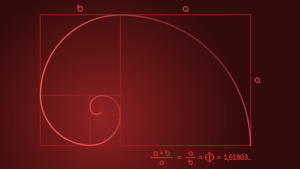
In the early 1200s, Italian mathematician Leonardo Fibonacci introduced the Fibonacci sequence. At the time, he became known as Leonardo Pisano (of Pisa), though Fibonacci was his last name. It meant the son of Bonacci.
The sequence starts with a one or a zero. According to him, each succeeding number is the sum of the preceding two numbers. So we have 0, 1, 1, 2, 3, 5, 8, 13, etc. In the original illustration, Leonardo used the example of breeding rabbits. He posited that beginning with a single pair, each new pair improves their breeding productivity.
More interest developed when scientists discovered that these numbers occur in natural phenomena. They first became apparent in the patterns of plants and trees. They then found connections to many aspects of human civilization. Today, the Fibonacci ratio is a base guideline for websites, buildings, markets, and more.
Historians also found that Indian mathematicians came up with something similar. One could see it in the work of Pingala dating back to 200 BC. They also appear often in various mathematical equations. They appear unintentionally and occur through most of creation and invention.
As mentioned earlier, the Fibonacci has many applications and occurrences. Mathematicians believe it to be the first instance of recurrence relation discovered. You can see Fibonacci in action in:
There have been signs of Fibonacci used in early mathematical systems, but Pisano was the one who began spreading the word. He popularized the number system we use today, replacing the Roman numeral system. His sequence seemed inconsequential at the time. Then, more and more people discovered the usefulness of it.
One application of Fibonacci is creating a numerical estimate for the task difficulty. It helps create a more efficient system where you assign a numerical value to the work at hand. That way, work can spread out between team members better. Individual workers can also use Fibonacci to prioritize their tasks and organize them better.
Due to the inherent ratio in Fibonacci numbers, one could argue that you can use them to make better proportions in many industries. The gaming industry could, for example, have a better scale of balance with the use of Fibonacci. However, there are always two sides to a coin.
Fibonacci never gets as much testing as it deserves outside of Math. This is because the person’s interests must align. There’s also the question of whether they want to use sequences in the first place. Another point is that Fibonacci occurs so naturally that people aren’t even aware that they are using it.
The precision of the Fibonacci is uncanny. It shows that there are specific ratios that occur in natural phenomena. You can see it in the body structure or the ripples of water in a pond. Some scientists speculate that these patterns appear in obsessive behavior and genius behavior. However, the significance of knowing these things has lacked in-depth exploration.
Astronomy is one of the sciences in which the Fibonacci sequences appear many times. It shows how the orbits of the planets match each other within a set sequence of the Fibonacci. For example, dividing the number of days in a tropical year by one of the Fibonacci ratio numbers shows the orbit of Venus.
Some believe that the discovery of the natural occurrence of Fibonacci points to a higher power. It shows a form of architecture that is inherent as a part of a grander design. The fact that it appears in both large and small-scale events makes it interesting.
Traders and technical analysts use tools based on the Fibonacci ratios. With them, one can determine when a price is more likely to turn its direction. One could use it to predict a point of entry or an exit. One of the reasons it’s popular is because it is a reliable way to gauge market movements.
It isn’t 100% accurate, but it is reliable enough to warrant use by many. Many regard market movements as the behavior of market participants as a whole. They believe these ratios are natural psychological levels where people react. Since the Fibonacci sequence and ratios occur naturally, it would make sense to argue that even humans work on similar patterns.
Out of all Fibonacci-based tools, retracement levels are the most popular. They trace the last significant movement of an asset and draw areas where there is a high potential of bounce after a drawdown. Many argue its effectiveness. Like other strategies in trading, Fibonacci works well if it fits with your style. Many people find more success using it over long-term trends.
The Fibonacci sequence is one of the most popular numerical sequences and tools used today. However, there are some arguments about whether it has reached the point of fiction. Some critics argue that not everything revolves around the Fibonacci sequence. Supporters say that it’s not about the fact that it doesn’t appear in everything.
The appeal of the Fibonacci is how it appears so naturally. It will exist whether people have discovered it or not. This does not hide the fact that many theorists in the past spread exaggerated tales about the Fibonacci. However, one cannot deny that the patterns exist around us.






Finding Trading Patterns in Nasdaq 100 Futures
Today, I am going to explain how to recognize market trading patterns. Being able to spot specific market patterns is crucial to knowing when to buy and/or sell a particular market. But how do we go about figuring out what the market is doing? Well, we rely on our time frame charts to give us …
The post Finding Trading Patterns in Nasdaq 100 Futures appeared first on….