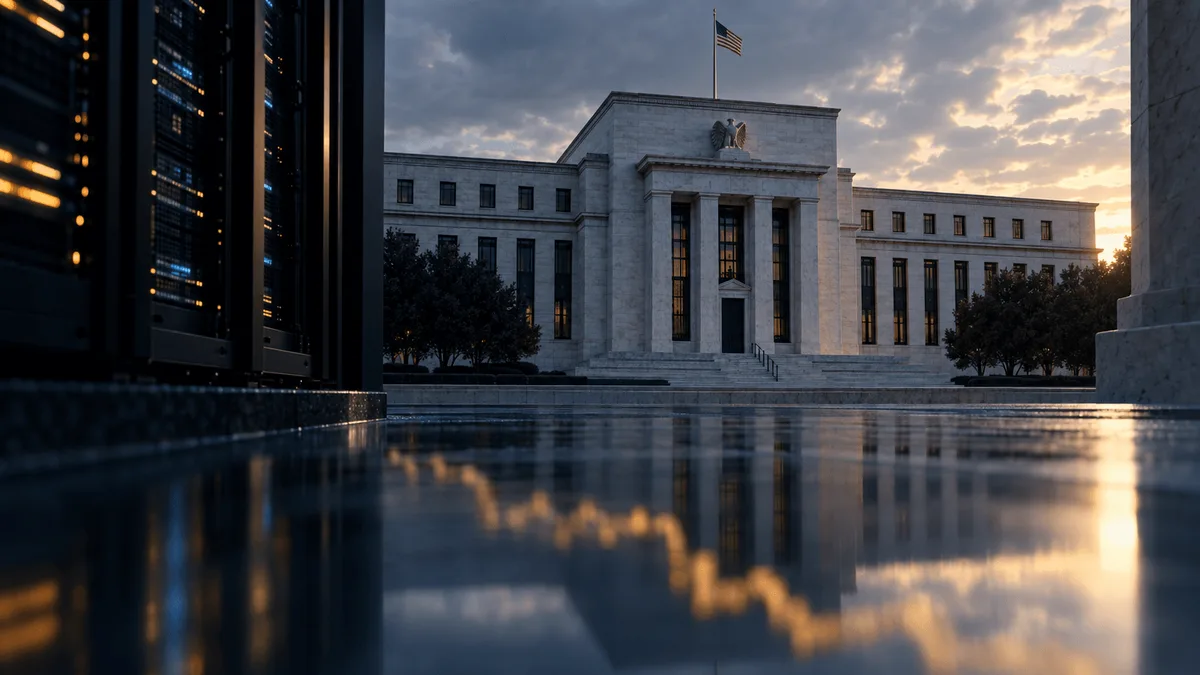
Federal Reserve officials spent much of November warning about leverage, AI financing and financial stability in language that reads almost like a blueprint for cooling an overheated market. That has led some investors to ask whether the central bank actually wants stock prices to fall as part of its inflation fight. The evidence supports a straightforward policy-tightening story more comfortably than it supports the stronger claim that officials are deliberately engineering a crash, even though the two can look similar from the outside.
Why the Federal Reserve Wants Tighter Financial Conditions
Fed Governor Michael Barr said in a November 16, 2026 speech that a sharp reversal in markets could lead to rapid deleveraging and, potentially, self-reinforcing fire sales. That is a warning about financial stability, not a stated goal. Still, it lines up with how officials have described the inflation problem. According to the October FOMC minutes and comments from several Fed officials, elevated inflation and the broader AI build-out are seen as a material source of inflation risk, with the internal debate increasingly centered on how much further rates may need to rise rather than whether to raise them at all.
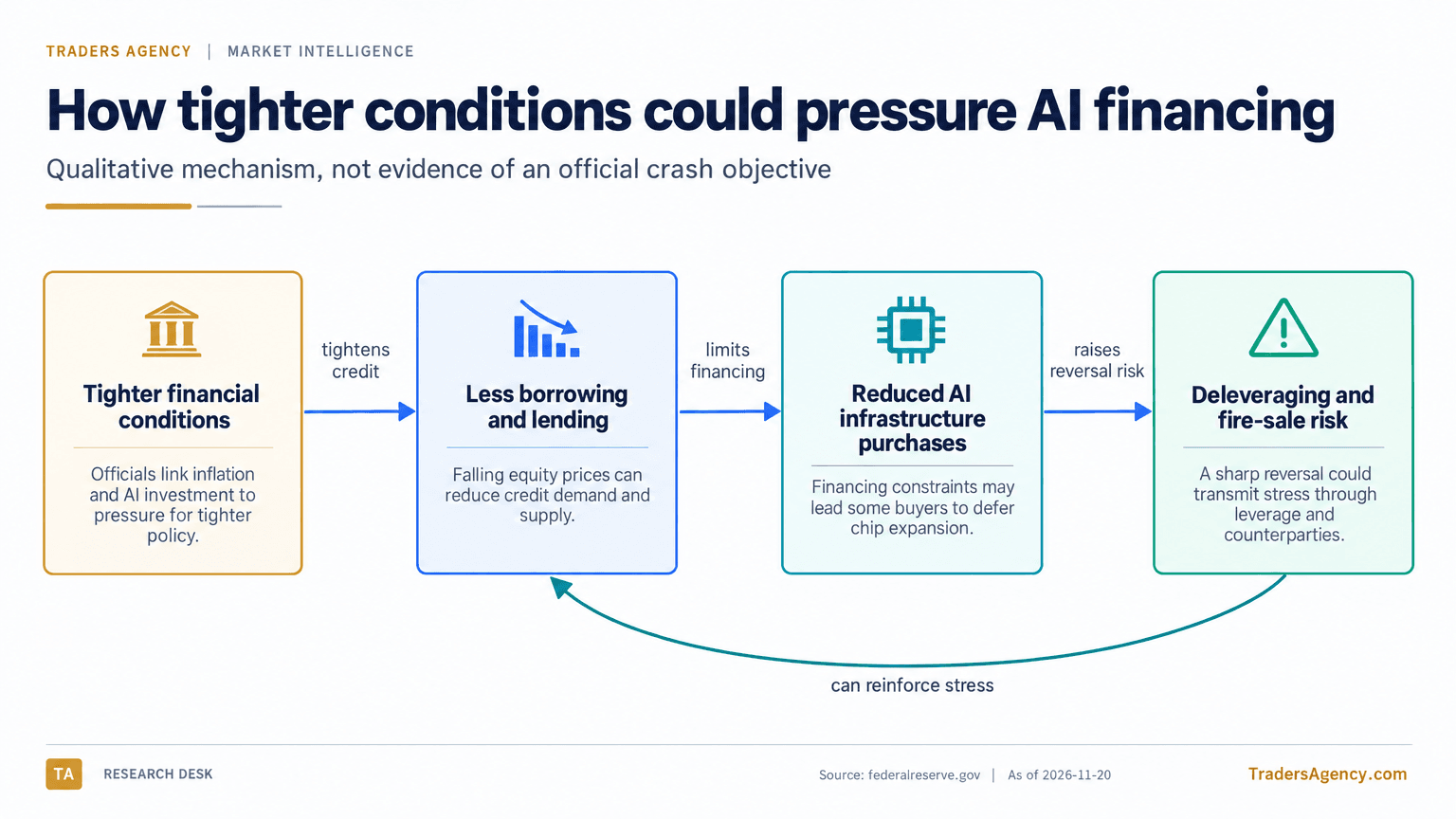
The mechanism behind that debate is simple. When stock prices fall, financial conditions tighten because people become less willing to borrow and lenders become less willing to extend credit. That channel gives the Fed a lever: weaker equity markets can cool speculative investment, including in AI infrastructure, without the central bank needing to raise rates aggressively on its own. It is a short step from recognizing that mechanism to assuming the Fed is actively pulling on it. That stronger interpretation is plausible, but it remains an inference from the data rather than something officials have confirmed as an explicit objective.
The AI Financing Web Under Stress
Barr's remarks also drew a distinction worth keeping in mind. He said he was less worried about direct losses because the amount of debt directly backing the AI boom is still limited, but he flagged that leverage at hedge funds and broader risk appetite are elevated. Leverage used in equity strategies has climbed in recent years through channels beyond traditional margin debt, including leveraged ETFs, options and other derivatives, and those exposures can transmit stress through prime-broker relationships if a sharp reversal hits.
The Fed's November 2026 Financial Stability Report put a number on the broader exposure. It counted more than $3 trillion in undiscounted, nominal obligations across Amazon, Alphabet, Broadcom, Meta, Microsoft, Nvidia and Oracle through the second quarter of 2026, split between more than $1 trillion in leases that had not yet commenced and more than $2 trillion in other contracts and guarantees. That figure spans both hyperscalers and chipmakers, and it represents headline contractual commitments rather than current debt outstanding or an estimate of expected losses. It is a useful gauge of how large and interconnected AI financing arrangements have become, but it is not, on its own, evidence of an imminent default wave.
Nvidia's Numbers Hint at Slower AI Financing
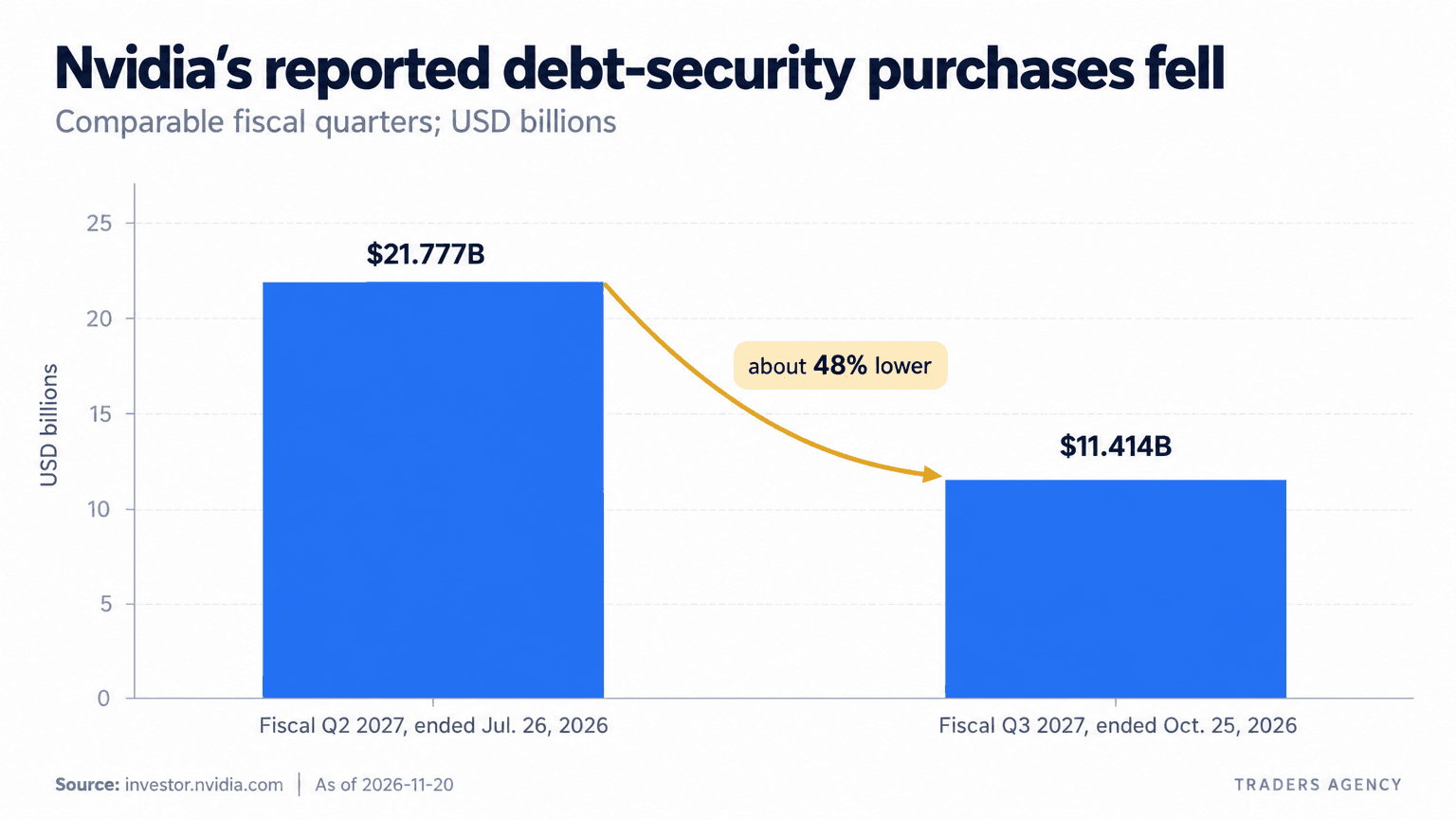
If tighter financial conditions are reaching the AI ecosystem, Nvidia's own numbers offer one data point. The company's investments in other entities' debt fell from roughly $21.8 billion in its fiscal second quarter of 2027, ended July 26, 2026, to about $11.4 billion in the following quarter, ended October 25, a decline of roughly 48 percent. Nvidia's neo-cloud commitments also slipped, from about $36 billion to about $32 billion over the same stretch.
Those figures invite a straightforward, though unproven, narrative: lenders fund AI infrastructure buyers, those buyers purchase Nvidia chips, and the resulting demand supports Nvidia's revenue and its own capacity to extend financing. If credit conditions tighten anywhere along that chain, whether through higher rates, nervous lenders or rising credit-default-swap spreads on AI-linked debt, the ripple effects could show up in reduced neo-cloud spending. That said, a single quarter's decline in a debt-investment line item may also reflect ordinary treasury management or timing rather than a structural shift, so it is best read as a signal worth monitoring rather than confirmation of a broader slowdown.
Want expert trading insights delivered daily?
Join thousands of traders who rely on Traders Agency for market analysis and trade ideas.
Join Traders AgencyTwo Warning Signs the Fed Is Watching
Former Fed Governor Kevin Warsh laid out two illustrative scenarios in remarks on November 16, 2026, neither of which he presented as a forecast. In one, a superintelligence-driven expansion raises GDP growth but still displaces enough workers that unemployment climbs above levels consistent with full employment. In the other, AI investment disappoints, equity valuations fall, growth slows and unemployment rises in tandem.
Of the two, a weakening labor market appears to be the signal the Fed treats as more serious, since it would combine with falling asset values to create a sharper downturn than a mere AI slowdown would. For now, neither warning light is flashing. AI investment has remained resilient, and Minneapolis Fed President Neel Kashkari said on November 18, 2026, that interest rates are currently restraining data-center investment, adding that substantially lower rates would likely encourage even more spending. Separately, the October FOMC minutes linked strong AI-related demand to inflation pressures, reinforcing why officials have been reluctant to ease policy even as financial conditions tighten.
Early Signs of a More Selective Market
There are hints that tighter conditions are already encouraging investors to differentiate rather than dump technology stocks indiscriminately. Reuters reported that a Bank of America survey conducted November 6 through 12, 2026, found 52 percent of fund managers expect at least one AI hyperscaler to announce a capital-spending cut within six months, up from a reported 30 percent in October, though the comparability of that earlier figure has not been independently confirmed.
Microsoft's projected 2026 capital spending has reportedly been revised from around $175 billion to about $170 billion, a change that may partly reflect delayed hardware deliveries and lease-accounting treatment rather than a genuine pullback in AI ambitions. In the memory market, TrendForce reported on November 17, 2026, that NAND spot prices fell roughly 20 percent over two weeks amid reduced Chinese inventories, even as enterprise SSD contract prices were separately projected to rise. Morgan Stanley's model reportedly projected SanDisk's fiscal 2029 earnings per share falling about 21 percent, a forward-looking analyst estimate rather than a confirmed reduction in reported earnings.
Taken together, these data points point toward a more selective, stock-specific environment within technology and AI-linked names rather than a uniform collapse across the sector.
What This Means for Investors
The clearest conclusion from this body of evidence is that the Fed is tightening financial conditions because it views inflation and AI-driven investment as linked risks, and it is comfortable letting weaker equity valuations do part of that work. Whether officials are consciously targeting a market decline as a policy tool, rather than simply tolerating it as a side effect of fighting inflation, remains an interpretation rather than a documented fact. Traders Agency analysts are watching labor-market data, hyperscaler capital-spending revisions and credit spreads on AI-linked financing as the most useful signals for whether this remains a contained repricing or something that spreads into a broader slowdown.
Want expert trading insights delivered daily?
Join thousands of traders who rely on Traders Agency for market analysis and trade ideas.
Join Traders AgencyDISCLAIMER: Traders Agency does not offer financial advice. The information provided is for educational purposes only and should not be considered financial advice. Traders Agency is not responsible for any financial losses or consequences resulting from the use of the information provided. Trading carries inherent risks and may not be suitable for all individuals. You are advised to conduct your own research and seek personalized advice before making any investment decisions, recognizing the potential risks and rewards involved.
- Michael Barr: Some Potential Financial Stability Implications of Artificial Intelligence
- Minutes of the Federal Open Market Committee, October 27–28, 2026
- Financial Stability Report, November 2026
- Ornn GPU Cloud Price Comparison
- Nvidia Fiscal Q2 2027 Financial Results
- Nvidia Fiscal Q3 2027 Financial Results
- Nvidia Form 10-Q for the Quarter Ended July 26, 2026
- Nvidia November 17, 2026, Form 8-K and Earnings Exhibits
- Kevin Warsh: Opening Remarks at the Productivity and Jobs Task Force Conference
- Neel Kashkari at the FinRegLab AI Symposium
- Fed’s Kashkari Says Interest Rates Can Impact Tech Investment
- Reuters: Investors Slashed Tech Exposure Allocations by Most Since 2006
- Fund Managers Cut Tech Allocations, Question AI Capex
- Fund Managers Cut Their Tech Overweight from 37% to 12%, BofA’s Survey Finds
- Microsoft Fiscal Year 2026 Fourth Quarter Earnings Conference Call
- Microsoft Fiscal Year 2027 First Quarter Earnings Conference Call
- NAND Spot Prices Reverse Course, Sliding 20% in 2 Weeks
- Morgan Stanley Stands by Sandisk as CFO Flags a Low-End Pullback
See more from Traders Agency on Google
Make us a preferred source and our market analysis will appear more prominently in your Google Search, Top Stories, and AI results.
Add to Preferred Sources