
Hey, Ross here:
Oracle just sent an act of God letter on a $20 billion-plus AI data center campus. Six days earlier, investors in one of the biggest private credit funds in America tried to pull their money out and got told to wait. The Oracle act of God letter and that redemption line are not two separate stories. They're two cracks in the same pipe, the pipe carrying retail investor money straight into the AI buildout.
If your financial advisor ever put you into an income fund or a private credit fund over the last few years, the kind that pays a steady yield and doesn't have a ticker symbol you can sell, this one matters to you directly.
Below: the rule buried in the paperwork that decides when you actually get paid, the number on Oracle's books that hasn't hit the balance sheet yet, and the three signals I'm tracking every quarter from here.
What Does an Act of God Letter Mean?
Bottom Line: Oracle's force majeure notice on a massive AI data center project lines up with a separate warning sign: a private credit fund that could only pay out about 40% of investor withdrawal requests. Both point to the same underlying risk, retail money is tied up in AI buildout financing that may not be as liquid or as solid as it looks on paper.
An act of God letter, formally a force majeure notice, is the document a company sends when something outside its control means it can't hold up its end of a deal. It's the clause you pull when circumstances beyond your power threaten to blow up a timeline.
A force majeure notice protects the sender in case of delay. It doesn't admit one.
But nobody sends their landlord an act of God letter on a project they're totally confident in.
Why Did Oracle Send a Force Majeure Notice?
No gas, no power. No power, no data center.
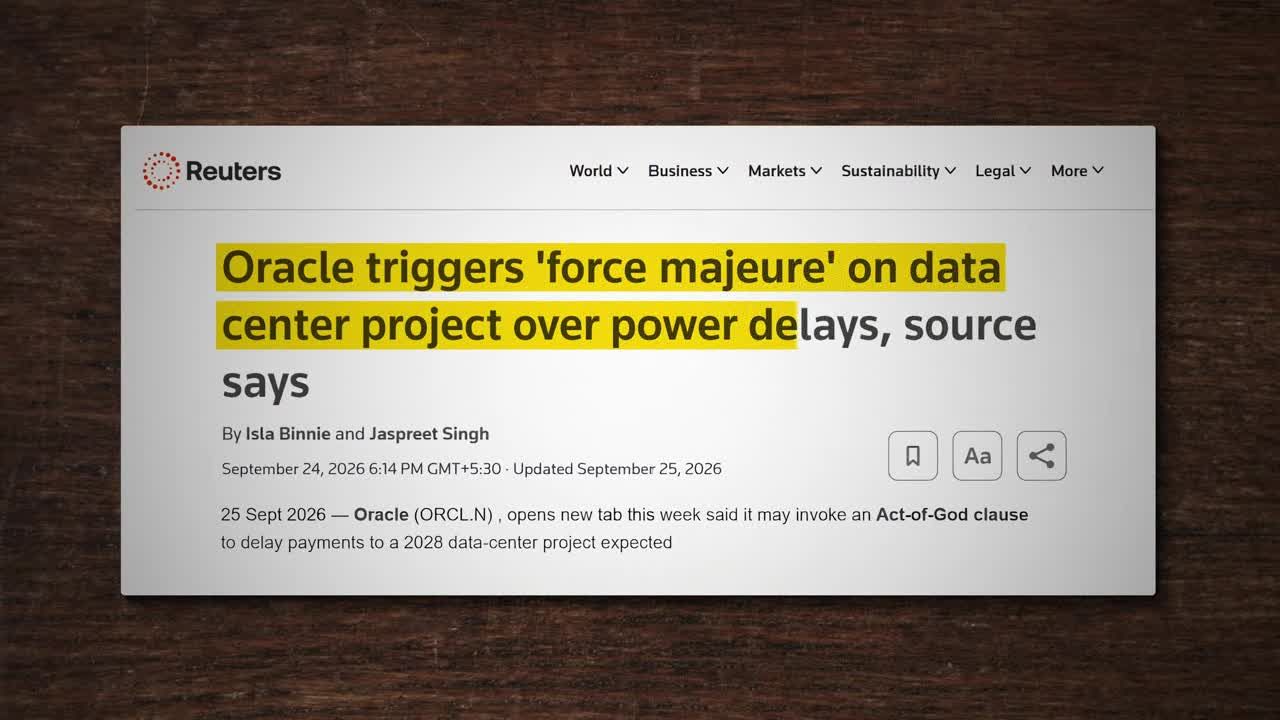
Oracle sent its force majeure notice on September 24th, citing potential delays in securing power. The reason traces back to July, when New Mexico rejected the natural gas pipeline extension feeding the site.
The project is Project Jupiter: 1,400 acres in the New Mexico desert, two and a half gigawatts of planned capacity. That is an enormous amount of electricity for a single campus. Four buildings, built for Oracle as part of the Stargate buildout for OpenAI.
Here's who's on the hook:
- Blue Owl, one of the biggest names in private credit, owns the developer and put in about $3 billion of equity
- A group of banks lent another $18 billion
- According to Reuters reporting, getting the power was Oracle's job
Oracle couldn't lock the power down. The letter went out. The stock dropped about 4% that same day.
Oracle's $260 Billion Problem
Both statements can be true on paper. A force majeure notice is a legal protection, not an admission of failure. But Oracle's balance sheet is what makes the Oracle act of God letter far more dangerous than it would be for, say, Microsoft.
On July 9th, S&P downgraded Oracle's debt to BBB minus, one notch above junk. In that report, S&P counted up the leases Oracle has already signed that kick in between fiscal 2027 and 2029. The total came to $260 billion.
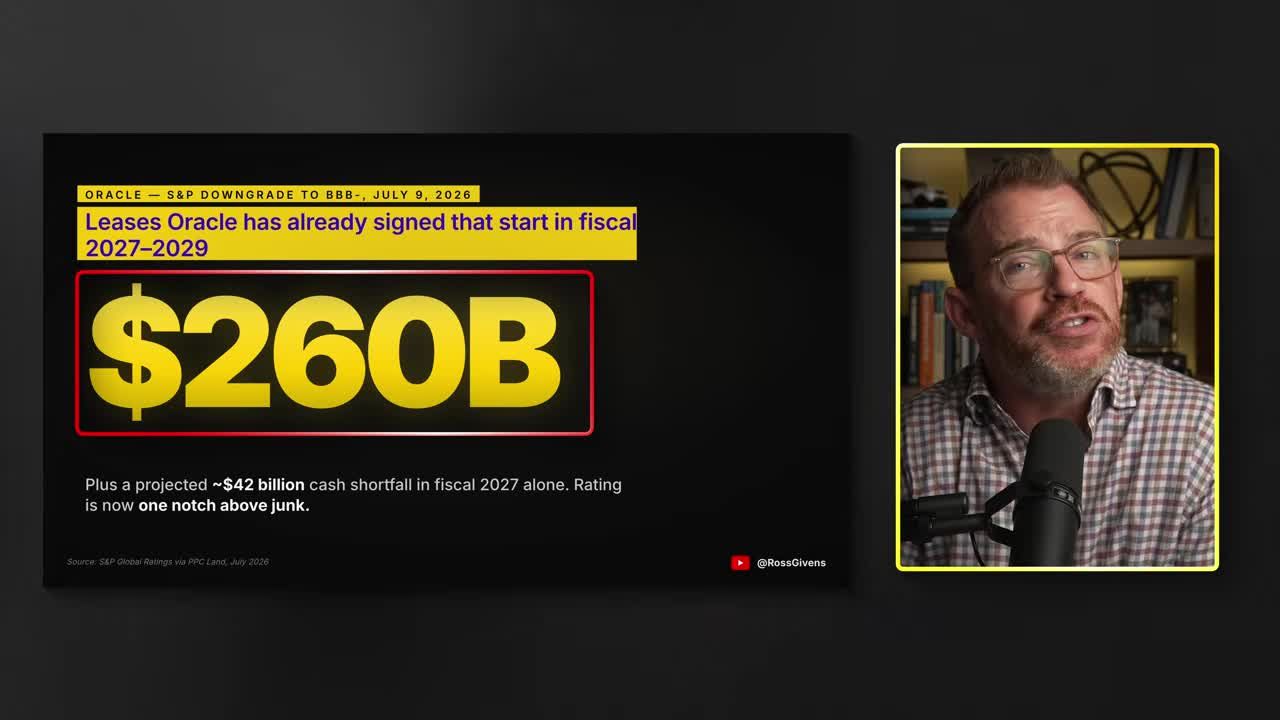
Here's the part most people miss. Those leases don't show up on the balance sheet the way regular debt does until the building actually opens. The bills haven't started yet. S&P expects Oracle to burn through meaningfully more cash than it brings in during fiscal 2027 alone.
Follow the dollars. The bills start when the buildings open. The buildings need power to open. Until they're running and getting paid, the gap gets filled with borrowed money.
You can track the filings behind all of this directly through the SEC's EDGAR database.
Get an entire year of live weekly mentoring sessions, my newsletter, indicators, bonus reports, tons more. Click the link and I'll see you in the next live session.
Join my Black Ops Trading ClubWhy Can't You Sell a Non-Traded BDC?
These funds are called non-traded BDCs, business development companies. They're a big pool of money that makes loans to companies, usually companies banks either won't lend to or won't lend to fast enough. The fund collects the interest and passes it on to you.
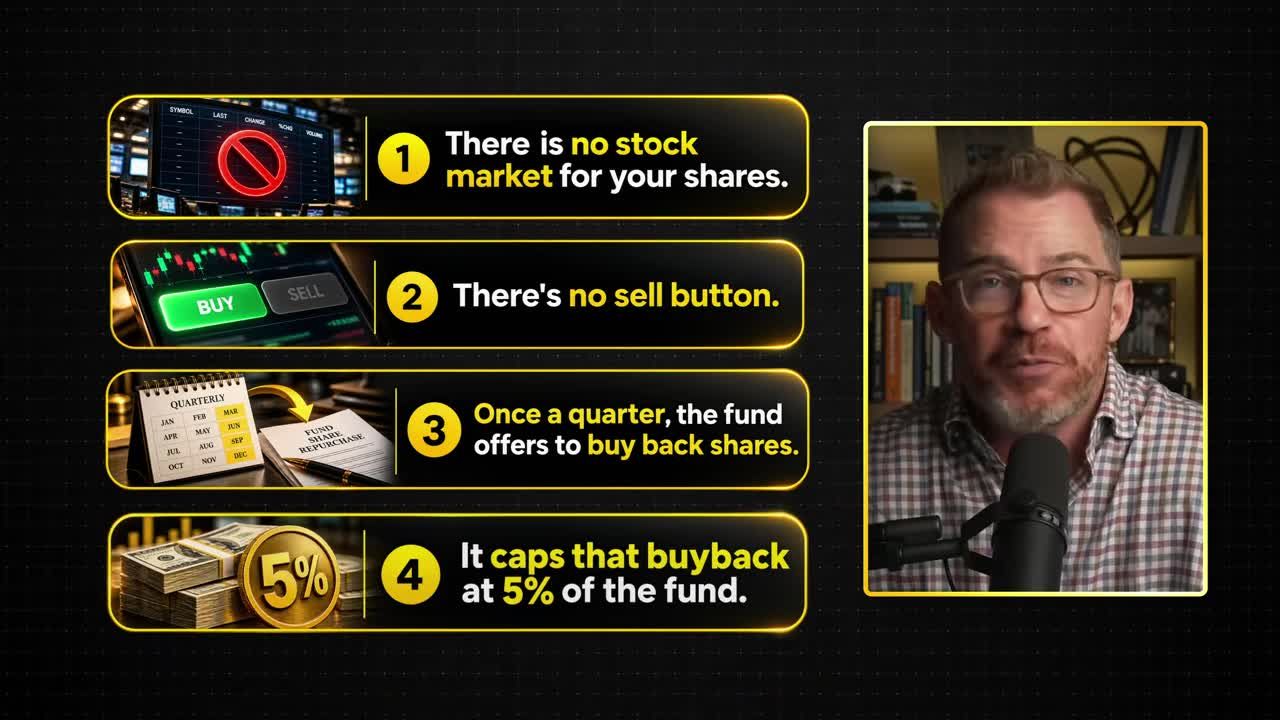
The catch is in the word non-traded. There is no stock market for your shares. There is no sell button.
Once a quarter, the fund offers to buy back shares. And it caps that buyback at 5% of the fund.
The Line Got Longer Than the Door
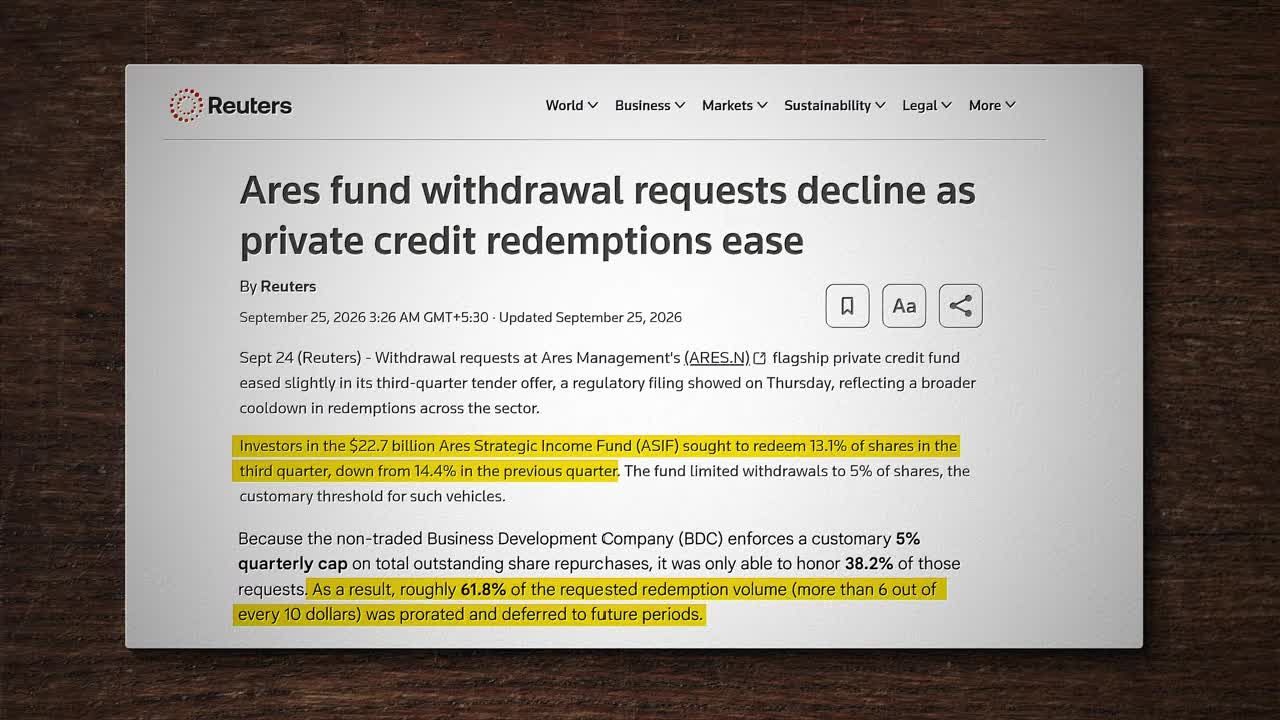
On September 18th, investors holding 13% of the Ares Strategic Income Fund asked for their money back. More than 6 out of every 10 of those dollars got told not yet. Not no. Just not this quarter. Get back in line.
The fund holds roughly $10 billion. And it is not alone.
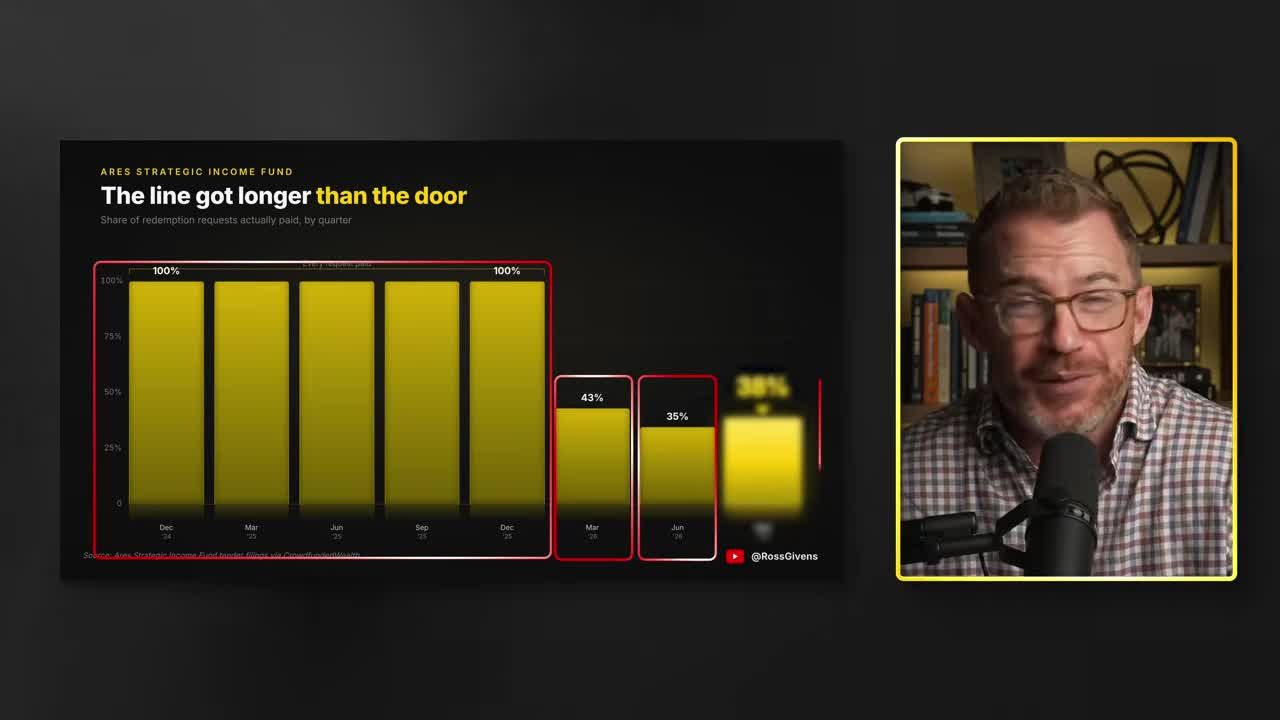
For years nobody noticed the 5% cap, because nobody hit it. Ares paid out every single request, every quarter, 100% of the time, all the way to the end of last year.
Then this year the requests started piling up:
- March: 43% of requests paid
- June: 35% of requests paid
- September: 38% of requests paid
Ask for your money in September and you got back a little more than a third of it. The rest went back in line behind everybody else who didn't get paid either.
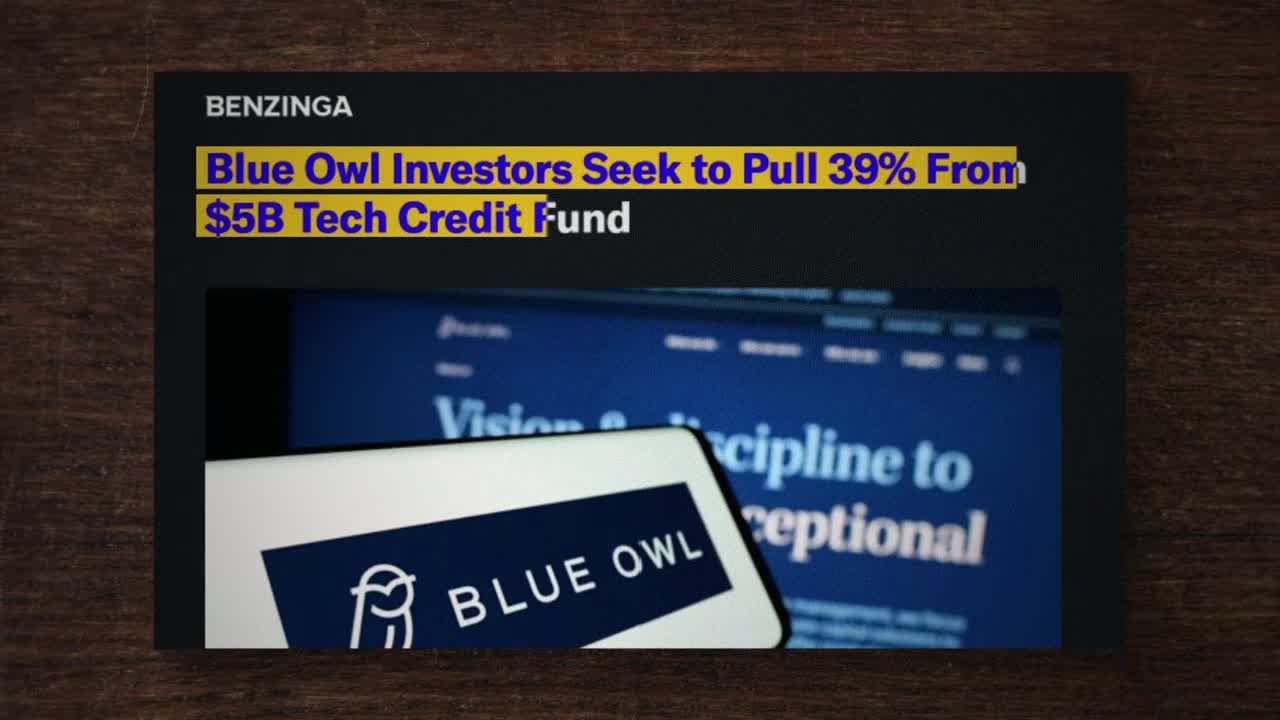
And Ares isn't even the worst of it. Blue Owl's technology lending fund saw requests for more than 40% of its shares back in the first quarter. Four out of every $10 in a fund that lends to tech companies wanted out.
Blackstone's flagship private credit fund, BCRED, got requests for about 10% in each of the last two quarters. It held the line, capped at 5%, both times.
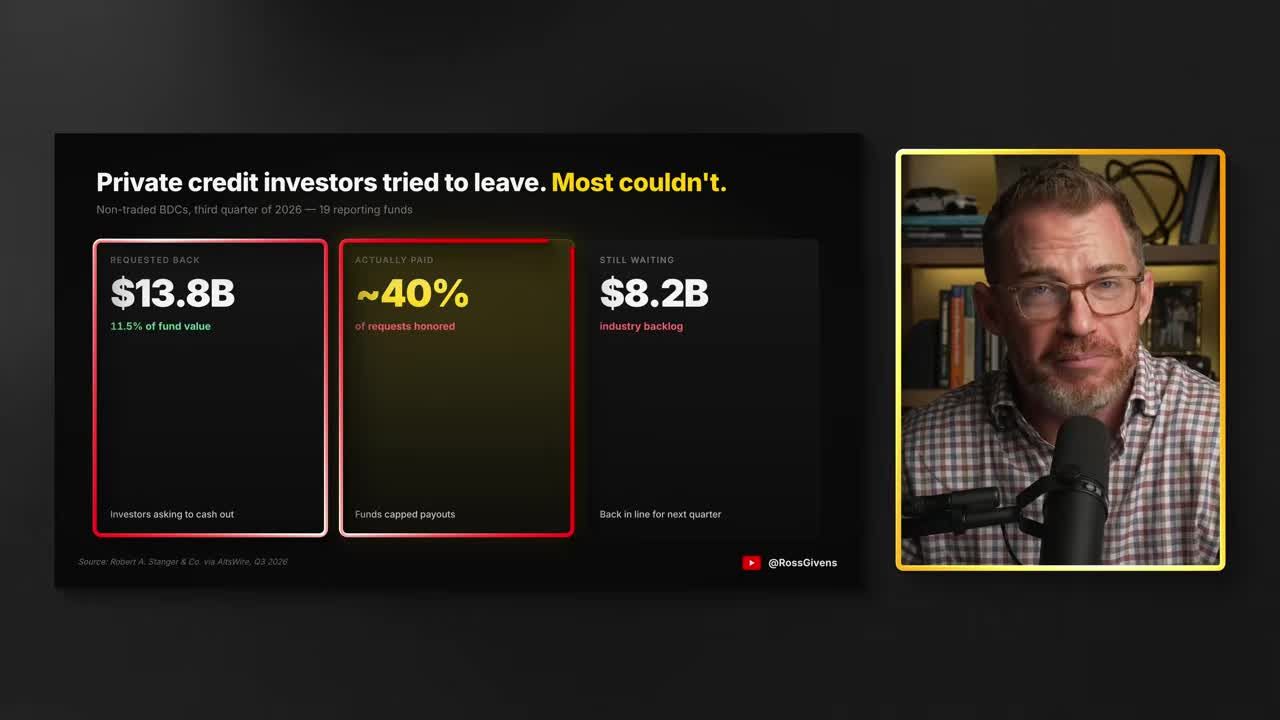
Across the industry, $13.8 billion tried to walk out of these funds in the third quarter alone. About 40% of it made it through the door.
New Money Fell 90%
The surface read is reassuring. The people who track this industry say redemption demand may have peaked back in the second quarter, with requests across the industry dipping from about 12.7% to 11.5%.
That's not the number I care about. This is.
Think about what that means. When new money stops coming in the front door, the only cash available to pay the people walking out the back is whatever the loans pay in interest and whatever the fund can sell. And there are still billions sitting in line across the industry.
You'll hear people say Oracle's problems caused the private credit panic. Look at the dates. The redemption wave started in the first quarter. Oracle's letter landed in late September.
One didn't knock over the other. They are two cracks in the same pipe, the pipe that's been carrying retail money into the AI buildout.
Why the Line Won't Clear Fast
On October 2nd, the 10-year Treasury closed at 5.28%, the highest since 2002. That's interest backed by the U.S. government, and you can sell it any day the market is open.
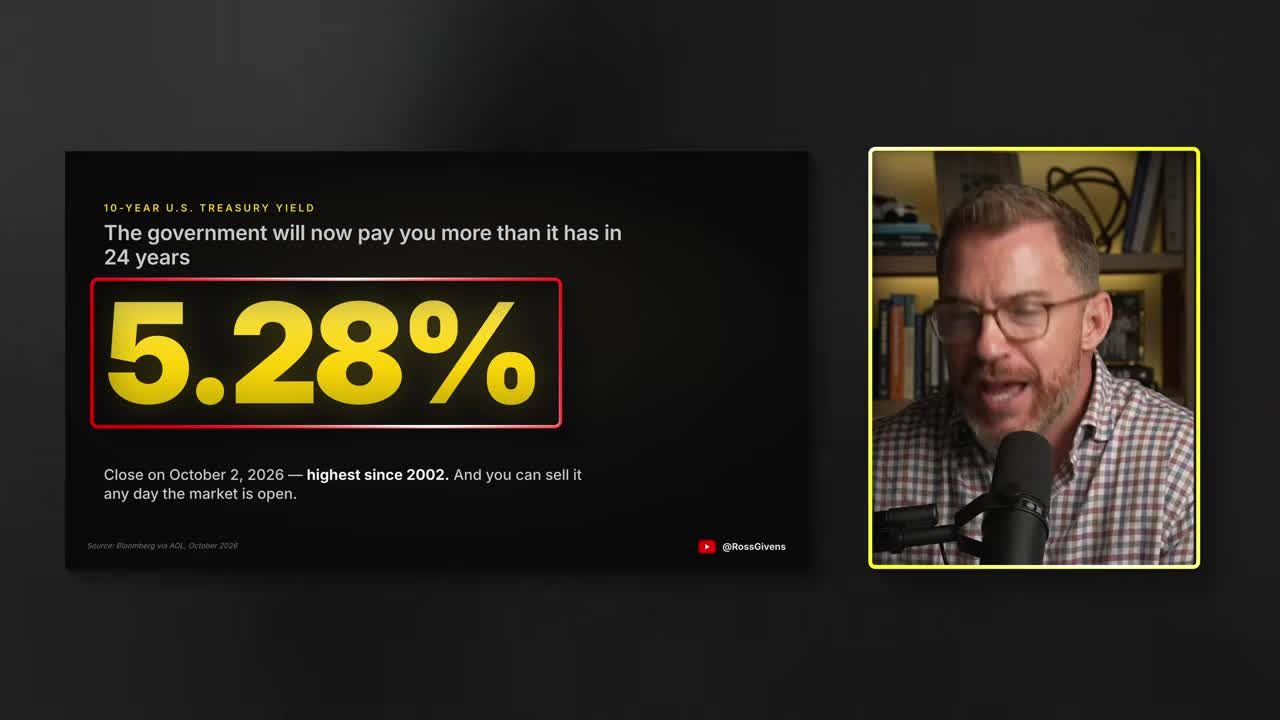
So ask yourself: why would you keep sitting in a fund you can't get out of when the government will pay you north of 5% with a sell button attached, in and out whenever you want?
I don't think that line gets cleared fast. Current yields are published daily by the Federal Reserve.
Three Signals I'm Watching
1. The December tenders. If redemption requests climb instead of fading, the "peaked in Q2" story is dead. And if any big fund cuts its payout below the 5% cap, that's a whole different conversation. Then we really have problems.
2. Oracle's credit rating. One more notch down and it's officially junk. Plenty of big bond buyers have rules limiting how much junk debt they can hold. When a big borrower falls across that line, the buyers it relies on start backing away right when it needs them most.
3. More letters. Jupiter is one campus. If force majeure notices start showing up on other AI sites over power, this isn't one bad pipeline in New Mexico. It's the whole buildout running into the grid.
Final Thoughts
Private credit isn't blowing up. It's doing exactly what it always said it could do in the fine print. The problem is most people never read the fine print. And now the borrower sitting at the center of the AI buildout has told its landlord it might not be able to keep the lights on. Literally.
If I owned one of these funds, I'd be working my way out. With the 5% rule in place, that can take time, so start now.
If your advisor got you in, ask exactly how the request works: does it roll over to the next quarter on its own, or do you have to resubmit every time? Don't assume.
And don't judge any of these funds by the yield alone. Higher yields are higher for a reason, just like cheap stocks are usually cheap for a reason. The more interest a borrower is willing to pay, the less creditworthy investors believe it to be.
Watch the December tenders. Watch Oracle's credit rating. Watch for more letters. That's how you'll know whether this stays contained to one campus in the New Mexico desert or becomes the whole buildout running into the grid.
Frequently Asked Questions
What qualifies as an act of God letter in a business contract?
It's a force majeure notice, sent when an event outside a company's control prevents it from meeting its contractual obligations. It protects the sender from penalties tied to delay, but it doesn't erase the underlying financial exposure.
Why did Oracle send one?
The Oracle act of God letter, formally a force majeure notice, went out on September 24th, citing potential delays in securing power, after New Mexico rejected the natural gas pipeline extension in July. No gas, no power. No power, no data center.
What is Project Jupiter?
A 1,400-acre data center campus in the New Mexico desert with two and a half gigawatts of planned capacity, four buildings built for Oracle as part of the Stargate buildout for OpenAI. Blue Owl put in about $3 billion of equity and a group of banks lent another $18 billion.
What are non-traded BDCs?
Business development companies: pools of investor money that make loans to companies banks won't lend to, or won't lend to fast enough. There's no stock market for the shares, and quarterly share buybacks are capped at 5% of the fund.
Should I try to pull money out of a private credit fund now?
If you're in one, start the process now, because the 5% cap means getting fully out can take multiple quarters. Confirm with your advisor exactly how the redemption request process works before assuming anything.
Get an entire year of live weekly mentoring sessions, my newsletter, indicators, bonus reports, tons more. Click the link and I'll see you in the next live session.
DISCLAIMER: Traders Agency does not offer financial advice. The information provided is for educational purposes only and should not be considered financial advice. Traders Agency is not responsible for any financial losses or consequences resulting from the use of the information provided. Trading carries inherent risks and may not be suitable for all individuals. You are advised to conduct your own research and seek personalized advice before making any investment decisions, recognizing the potential risks and rewards involved.
See more from Traders Agency on Google
Make us a preferred source and our market analysis will appear more prominently in your Google Search, Top Stories, and AI results.
Add to Preferred Sources